Gulfview Plumbing & Water Treatment helps Pinellas County homeowners compare water-softener installation, replacement, and service options. Start with the concern you want to address and the equipment already in your home, then review a recommendation based on your water and property.
Call 727-662-2550 or schedule a water-treatment appointment.
Water softener installation starting price
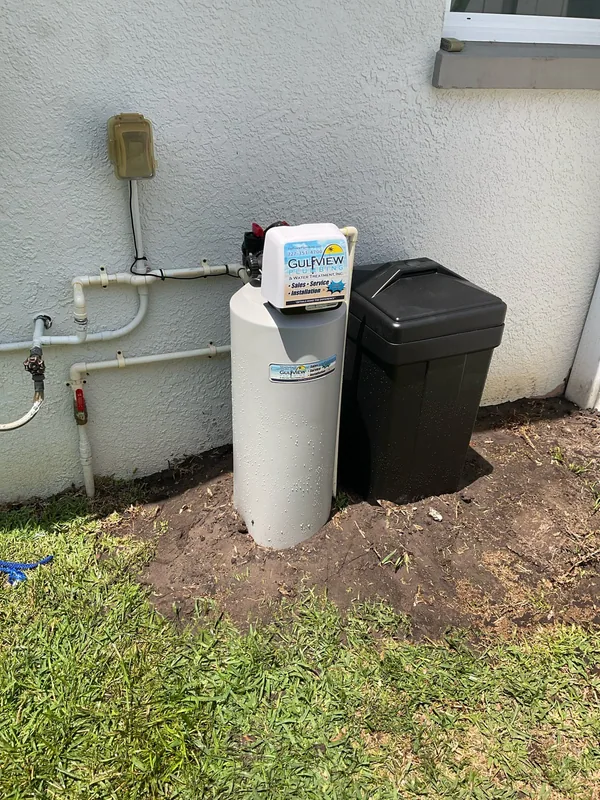
Clack WS1 two-piece water softener, 9 x 48-inch mineral tank: starting at $2,450 installed. This Clack WS1 water softener system includes 1 cu. ft. of chlorine-resistant softening resin, a separate brine cabinet, digital Clack WS1 control head with battery backup, UV-rated tank cover, gravel support bed, 150 lb. of salt, materials and installation labor.
Includes connection to accessible existing water piping, programming, startup, and operation and leak checks. Salt is added to the available tank capacity, with any remaining supplied salt left with you. We help select the right system size for your water quality and household use; your recommended configuration may affect the final price.
A properly installed GFCI-protected outlet with a weatherproof cover is required within 10 ft. of the installation. Any needed electrical installation must be arranged with a licensed electrician; temporary power and extension cords are not suitable. Review additional plumbing or site-preparation needs in the estimate. Supplied equipment and installation carry two-year residential or one-year commercial coverage; existing components and customer-supplied items are excluded, and manufacturer terms are separate.
What a water softener does
Water softeners remove hardness minerals, primarily calcium and magnesium. Hard water can contribute to scaly buildup and make soap harder to lather. A softener is not a disinfectant: it does not remove bacteria, viruses, or parasites. The CDC guide to home water treatment explains these differences.
How does a salt-based softener work?
A conventional sodium-based softener uses ion exchange: calcium and magnesium in the incoming water are exchanged for sodium. This reduces hardness; it does not mean every unwanted substance has been removed. For background on hardness minerals and scale, read the USGS guide to water hardness.
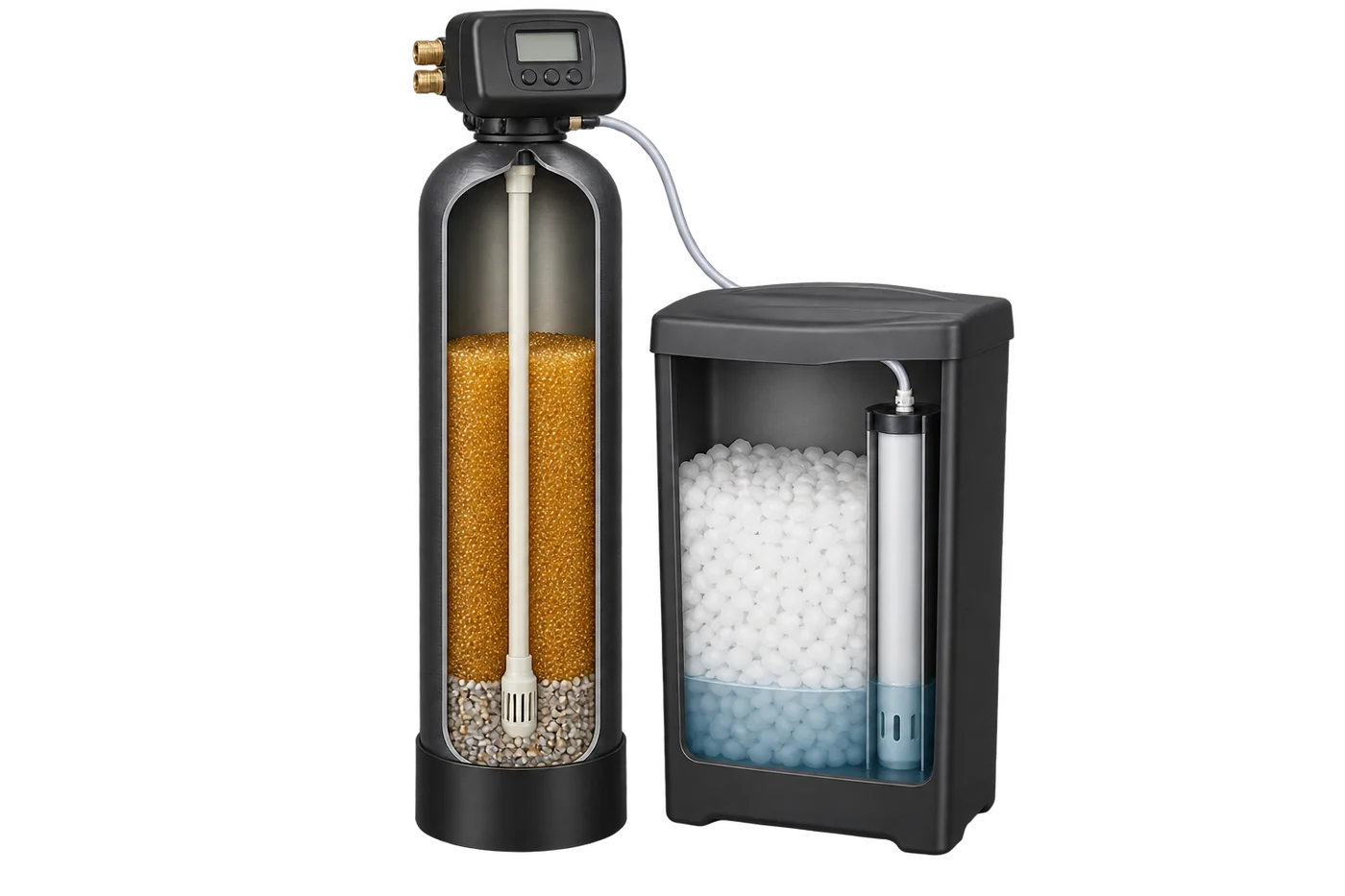
Ask which supplies your selected model requires, how its maintenance and regeneration are handled, and what settings are appropriate for the tested water and household demand. Follow the equipment instructions rather than using a generic salt quantity or schedule.
Softening and filtration are different choices
Hardness, taste, odor, and a specific contaminant concern are not the same problem. A softener, whole-house filter, and drinking-water system may have different purposes. Review the exact model and its documented capabilities rather than relying on a general promise of pure water. See our water-treatment overview for filtration and reverse-osmosis options.
Considering softening and filtration together? Our Clack WS1 Twin-Tank System pairs a 9 x 48-inch softener with a separate 9 x 48-inch carbon filter. Review the package starting price, inclusions and installation requirements, then discuss whether the combination fits your water and household needs.
The CDC recommends matching treatment to your water and checking product claims for the substances you want to address. Taste and appearance alone cannot establish water safety. Review your utility water-quality report and discuss relevant testing. Read the CDC guidance on choosing a filter.
Mineral marks: cleaning is not water treatment
Before cleaning a faucet or shower finish, identify its model and finish and read the current care instructions. A method recommended for one surface may not suit another. For example, Moen separates its cleaning guidance by finish. Do not assume an abrasive pad, descaling product or prolonged vinegar soak is suitable for every fixture.
Follow the appliance manufacturer’s instructions for dishwashers, washing machines and water heaters instead of adding a household cleaner based on a general hard-water tip. Cleaning visible marks does not measure hardness or establish drinking-water safety. If marks recur, discuss water testing and treatment goals; if flow has changed at one fixture, our faucet and shower service guide can help you describe the problem. A treatment recommendation and a fixture repair address different questions.
Planning a new installation
Tell us your water source, household needs, existing equipment, and available installation space. During the assessment, ask which fixtures will receive treated water, what plumbing connections are included, and what access is needed for future service. Equipment selection and the installation scope should be reviewed together.
Gulfview works with Clack WS1 systems. Ask which proposed equipment fits your application, what settings and maintenance it requires, and which parts of the installation are included in the estimate. A brand name alone does not establish the right capacity or configuration for a particular property.
Service for an existing softener
If performance has changed, have the model information and service history ready. Tell us about leaks, unusual operation, displayed messages, and when you first noticed a change. An assessment can help determine whether service, a component repair, or replacement is the appropriate next step. Do not assume a change in water feel proves that an entire system needs replacement.
Questions to ask before approving work
Ask for the equipment model, installation scope, included connections, startup checks, maintenance responsibilities, and warranty details in writing. Discuss expected ongoing supplies and service needs. Confirm whether removal of existing equipment, additional plumbing work, or other site preparation is included. Compare proposals on the complete scope, not only the equipment name.
Pricing and warranty
Your estimate depends on the equipment, installation conditions, connections, and agreed work. The starting price above covers the listed Clack WS1 system and installation scope; your recommended system and site requirements may differ. GreenSky financing may be available for qualifying projects, subject to credit approval and applicable terms.
Qualifying materials furnished by Gulfview carry a two-year residential parts and labor warranty. Customer-supplied materials are excluded. Confirm the coverage for your specific installation or repair with the estimate, including any manufacturer requirements.
Talk with Gulfview about your water
Family-owned and operated by John and Chrissy Wear, Gulfview serves Pinellas County and selected surrounding communities. Florida Plumbing License CFC1429897. Check our service areas and call 727-662-2550 or schedule an appointment.