Low water pressure can make a shower disappointing and everyday chores take longer. Gulfview Plumbing & Water Treatment helps customers in Pinellas County and surrounding service areas find the cause of weak flow and understand their repair options. We start with what has changed and assess the affected plumbing before recommending work.
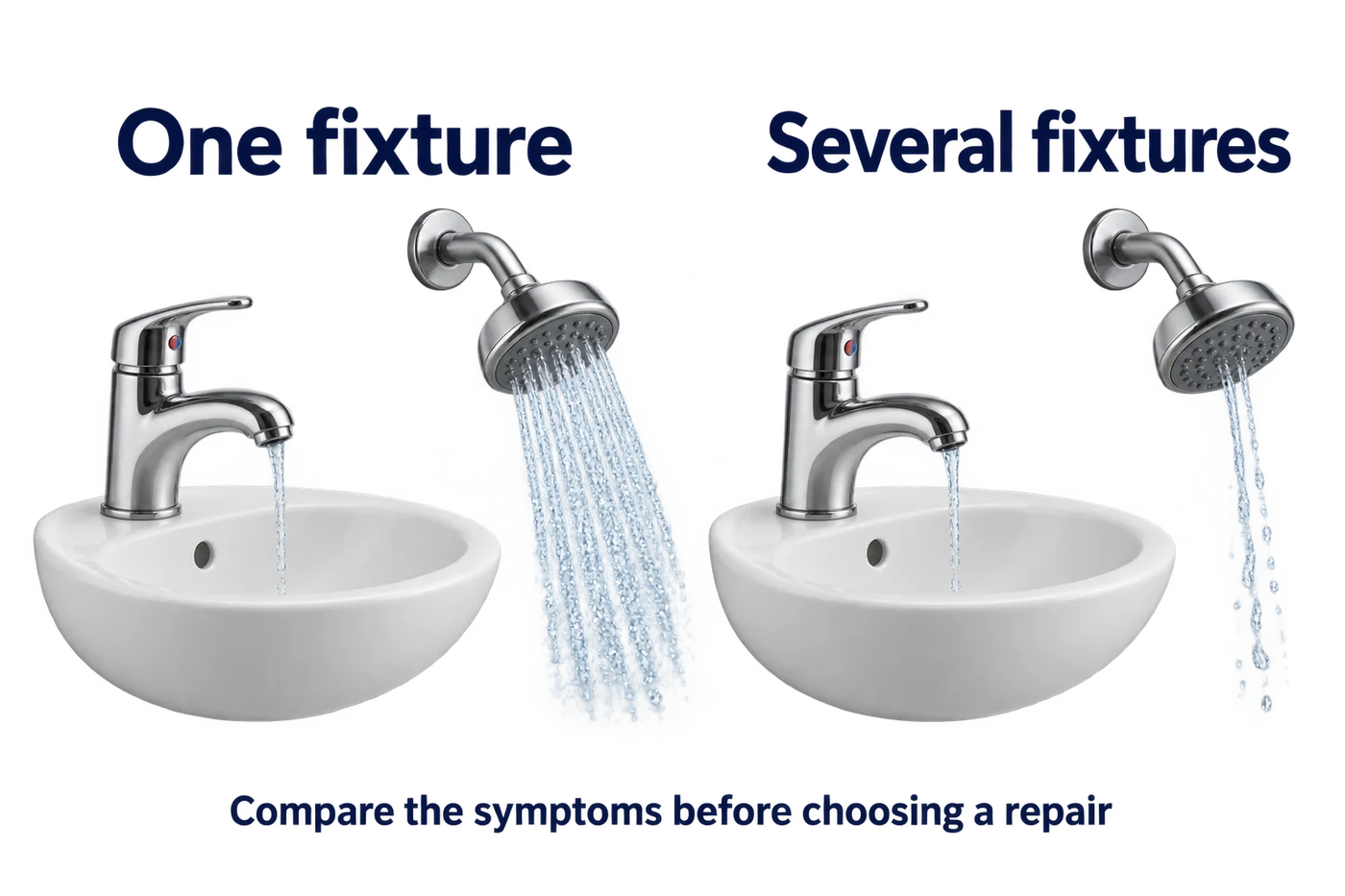
Low water pressure: one fixture or several?
Note whether the change affects a single faucet, a shower, or fixtures throughout the property. Compare ordinary use without dismantling equipment. Does the problem happen all the time, only at certain times, or when another fixture is running? Share those observations rather than assuming the entire home has the same issue.
If the concern is isolated to a fixture, our faucet and shower guide explains repair planning and parts compatibility. The assessment still needs to establish the cause before a component is replaced.
Hot water, cold water, or both?
Tell us whether the change occurs with hot water, cold water or both. Also mention changing temperatures, reduced hot-water supply or recent water-heater work. Our water heater guide covers equipment assessment, but a hot-side symptom alone does not establish that the heater needs replacement.
What changed before the low water pressure started?
Mention recent plumbing work, utility notices, a new appliance, a treatment-system service visit or a change in household demand. Have the model information and maintenance history of any water treatment equipment available. Do not bypass equipment, force valves or adjust a regulator simply to test a theory.
Can a filter, water softener or valve cause low water pressure?
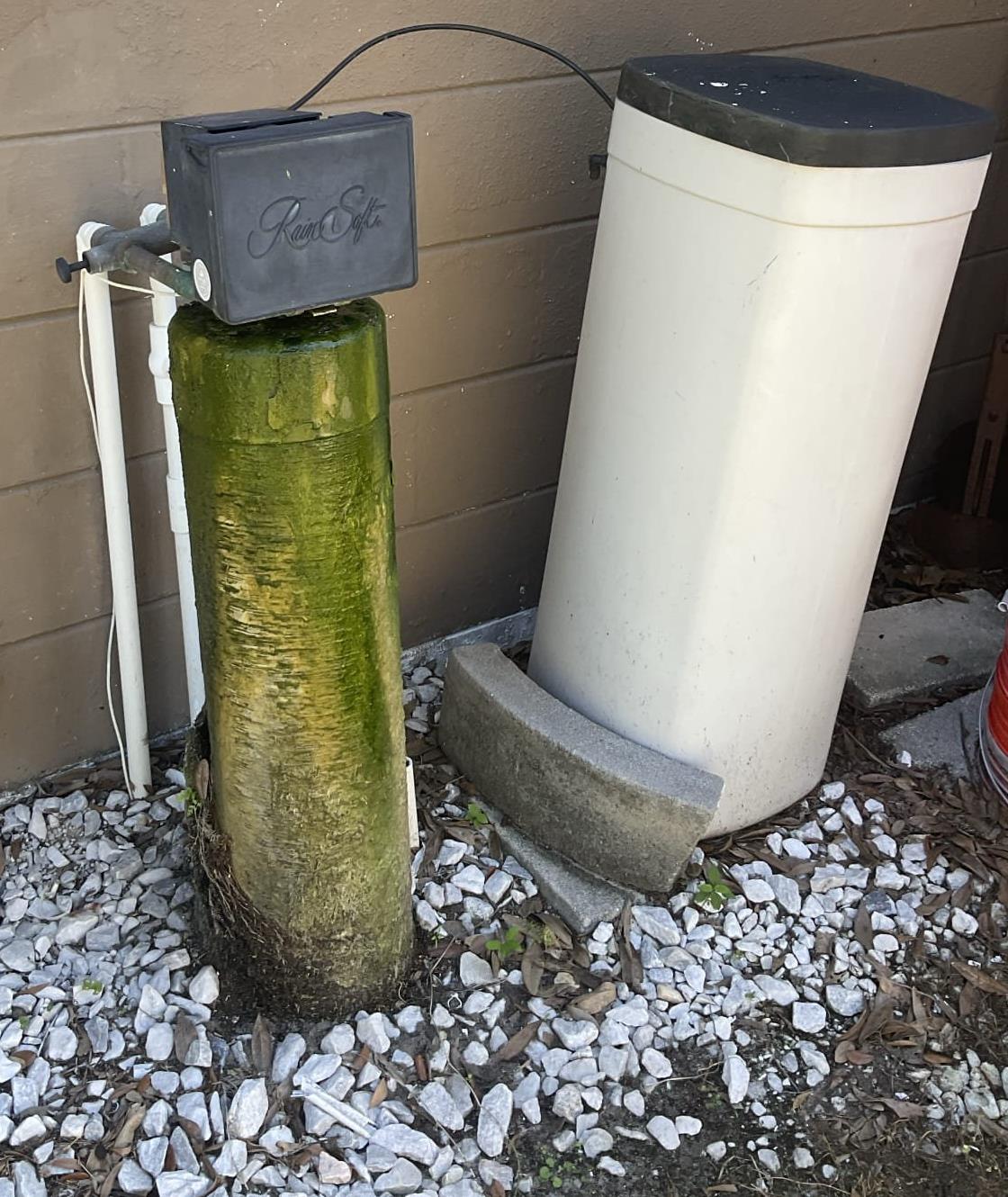
Yes. Water has to pass through these parts before it reaches your taps. A clogged sediment filter, restriction inside a water softener or filtration system, or a valve that isn’t opening properly can leave you with weak flow. If several fixtures changed together, we consider equipment serving the whole home as well as the incoming supply.
A filter that needs attention
Filters collect material as they work. When a cartridge becomes clogged, less water can pass through it. A whole-home filter can affect several fixtures, while a filter serving a separate drinking-water faucet may affect only that outlet. Tell us when the filter was last serviced and whether the change was gradual or sudden; the right maintenance depends on the equipment and your water conditions.
A restriction in the treatment system
A water softener or carbon filtration system can develop a restriction in its screen, media or control valve. That doesn’t mean every weak shower calls for a replacement system. We can investigate the equipment and explain whether service, a component repair or replacement makes sense. Whirlpool’s filter troubleshooting guidance also identifies blocked sediment filters and internal restrictions as possible causes.
A partially closed or failed valve
A shutoff valve that is partly closed or has a damaged internal part can restrict the supply. A malfunctioning pressure regulator is another possibility. Mention recent plumbing work or a recent shutoff, even if the handle appears to be in its usual position. We check how the valve is working rather than assuming its position tells the whole story. Don’t force a stiff handle or adjust a regulator to try to overcome weak flow.
If the pressure changed around the same time as treatment-system trouble, let us know when you schedule your visit. We can look at the symptoms together before you spend money replacing equipment.
Low water pressure beyond your property
If several nearby properties have a sudden change, check notices from the utility that actually supplies your address and report the concern to that utility. A mailing city does not always identify the provider. If you are a county utility customer, Pinellas County Utilities publishes service notices and contact information. Follow any instructions the utility issues about outages or water use; this guide does not establish whether your water is safe to drink.
Do not operate utility-owned meter valves or open restricted equipment. Ask the utility to explain its responsibility and the next step. Tell Gulfview about any notice or findings when arranging service.
How we investigate low water pressure
We listen to what you have noticed, then assess the affected fixtures and supply system. Pressure measurements and the condition of piping, valves and treatment equipment can help narrow down the cause. We explain the proposed checks, any separately priced testing and what the findings mean for your repair options.
A higher water bill, visible moisture or repeated leaks should also be mentioned. Those clues do not prove a hidden leak by themselves. Leak investigation or repiping should follow findings rather than the age of the home or a weak shower alone.
Pressure-reducing valve supplied and installed: starting at $915
If the assessment supports pressure-reducing valve installation or replacement, the standard 3/4-inch package includes one Gulfview-supplied valve, installation labor, necessary piping modifications, fittings and connections, and removal of the existing pressure-reducing valve when needed. Includes checks of water-pressure regulation and operation, plus connection leak checks.
This is an installation starting price, not a promise that a regulator will correct every weak-flow complaint. Diagnosis comes first. Confirm the required valve size, access and complete scope in your estimate; other sizes and work outside this task are separately priced.
Gulfview covers the work and company-supplied parts in this task for two years residential or one year commercial. Existing plumbing and customer-supplied items are excluded. Any manufacturer warranty is separate; labor after the company warranty period is chargeable.
Will a pressure-reducing valve fix low water pressure?
Not automatically. A pressure-reducing valve lowers incoming pressure and regulates it for your plumbing; it is not a booster for an inadequate supply. That’s why we assess the system before recommending the installation package above. Watts explains how pressure-reducing valves work. If your concern is low water pressure, tell us how it behaves during ordinary use so we can investigate the cause rather than choose a part first.
Is weak flow the same as low water pressure?
Not always. Pressure is the force moving water through the plumbing; flow is how much water reaches the fixture over time. A restricted faucet or pipe can reduce flow even when the incoming pressure is normal. That distinction matters because the right repair may be close to the fixture rather than at the main supply. The Portland Water Bureau explains the difference between pressure and flow.
You don’t need to diagnose the plumbing before calling. Tell us what everyday use feels like: whether a shower weakens when another faucet opens, or one tap takes longer to fill a glass. Those details help us discuss the problem with you without jumping straight to a replacement.
Low water pressure in a condo or shared building?
Let your property manager know whether other units have noticed a change. Shared equipment, building access and any planned water interruption may need coordination before a visit. You can still contact Gulfview about the plumbing serving your unit; share your manager’s contact information and any building requirements when scheduling. Our condo plumbing guide explains how to prepare for access and approvals. We can discuss what needs investigation without assuming the entire building needs new piping.
When the shower slows down as another tap opens
A shower that feels fine until the washing machine fills is a different concern from a bathroom faucet that barely runs all day. Several outlets are sharing the available supply. A restriction in a valve, filter or pipe may become more noticeable when demand increases, even though a single tap seems acceptable on its own.
Tell us which combination interrupts your routine. Perhaps the kitchen faucet slows when someone showers, or the upstairs bathroom struggles while downstairs fixtures work normally. We can compare those conditions during the assessment rather than relying on how the plumbing behaves with every other outlet turned off. You shouldn’t have to rearrange the household’s entire morning around an unexplained change.
Why a pressure reading is only part of the picture
A reading taken while no water is running doesn’t tell us everything about delivery during use. We consider the symptoms alongside measurements and the plumbing serving the affected fixtures. The question is not simply whether a gauge shows a particular number; it’s why the water reaching your shower or sink no longer meets your everyday needs.
This is also why increasing a regulator setting isn’t a sensible first response. It may leave a restriction untouched or create a different problem elsewhere. We look for the cause before recommending adjustments or replacement equipment.
Can older water lines restrict flow?
Yes. Corrosion and deposits inside some older piping can reduce the space available for water to pass through. A gradual loss of flow may be one clue, especially when several fixtures are affected. But the age of the house alone doesn’t tell us whether its water lines need replacement. A serviceable pipe and a failing valve can exist in the same older home.
When the findings point to a piping problem, we’ll explain whether a local repair addresses it or whether a broader replacement deserves consideration. Our whole-home repiping page covers route options and planning. You’ll have a chance to discuss access, the rooms affected and the proposed work before making a decision.
A repair that fits the problem
A restriction at one fixture may call for attention to that fixture’s components or supply connection. Trouble at a whole-home filter may require equipment service. Deteriorated piping may need a different approach. We want you to understand that distinction, especially if you’ve already replaced a showerhead or faucet and the weak flow hasn’t improved.
Bring up previous attempts to solve the problem. Knowing what has already been serviced helps us avoid starting the conversation from scratch and gives you a clearer explanation of what we recommend next.
Questions customers ask about low water pressure
Should I replace my showerhead first?
If only the shower has changed, a restriction at the showerhead or another shower component is one possibility. If nearby faucets are weak too, a new showerhead may leave the underlying concern unresolved. Tell us which fixtures are affected before buying parts. We can help you decide whether a fixture repair or a supply investigation is the better next step.
Why is the kitchen’s drinking-water faucet slower than the main faucet?
A separate drinking-water faucet has its own treatment equipment and delivery characteristics. Its flow shouldn’t automatically be judged against the main kitchen tap. A noticeable change from how that same faucet normally performs is more useful information. Share the system type, recent filter changes and whether the slowdown began suddenly or developed over time.
Our water filtration services include discussing equipment that serves a single outlet as well as the whole property. We can look at the concern in the context of your system instead of assuming all filters operate in the same way.
Does a leaking softener always need to be replaced?
Not necessarily. The leak location, equipment condition and available repair options matter. A leaking connection and a failed tank are different problems. If the unit is also restricting flow, mention both concerns so we can assess them together. We’ll explain what can be repaired and when replacement would be the more practical option, without treating every treatment-system issue as a reason to buy a new system.
Could a shutoff valve look open but still cause trouble?
Yes. The handle’s position doesn’t establish the condition of the parts inside. A damaged or obstructed valve can affect delivery even when you haven’t deliberately closed it. If the problem started after a plumbing repair or water interruption, that timing is helpful. Our shutoff valve service addresses leaking, difficult-to-operate and failing valves. Leave a stuck handle alone rather than risking a broken valve.
Should I call if the pressure comes back on its own?
An intermittent problem is still worth discussing if it keeps disrupting normal use. Let us know approximately when it happens, how long it lasts and whether another appliance is running. A short video of the affected faucet during the problem can help explain what you experience, although it can’t replace testing. If your utility has reported work or an interruption, share that information too.
What if I rent the home?
Tell the property owner or manager about the change and follow their process for arranging repairs. If you’re coordinating the visit, let us know who can authorize work and how we can reach them. For a condo, also mention any building access rules or shared shutoff arrangements. Sorting out those details before the appointment helps avoid delays once the plumbing concern is being assessed.
Can you assess low water pressure and another repair on the same visit?
Let us know about both when you schedule. A weak faucet, a running toilet and a leaking outdoor valve may be separate concerns, but discussing them together helps us plan the visit. We can explain which work relates to the pressure complaint and which repairs have their own price. Mention any parts you already have, too, so we can discuss compatibility before installation.
If your main concern is deciding where to start, tell us what is affecting your day the most. You don’t have to select a replacement product to ask for help.
Make room for a clearer answer
You don’t need to take equipment apart or prepare a technical report for us. A simple description of what changed is a good start. If it’s practical, clear stored items from the affected sink cabinet and leave access to any filter, softener or visible shutoff. Keep pets away from the work area, and tell us if equipment is behind a locked gate or in a shared utility room.
We’ll discuss the investigation and recommended work with you. If repairs involve interrupting the water supply or opening a concealed area, those details should be part of the conversation before the work proceeds. The goal is a repair you understand and plumbing that suits your household’s needs.
Your low water pressure repair options
You will know what we recommend and why before approving the work. We explain the parts or equipment, access needed, price and applicable coverage. A fixture repair, regulator service and piping replacement are different projects, so we identify any additional work that needs a separate estimate.
Use our home plumbing checklist to gather records. Schedule an assessment or call Gulfview with your address and symptoms. Family-owned and operated by John and Chrissy Wear. Florida Plumbing License CFC1429897.