Behind the Wall: A Copper Waste Arm Replacement
When a drain fails inside a wall, you want the leak fixed—and you want to know what your home will look like afterward. For this copper waste arm replacement, we took care of the damaged pipe and patched the opening we needed to reach it. The photos follow the work from the exposed connection to the new PVC drain and finished, unpainted patch.
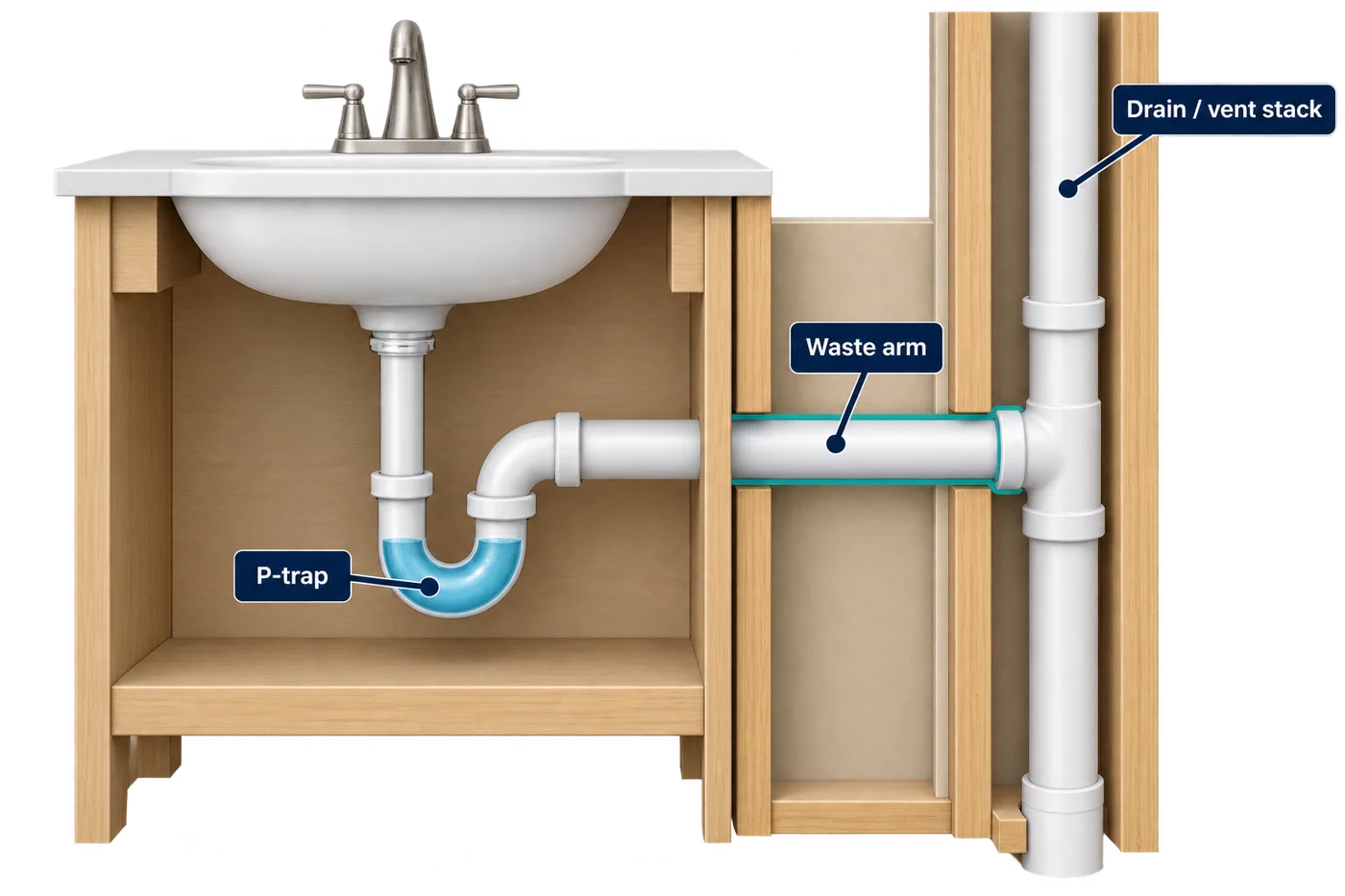
A waste arm carries used water away from a fixture toward the rest of the drainage system. It is usually out of sight. Here, reaching that concealed pipe meant opening the exterior wall beneath a patio window.
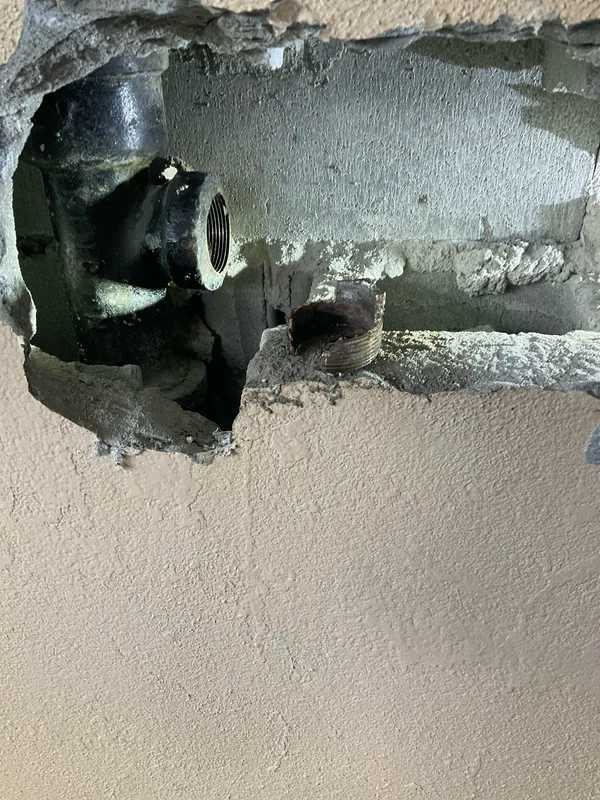
Opening the wall to reach the drain
After locating the problem, we opened the wall beneath a patio window and removed the old section. The exposed connection let us reach the area that needed repair. For a copper waste arm replacement like this, the access work matters as much as the pipe. We need room to remove the damaged section and make the replacement connections.
The removed copper waste arm
Once we removed the copper waste arm, the split was easy to see. The pipe itself had failed, so tightening a connection beneath the sink would not have solved the problem. Replacing the damaged section addressed the part of the drain that needed attention.

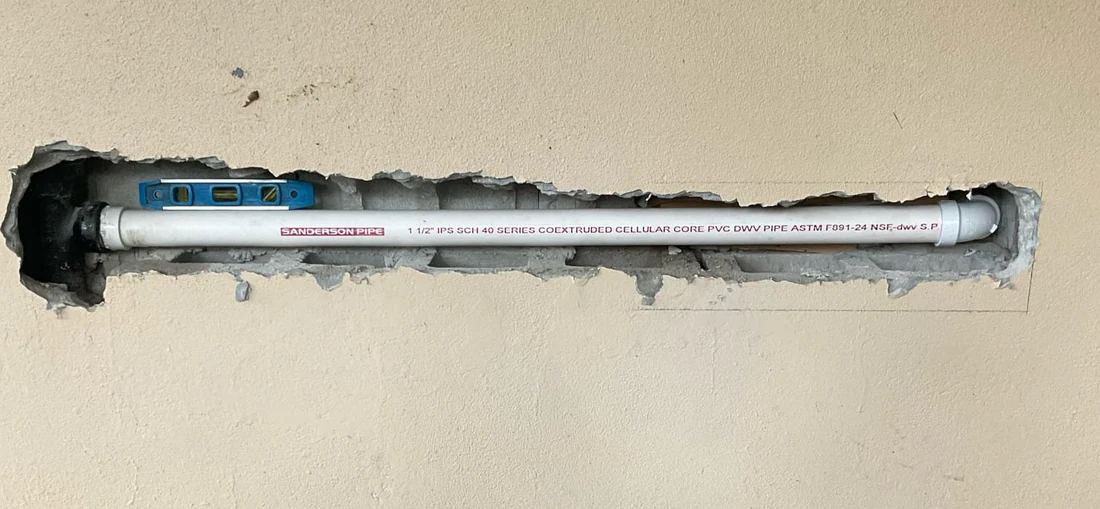
The copper waste arm replacement, before patching
We installed a new PVC waste arm in place of the damaged copper section. The repair addressed that section of drain piping; it was not a whole-home repipe. The new section was visible before patching, so the homeowner could see the part of the repair that would soon be concealed again.
After the copper waste arm replacement: closing the wall
Once the pipe work was finished, we patched the opening. The patch remained unpainted. For a similar repair at your home, we can talk through wall closure, texture and painting before work begins. You deserve to know how the room will be left and which finishing work may need separate arrangements.

Drain repair or water-line repiping?
Copper can be used in different parts of a home’s plumbing. In this project, the copper pipe carried drainage, not fresh water to the fixtures. A damaged waste arm calls for a different assessment from aging water-supply piping. If you are unsure what is leaking, you do not need to identify the pipe yourself before calling.
The Copper Development Association’s Copper Tube Handbook covers the different uses of copper in plumbing, including drainage. The pipe material alone doesn’t tell you which service you need; its purpose and condition matter.
Our leak repair services can help you understand the next step. For a broader concern about your home’s supply lines, explore whole-home repiping options. We will explain which type of work fits the problem we find.
Planning a copper waste arm replacement at your home
If you’re facing a repair behind a wall, you probably have questions about more than the plumbing. How much of the wall needs to open? Who closes it? What about texture and paint?
We can talk through the access, pipe repair and wall restoration together before work starts. This copper waste arm replacement included wall patching. Painting remained a separate finishing step, and your estimate should make that distinction clear too.
Does a drain problem always mean opening a wall?
No. A drip from an exposed connection, a blocked sink and a failed pipe inside the wall can call for different work. In this project, the damaged copper section was concealed, and access was necessary to replace it. That does not mean every slow drain needs the same repair.
If your concern is recurring slow drainage or backups, our drain and sewer services explain the options for finding and addressing the problem. If you’re seeing water where it doesn’t belong, tell us when it appears and which fixture was being used. Those details help us plan a useful visit without asking you to diagnose a hidden pipe.
Can the existing sink and faucet stay?
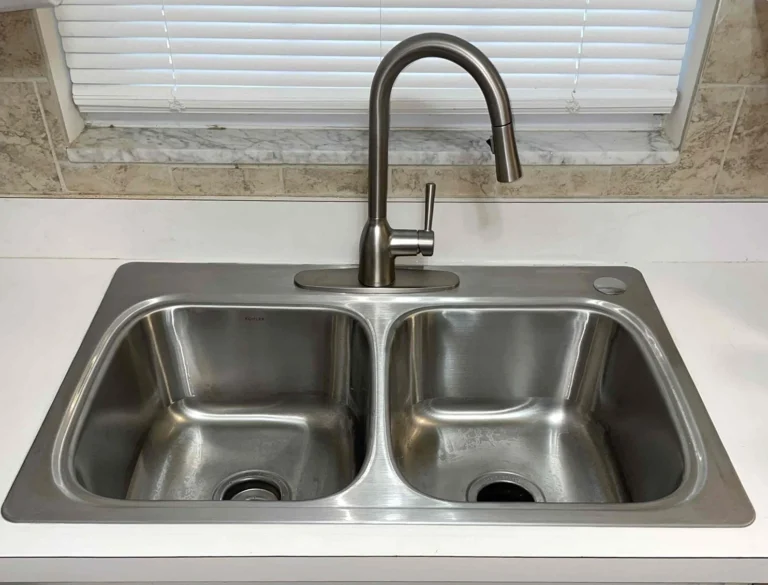
A copper waste arm replacement is a drain repair; replacing the sink or faucet is a separate decision. Whether fixtures need to be moved for access depends on your home’s layout. We can discuss keeping fixtures you like, any work needed to reconnect them and optional upgrades before you choose the repair.
If you’ve already been considering a kitchen refresh, this is a good time to mention it. Our plumbing services cover fixture work as well as leaks and drains. You can ask about both in one conversation while keeping the necessary repair and optional improvements clearly priced.
What affects the price of this repair?
The length of the damaged section is only part of a copper waste arm replacement estimate. Reaching the pipe, working around the existing fixtures and restoring the opening also affect the work involved. An exposed connection beneath a sink is a different visit from a drain concealed inside a wall.
Our service pricing menu gives you a starting point for comparing plumbing services. For a concealed repair, we’ll discuss the actual access and replacement work so you can decide with a clear understanding of what is included.
Tell us about the problem you’re seeing, or call 727-351-4700 if you have an active leak. Photos of an accessible area can help, but you don’t need to open a wall yourself to show us. You can also explore our plumbing services and project gallery.