Kitchen Drain Repair and Sink Replacement in Clearwater
A new sink can change how your kitchen looks and feels. But when the drain piping behind it has failed, the repair needs to reach beyond the cabinet. For this kitchen drain repair in Clearwater, we replaced a failed waste arm inside the block wall and updated the sink, faucet and connections during the same visit.
The work brought together two different needs: repairing the concealed drain and replacing fixtures the homeowner wanted to update. Here’s how the project came together, from the old piping to the finished kitchen.
Kitchen drain repair inside the block wall
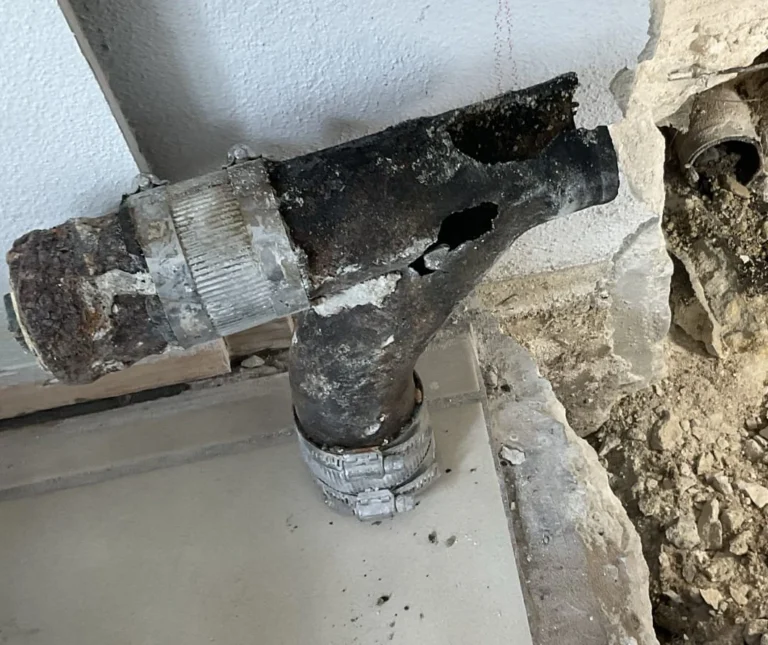
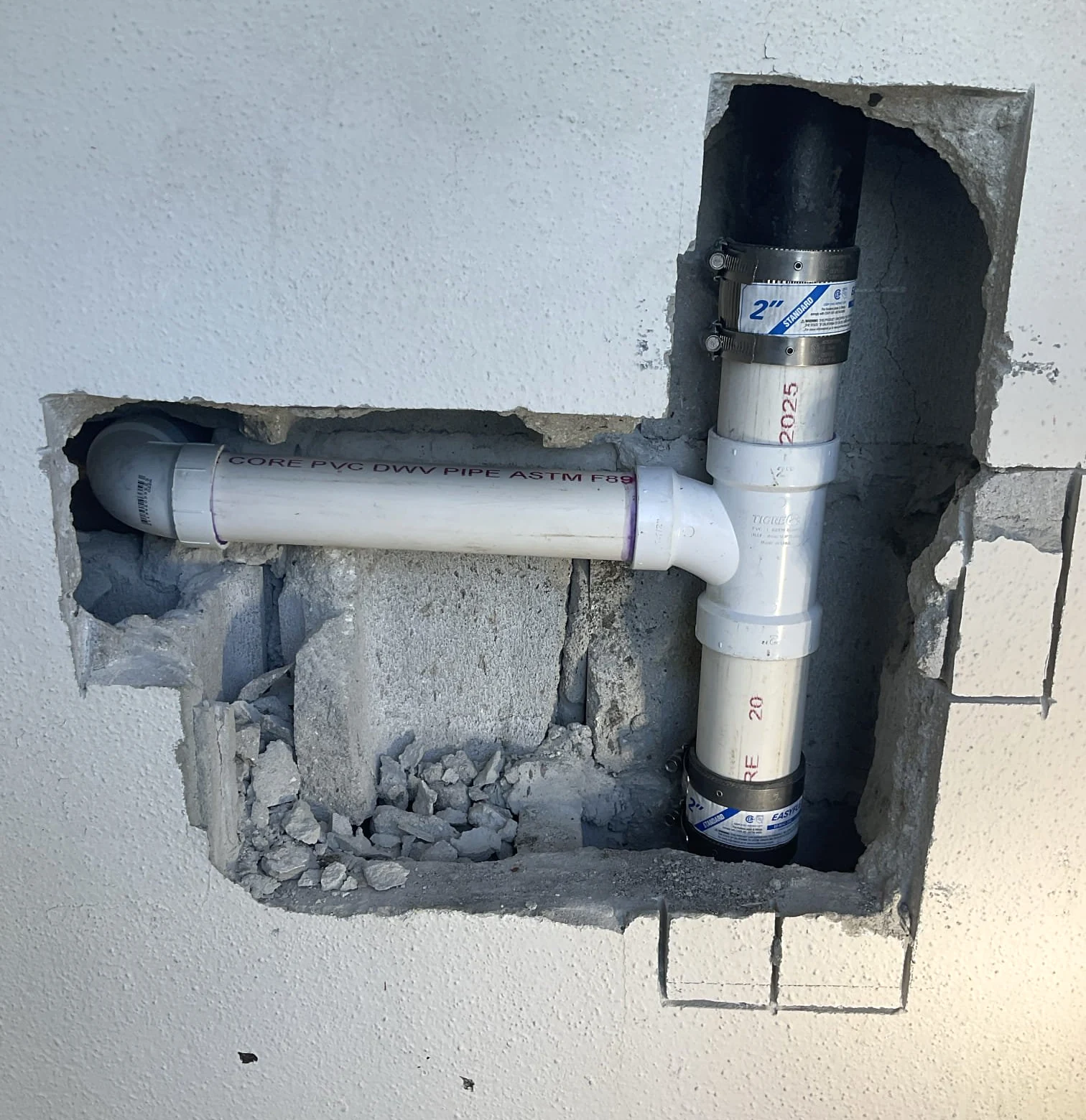
The kitchen waste arm is the drain pipe that carries water from the sink’s drain connection toward the rest of the drainage system. Here, the failed copper and cast-iron piping was inside the block wall. Replacing the visible drain beneath the sink alone would not have addressed that concealed failure.
We located and exposed the affected piping, removed the failed sections, and installed the replacement waste arm and drain connection. Opening the wall gave us access to the actual repair area instead of stopping at the piping visible inside the cabinet.

When you’re planning a kitchen drain repair, the location and condition of the piping help determine the work involved. A connection beneath the sink and a failed pipe inside a wall require different access. We’ll explain what we find and talk through the repair with you.
A slow drain and a leaking drain need different attention
A sink that empties slowly may need drain clearing, while moisture beneath the cabinet may come from a leaking connection or damaged pipe. Sometimes more than one concern is present. You don’t need to identify the cause before calling—tell us whether you’re seeing a drip, a backup, staining or an odor, and when you notice it.
That distinction matters when choosing a service. Clearing a blockage doesn’t replace failed piping, and installing a new faucet doesn’t repair a drain leak. Our drain and sewer services cover both stoppages and repair concerns. For an active leak, our leak repair page explains how we help find the source and discuss the next step.
This kitchen drain repair required opening the block wall. Other homes may need a different approach. In another Gulfview project, the affected cast-iron kitchen drain ran beneath two rooms. You can follow that cast-iron drain replacement to see why the location of a failed pipe changes the work involved.
Protecting the countertop while preparing for the new sink
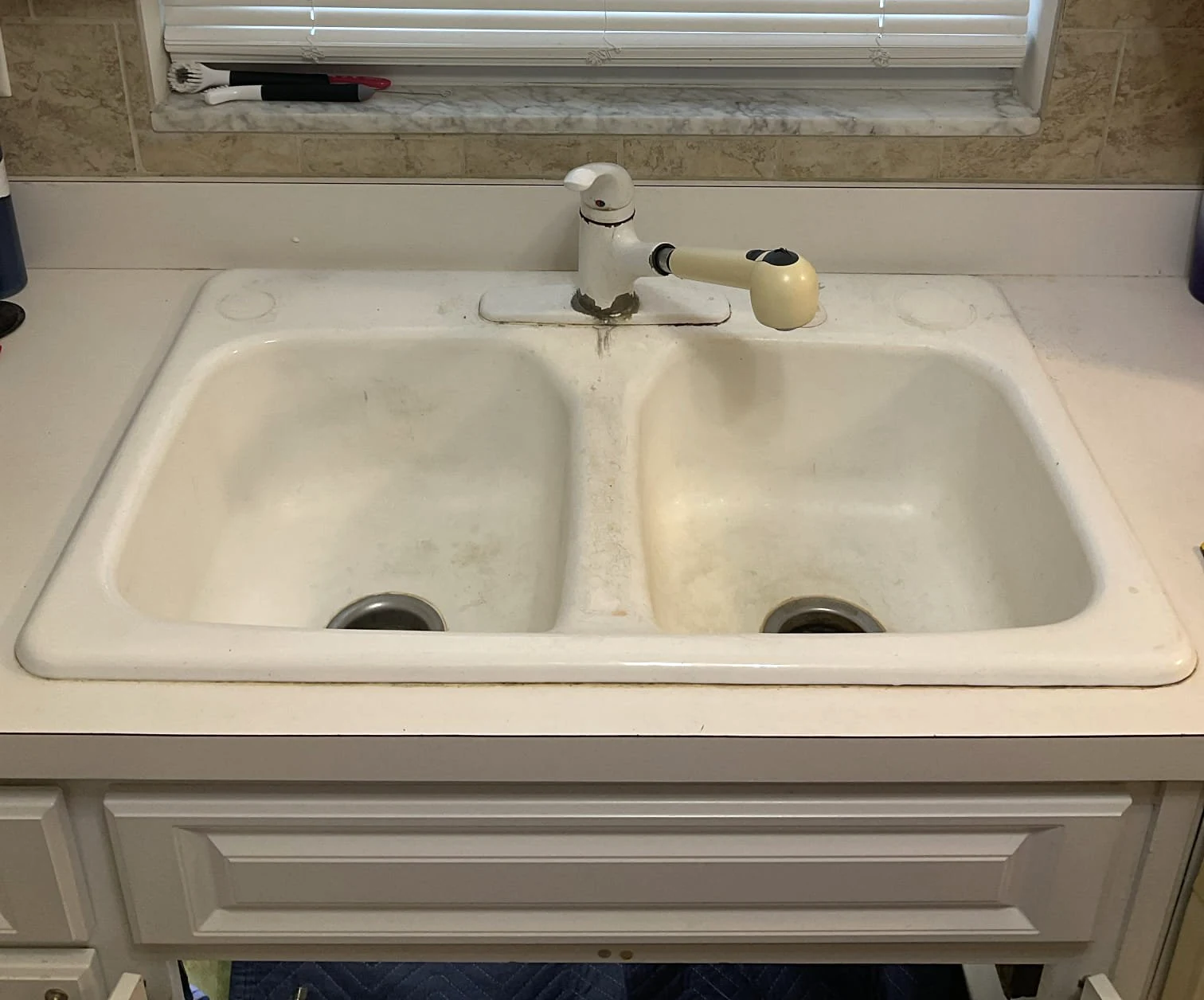
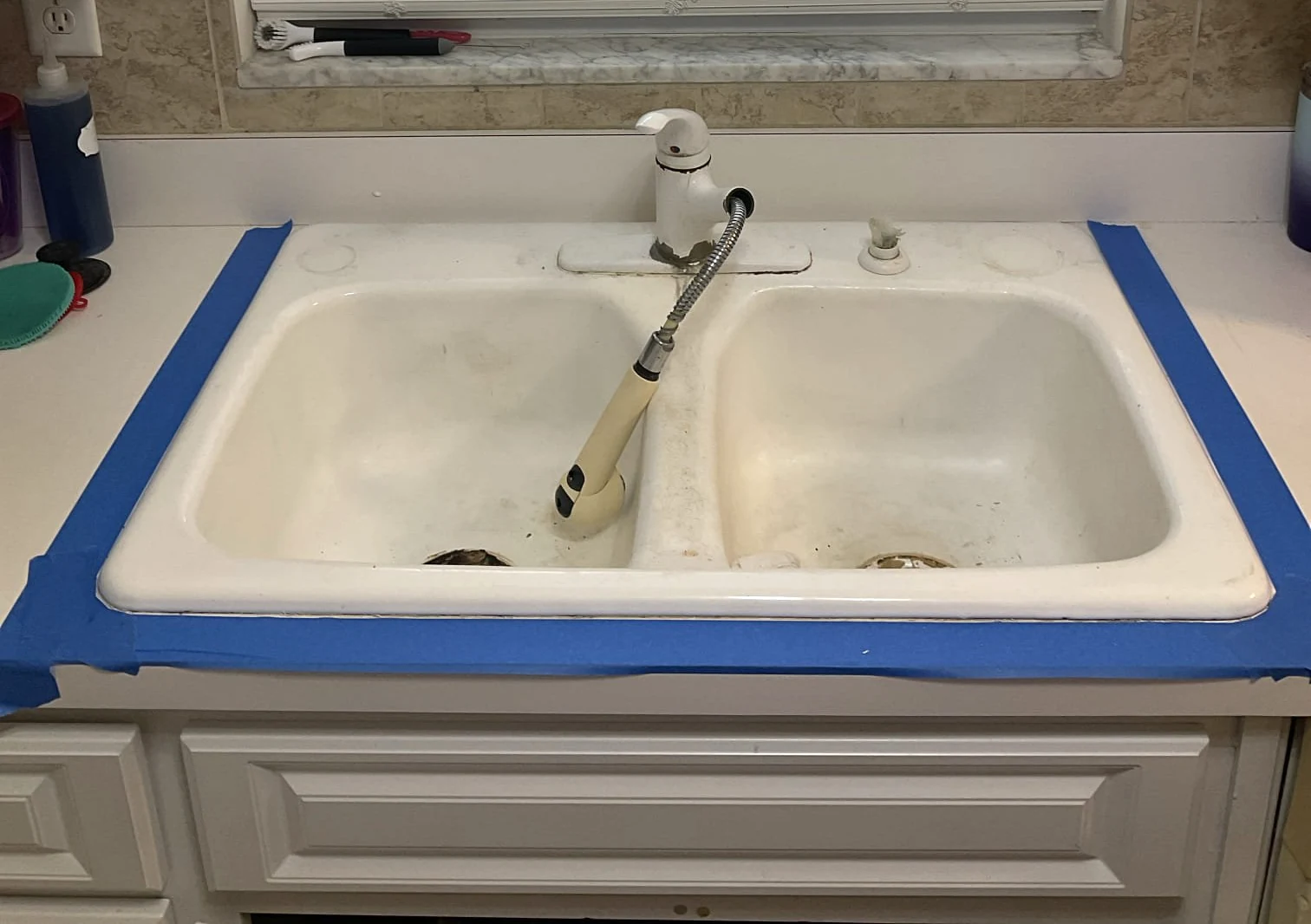
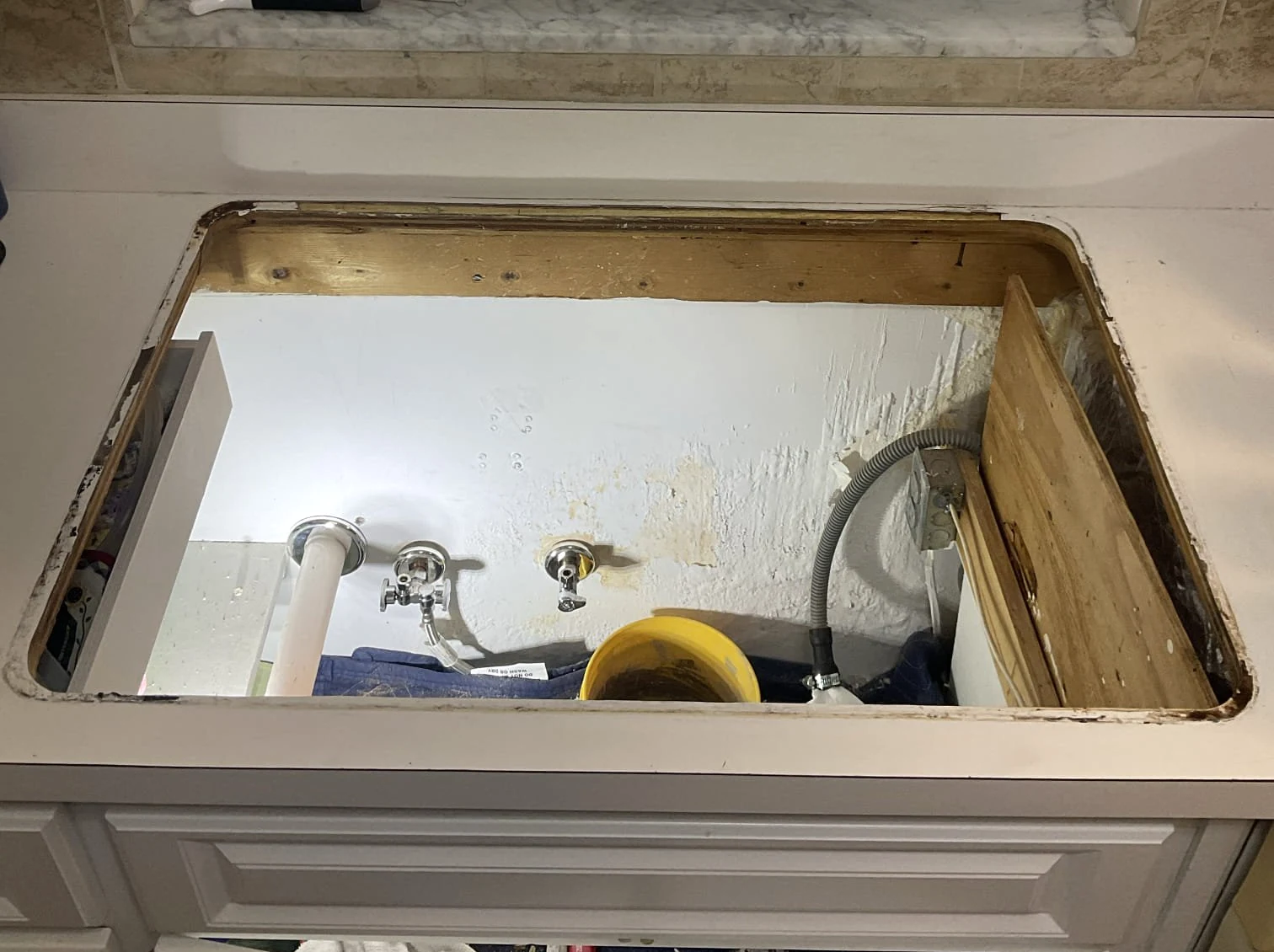
Before removing the old sink and sealer, we used protective tape around the work area to help prevent scratches to the existing countertop. Once the sink was out, we cleaned away the old sealer and prepared the opening for its replacement.
That preparation is easy to miss when you only see the finished kitchen. It is part of making the new sink fit into the home you already have, with care for the surrounding surface.
A new sink and faucet for everyday use
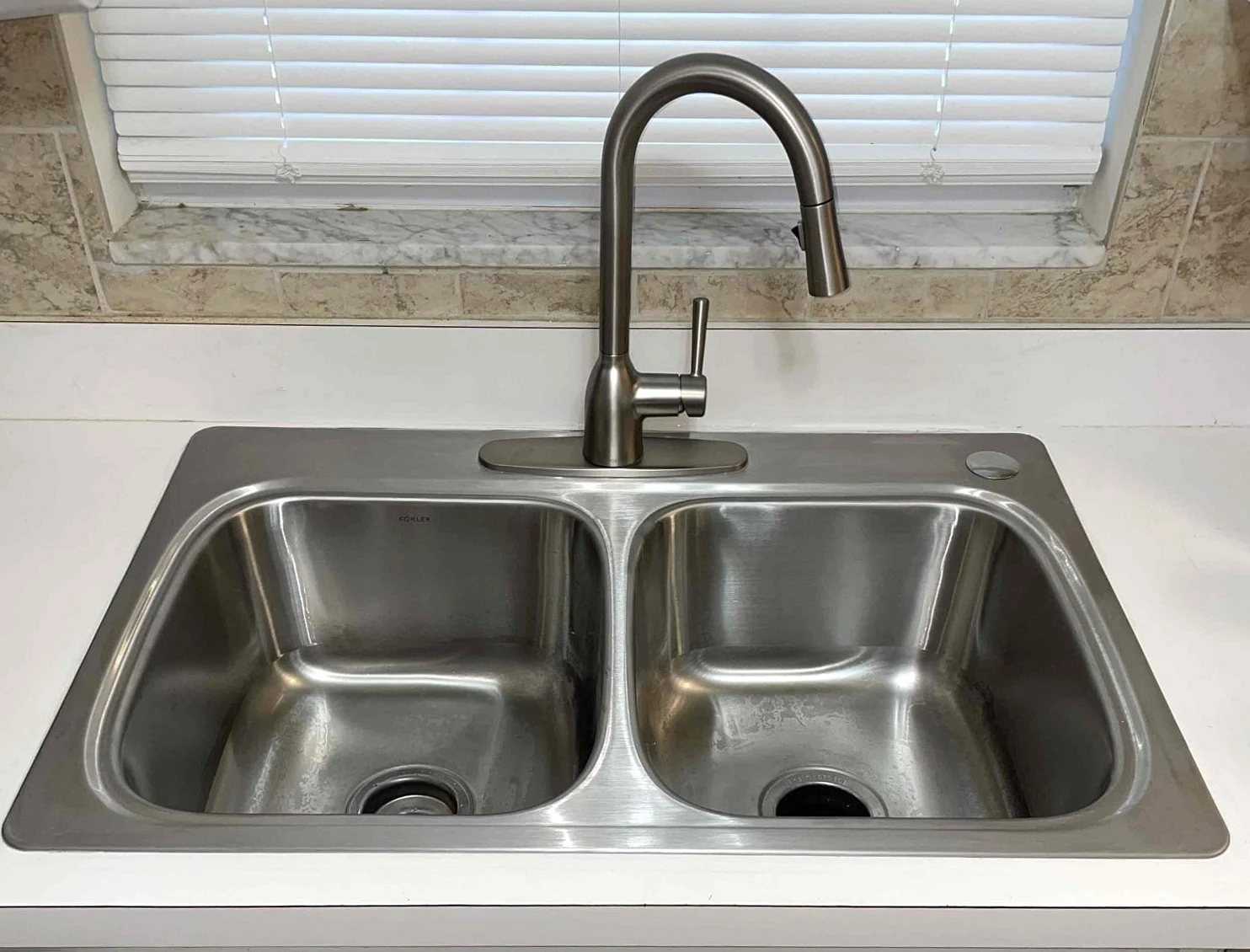
With the concealed drain repaired, we replaced the old sink with a two-bowl stainless steel sink and installed a Moen pull-down faucet. The homeowner’s existing garbage disposal was reinstalled as part of the kitchen update.
You don’t always need to replace every item around the sink when making an upgrade. Tell us what you’d like to change and what you hope to keep. The sink, faucet, disposal and available cabinet space all need to work together, and we can help you review those details before installation.
Choose the sink around the way you use your kitchen
Think about the dishes, cookware and everyday tasks your sink handles. A two-bowl sink lets you use separate basins, while your preferred faucet reach and pull-down style can make a difference when rinsing larger items. The right choice also needs to fit the existing opening, countertop and cabinet—not just look good in a product photo.
Before buying a replacement, talk with us about what you have and what you’d like to change. Basin depth, mounting style and room beneath the sink affect how the fixtures and drain connections fit together. Visit faucet and fixture services for help with a replacement or a kitchen update.
In this home, we kept the customer’s garbage disposal and reinstalled it with the new sink. If you’re deciding whether to keep yours, let us know about leaks, unusual noise or recent problems. We can review the condition and compatibility rather than assume every sink replacement needs a new disposal. Our garbage disposal services explain the repair and replacement options.
The connections beneath the sink matter, too
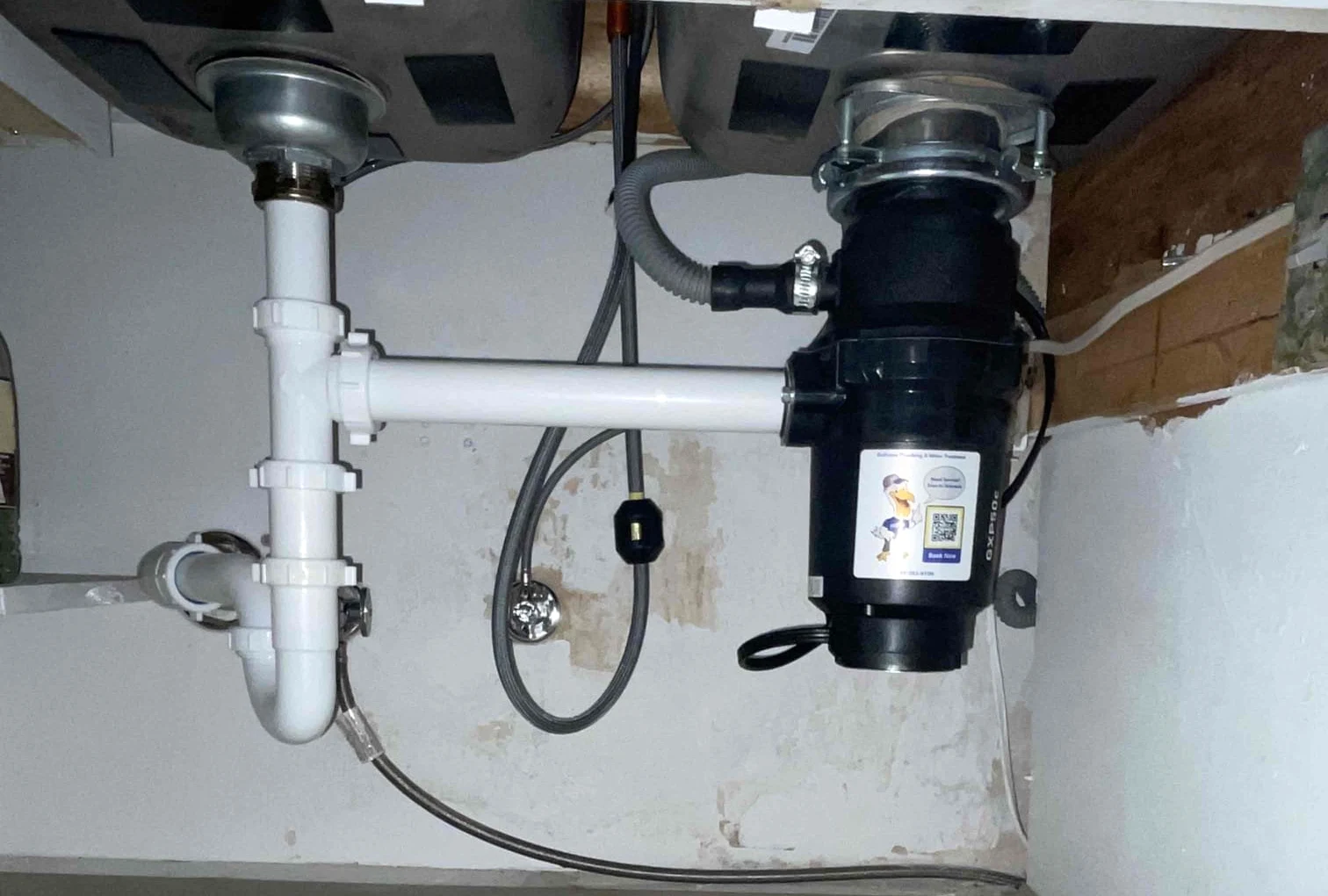
The finished surface is only part of a sink replacement. Underneath, we installed new tubular PVC drain piping and a P-trap, along with a new basket strainer. We also replaced the hot-water dual angle stop and the cold-water single angle stop.
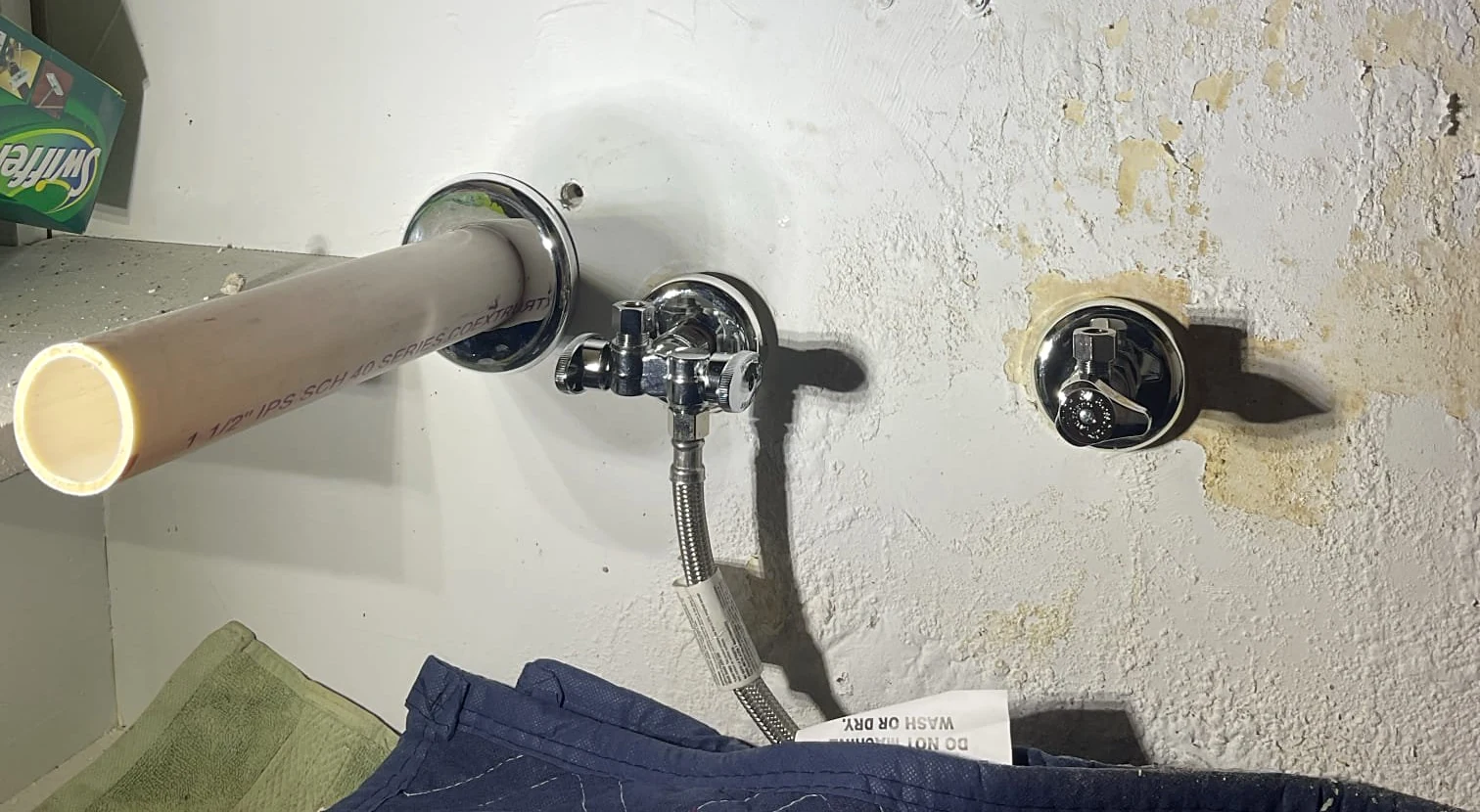
Those details connect the new fixtures to the home’s existing plumbing. When you’re planning a sink or faucet replacement, it’s a useful time to have us look at the drain connections and shutoff valves as well. We can explain which items need attention and which existing components can remain.
Why review the shutoff valves during a sink replacement?
The small valves beneath the sink let you isolate the faucet’s water supply for service. They deserve attention alongside the new fixtures, especially if you’ve noticed a drip around a handle, corrosion or a valve that is difficult to operate. In this project, the hot-water dual angle stop and cold-water single angle stop were both replaced as part of the kitchen update.
A dual-outlet valve can serve more than one connection, so the replacement needs to match the plumbing it supplies. We’ll look at the connections already present rather than choose a valve on appearance alone. If an existing shutoff is stuck, don’t force it. Let us know before the appointment so we can plan how to isolate the water for the work.
Keep the cabinet useful without hiding a new leak
Once the work is complete, leave enough space around the drain piping, supply connections and disposal to see them. Avoid wedging storage bins against the pipes or piling supplies around the valves. That makes it easier to spot a change and keeps the area accessible when maintenance is needed.
While putting your cleaning supplies back, take a moment to notice how the dry cabinet looks. If you later see fresh moisture, staining or a drip, tell us where it appears and whether the sink was being used. Those observations are more useful than guessing which part has failed. A photo can help you show the office the area without moving or disconnecting anything.
Finishing the kitchen drain repair
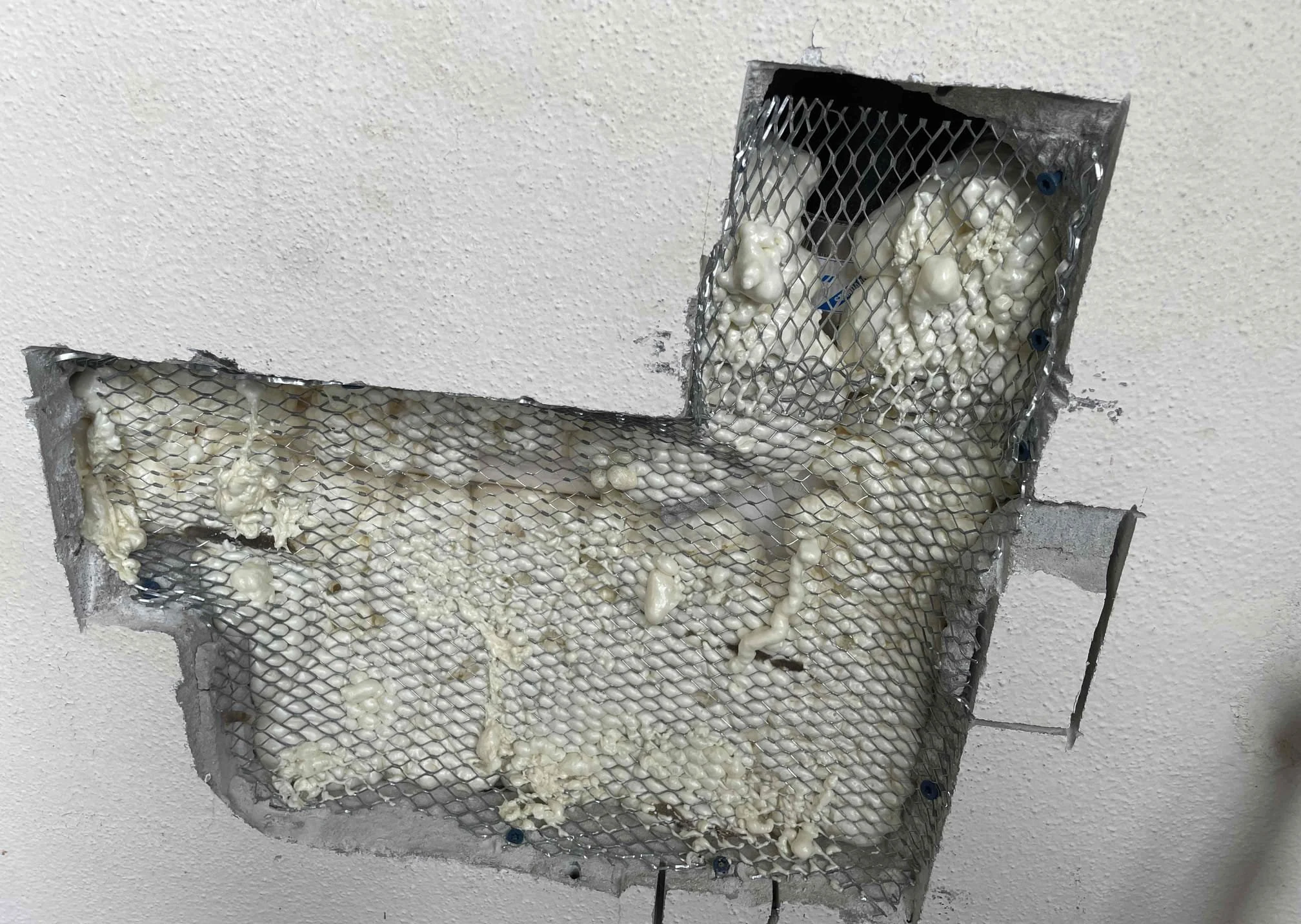
We prepared the opening with wire lath and foam sealer before applying fast-setting concrete and a stucco patch. These work-in-progress views show the preparation that is hidden once the wall is closed.
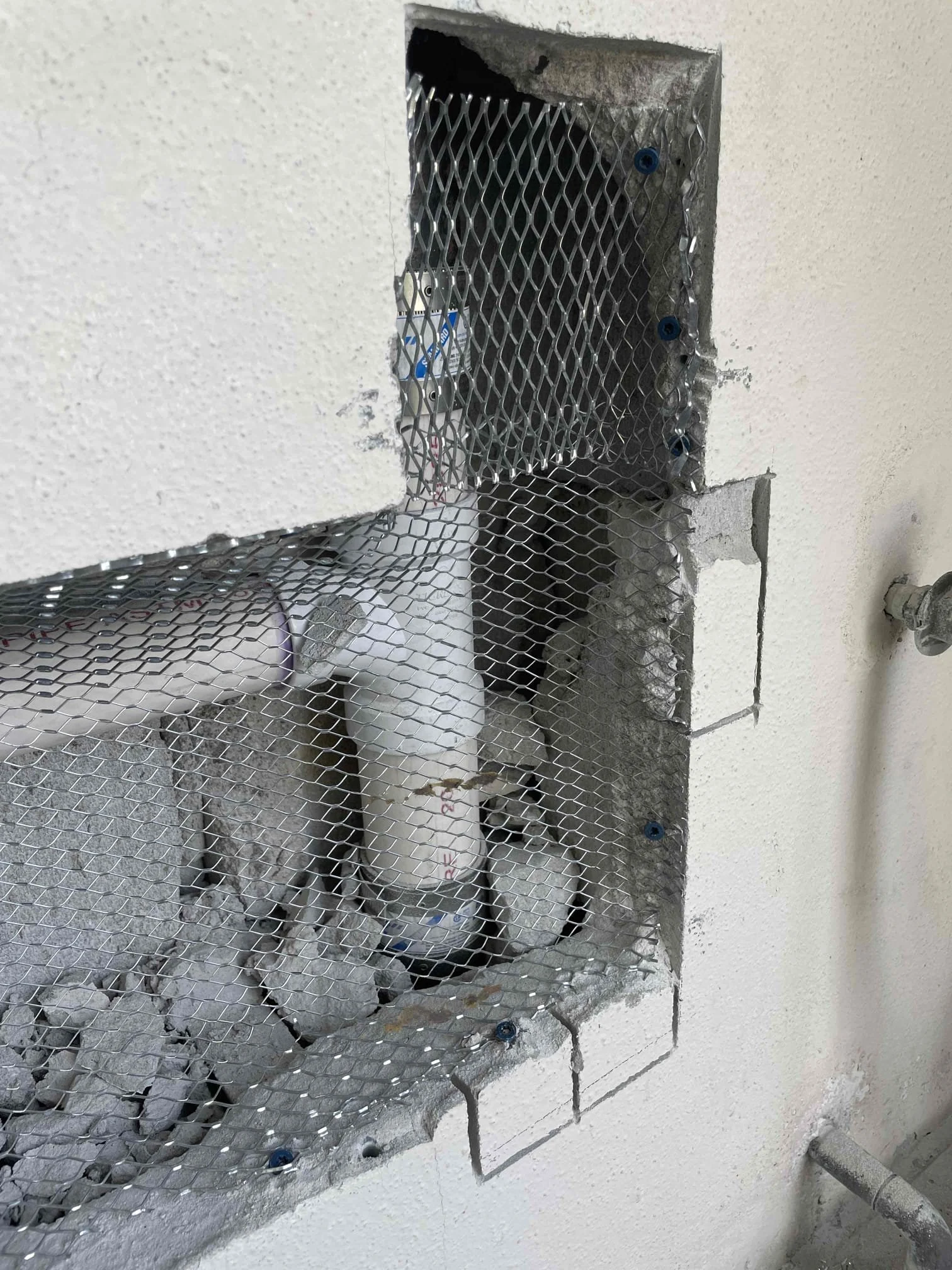
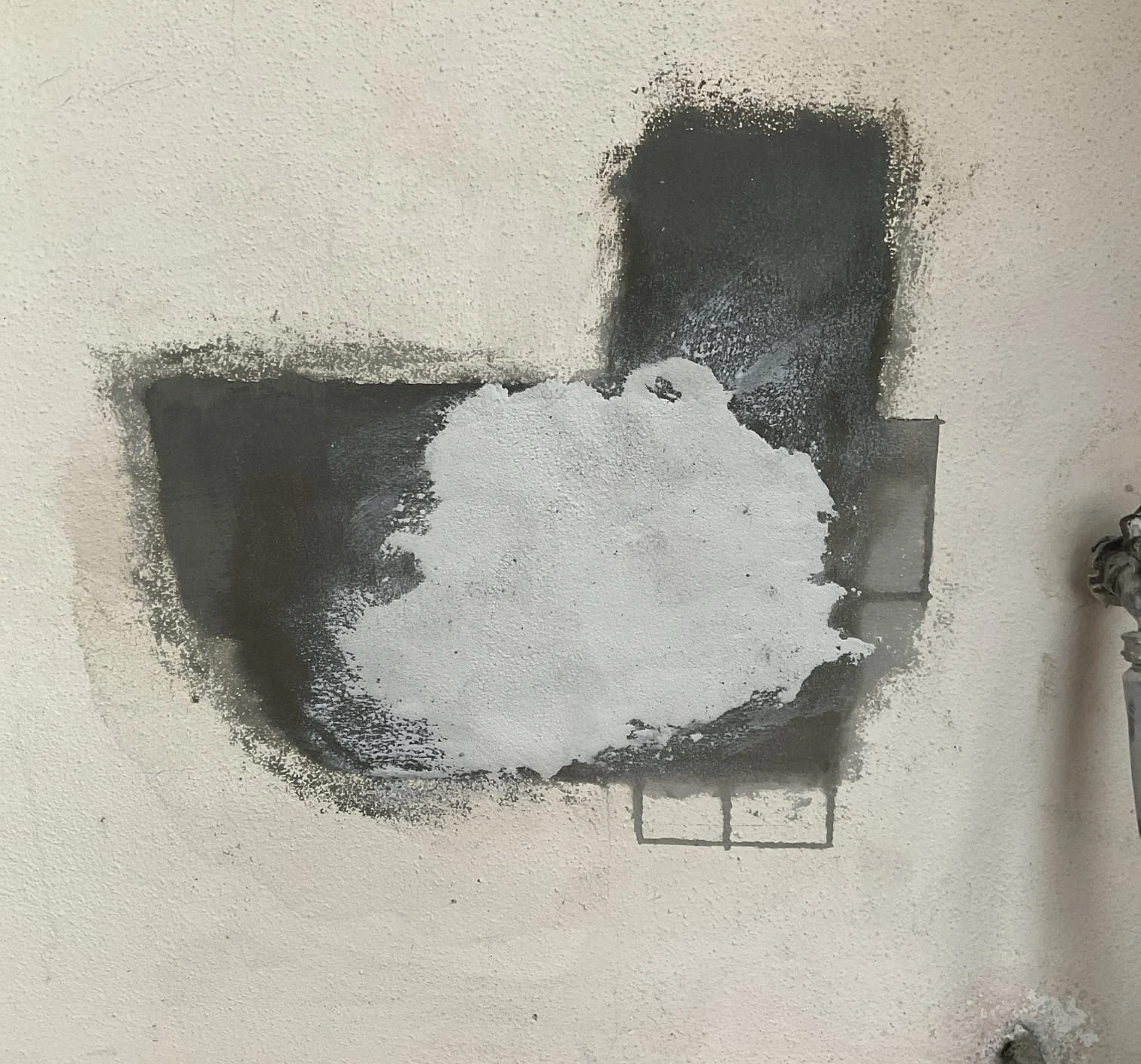
After replacing the concealed piping, we patched the wall opening. The photo below shows the completed patch before painting. Paint is the remaining cosmetic step to blend the repaired area with the surrounding wall.
Your kitchen drain repair questions, answered
Can you handle a kitchen drain repair and fixture replacement together?
Yes—this project combined concealed piping work with a sink, faucet and under-sink plumbing update. Tell us about both the repair and any improvements you’re considering when you schedule. That helps us plan the visit and discuss which parts of the work make sense together. You can also book a kitchen drain repair without committing to new fixtures.
Will a kitchen drain repair mean opening my wall?
Not every repair requires wall access. The answer depends on where the problem is and which piping needs attention. In this home, the failed waste arm was concealed inside the block wall, so access was necessary. We’ll explain the area involved and discuss the repair before proceeding. If wall work is needed, ask about patching and any finishing steps so you know what is included.
Do I need to pick out a new sink before calling?
No. You can start with the problem you want solved or the changes you have in mind. If you already have a sink or faucet selected, share the product information before the visit so we can discuss fit and installation needs. If you haven’t decided, we can help you consider the existing space and the features you want.
How can I compare the cost of repairs and upgrades?
Our plumbing services and starting prices give you a place to begin. A concealed kitchen drain repair can involve different access and restoration work from a visible connection beneath a sink. We’ll review the work needed at your home and the price before you approve it. For eligible projects, you can also explore our financing options, subject to credit approval and applicable terms.
Can I keep my countertop and cabinet?
That depends on their condition and the fit of the replacement sink. This homeowner kept the existing countertop, and we protected the area while removing the old sink and sealer. A different sink may need a different opening or support. Share your plans before ordering so the installation requirements can be considered along with the look you want.
What should I ask about the finished wall?
Ask which access and patching work is included in your kitchen drain repair and what remains for finishing afterward. On this job, we completed the concrete and stucco patch, but it had not been painted when the photos were taken. Knowing that distinction helps you plan the final appearance without confusing a completed plumbing repair with a finished paint job.
Do I need to replace the entire kitchen drain system?
A problem at the sink doesn’t automatically mean every drain in the house needs replacement. The condition and location of the affected piping guide that decision. We’ll discuss the area that needs work and any other concerns we find. This project involved the failed waste arm in the block wall and the sink connections; it was not a whole-home drain replacement.
What should I tell the office when I schedule?
Let us know what you’re noticing, whether the sink is usable and whether water appears only when you run the faucet or drain the basin. Mention any disposal concerns and the fixtures you’d like to replace. Photos of the sink and the area beneath it can help explain the layout, but you don’t need to take anything apart or expose a concealed pipe yourself.
For a leaking sink, avoid using it until the source can be assessed. Keep children and pets away from a wet work area, and don’t reach into standing water around electrical equipment. If the leak is active or you’re unsure what to do next, call us and describe what’s happening.
Enjoy the new sink without sending trouble down the drain
A fresh kitchen is easier to enjoy when everyday cleanup stays simple and convenient. Keep a container handy for cooled cooking grease instead of pouring it into either bowl. Having a disposal does not make fats and oils suitable for the drain. Scrape plates into the trash first, and follow the operating directions for your particular disposal.
InSinkErator’s disposal-use guidance recommends cold running water while grinding suitable food scraps and a brief rinse afterward. Feed scraps gradually rather than packing the chamber. If the sink is already backing up, stop using it and arrange help; running the disposal longer is not a substitute for addressing a blocked drain.
With two bowls, it can be tempting to keep using one when the other is slow. Tell us which side is affected and what happens in the other basin. That gives us a clearer picture of the symptoms without asking you to dismantle anything. A kitchen drain repair and a disposal repair can involve different parts, even though the problem appears in the same small area.
A deeper bowl can change more than the appearance
A deeper sink may make washing a large pot more comfortable, but it also occupies more of the cabinet below. If you want to keep a disposal, add drinking-water equipment or retain pull-out storage, mention those plans while comparing sinks. We can look at the available room and the existing connections before you commit to the purchase.
Think about faucet reach as well as its finish. You want the spout and pull-down head to suit the bowls and the way you wash dishes. Share the sink and faucet information together so we can discuss them as a combination. A style you like should also work comfortably in the space you use every day.
Make room for the things you want to keep
This homeowner kept the existing disposal while replacing the surrounding fixtures and plumbing. Your priorities may be different. Perhaps the faucet is still fairly new, or the sink is in good condition and the concealed drain is your only concern. Tell us which pieces you are happy with before we discuss replacement options.
That helps keep the conversation focused on your home. We can distinguish necessary repair work from optional changes and explain how the choices fit together. You can then decide whether to combine the work in one visit or address the immediate problem first. The finished project should reflect what you need, not a standard package of replacements.
Planning your kitchen drain repair and sink update
Whether you have a drain leak to resolve, a faucet you’re ready to replace, or several kitchen plumbing concerns, let us know what’s happening. We can help you plan the repair and discuss any upgrades you’d like to make along the way.
Once your new faucet is in place, follow the care directions for its finish. Moen recommends gentle cleaning followed by rinsing and drying with a soft cloth; its faucet finish care guide explains what to use and what to avoid.
Ready to plan your kitchen drain repair or sink update? Contact Gulfview Plumbing to talk about your home, or schedule an appointment. For an active leak or backup, call Gulfview so we can discuss what’s happening.