Mobile Home Water Heater Replacement in Clearwater
A leaking water heater can leave you with more to address than the heater itself. This mobile home water heater replacement in Clearwater also called for repairing the damaged floor beneath the electric tank. Our work began with removing the old heater and continued through reinforcing the support, installing a new subfloor, and fitting the replacement into the home’s exterior-access compartment.
The leak was only part of the job
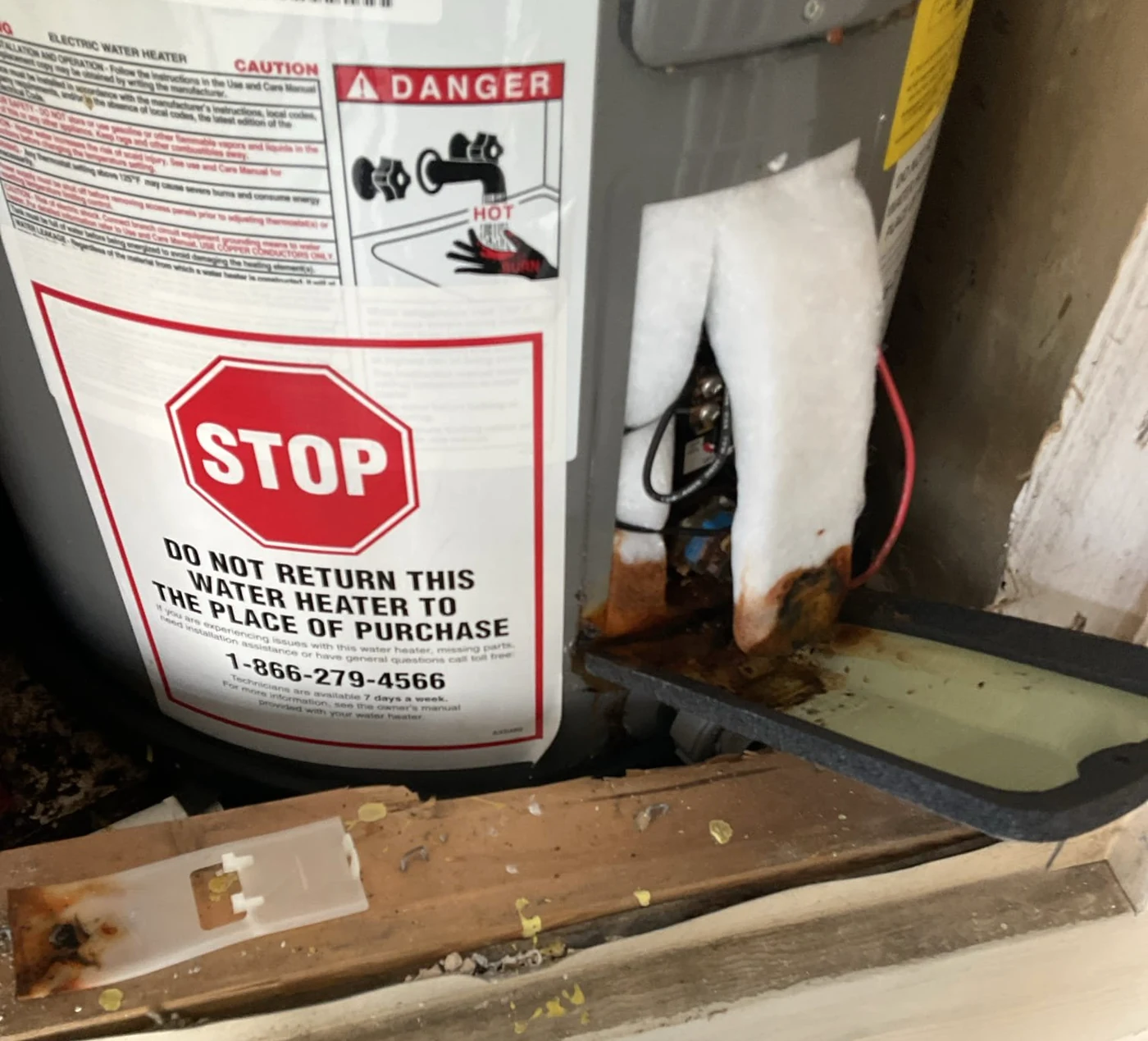
The homeowner called us about a leaking water heater. Once the old tank was removed, the condition of the floor was clear. Putting a new heater over that damaged base would have left an important part of the repair unfinished.
This is why a mobile home water heater replacement estimate sometimes needs to account for more than a new tank and connections. The space that supports the heater matters, too. In this case, the job included repairing that space before the new heater went in.
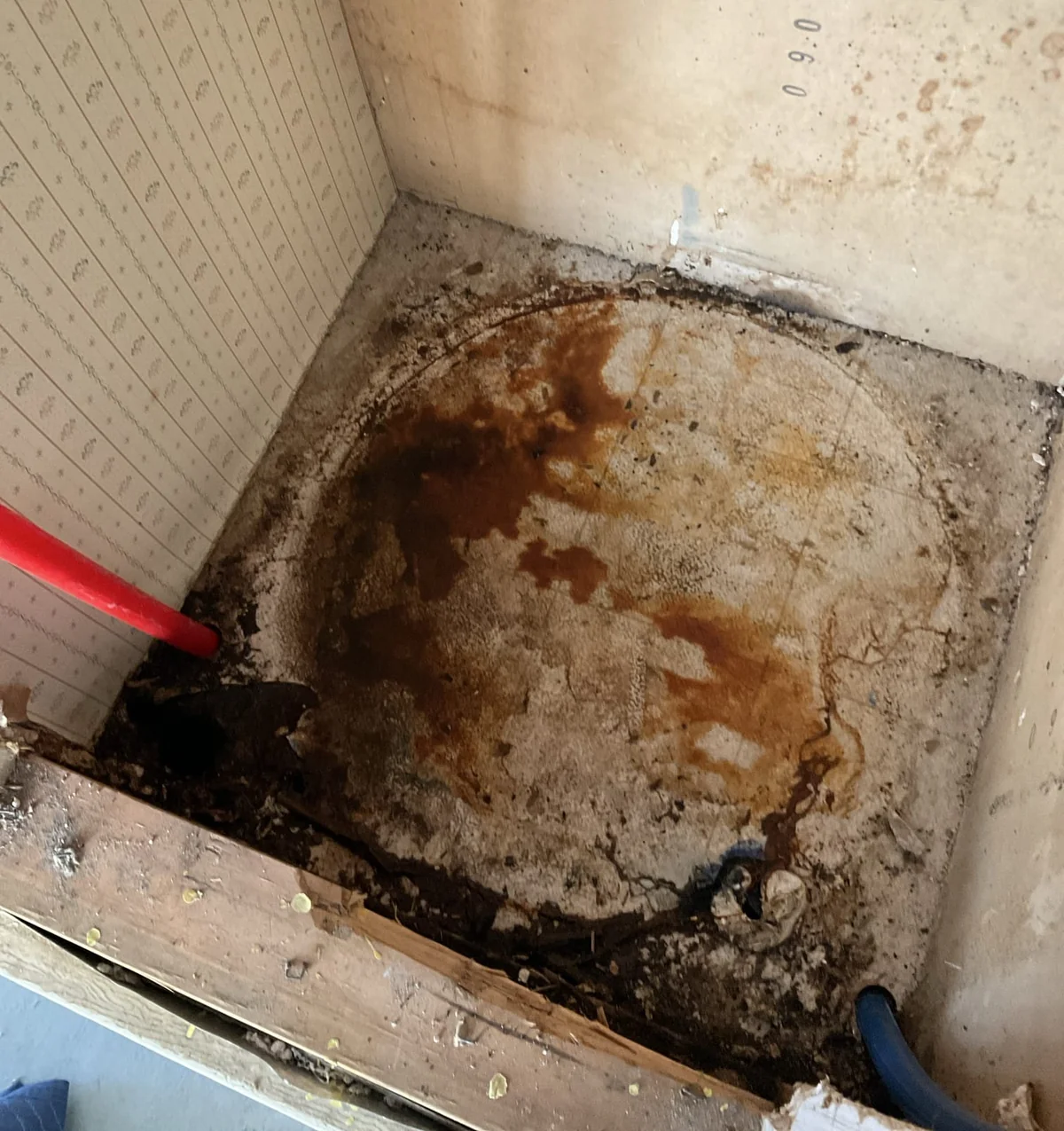
Preparing the work area and rebuilding the base
Before installing the new heater, we prepared the space for the floor repair. Protective coverings went down in the work area, with tools and materials arranged beside the compartment.
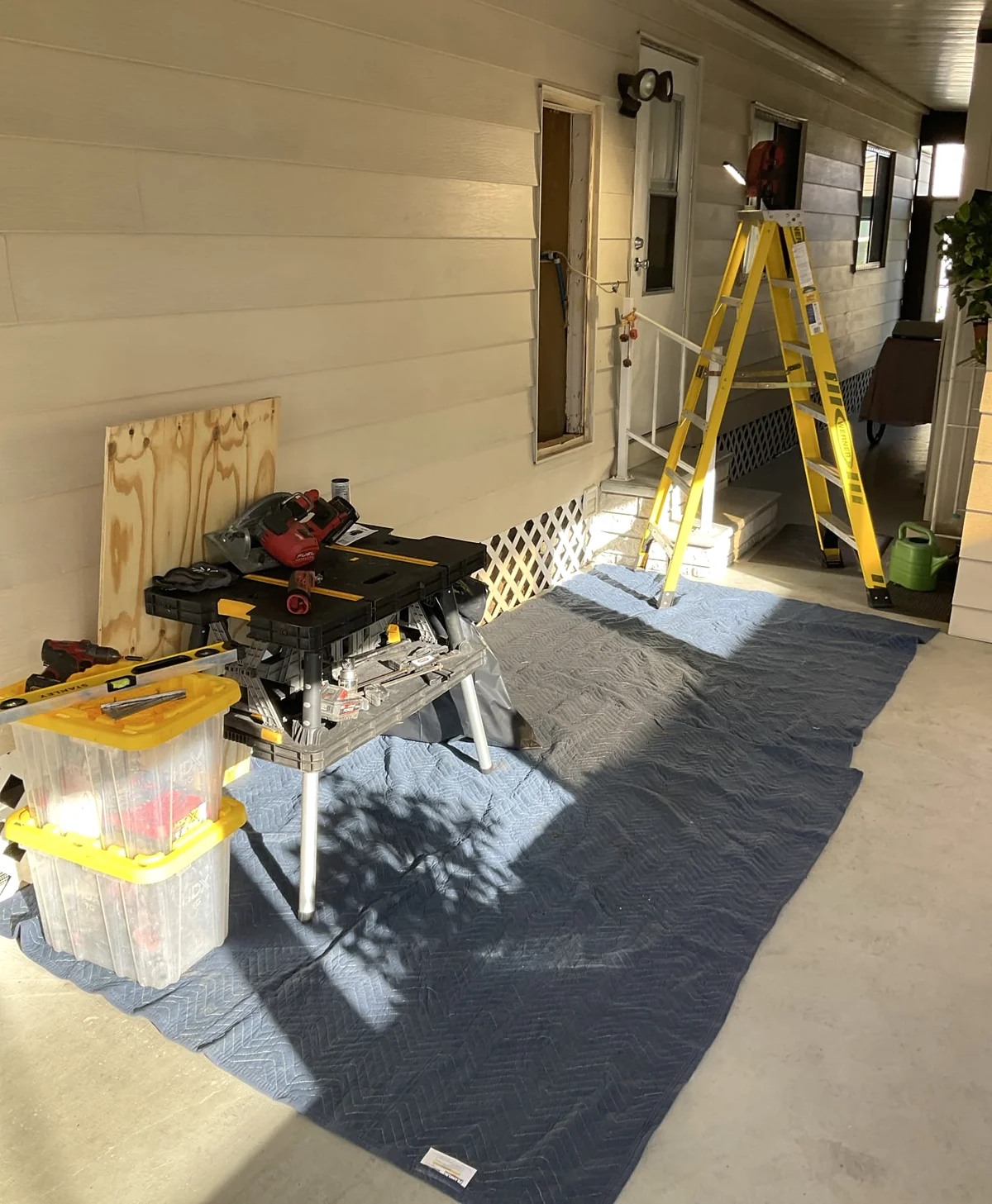
After removing the damaged flooring, we reinforced the support and installed new plywood. All replacement wood used for this repair was pressure-treated, including the support lumber and plywood. The new support and subfloor gave the replacement heater a repaired base within the existing compartment.
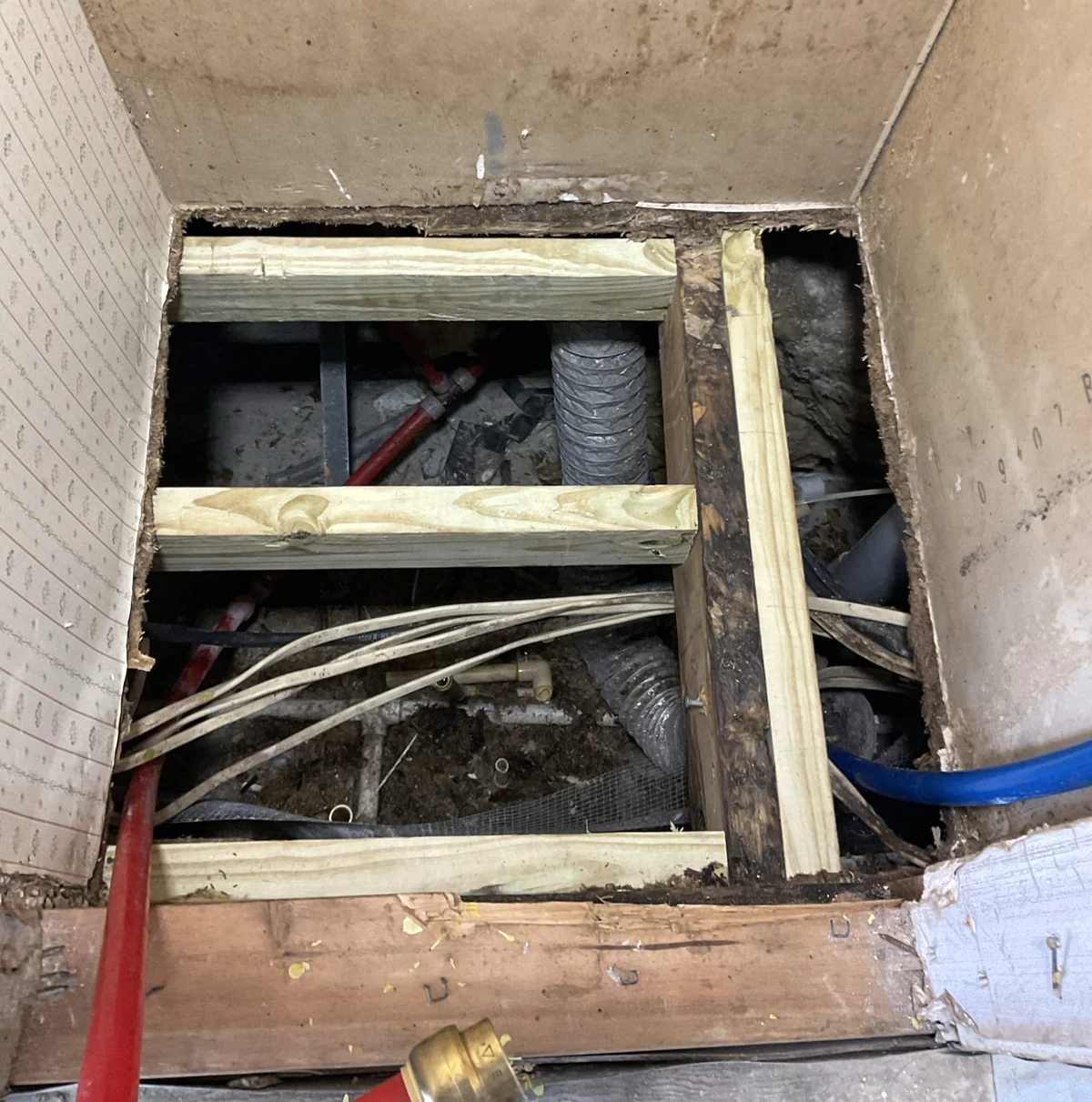
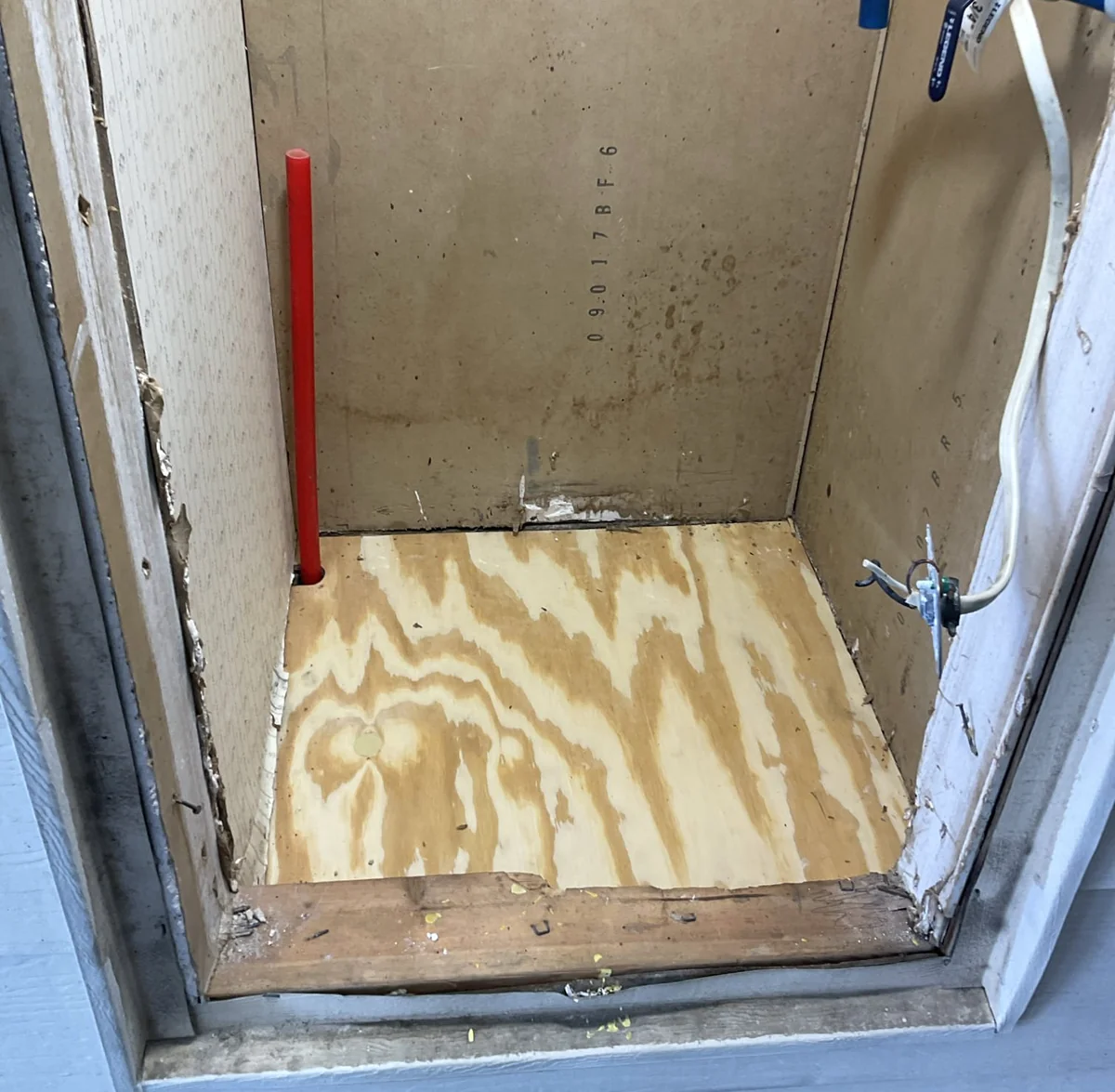
A new pan and drain before the heater went in
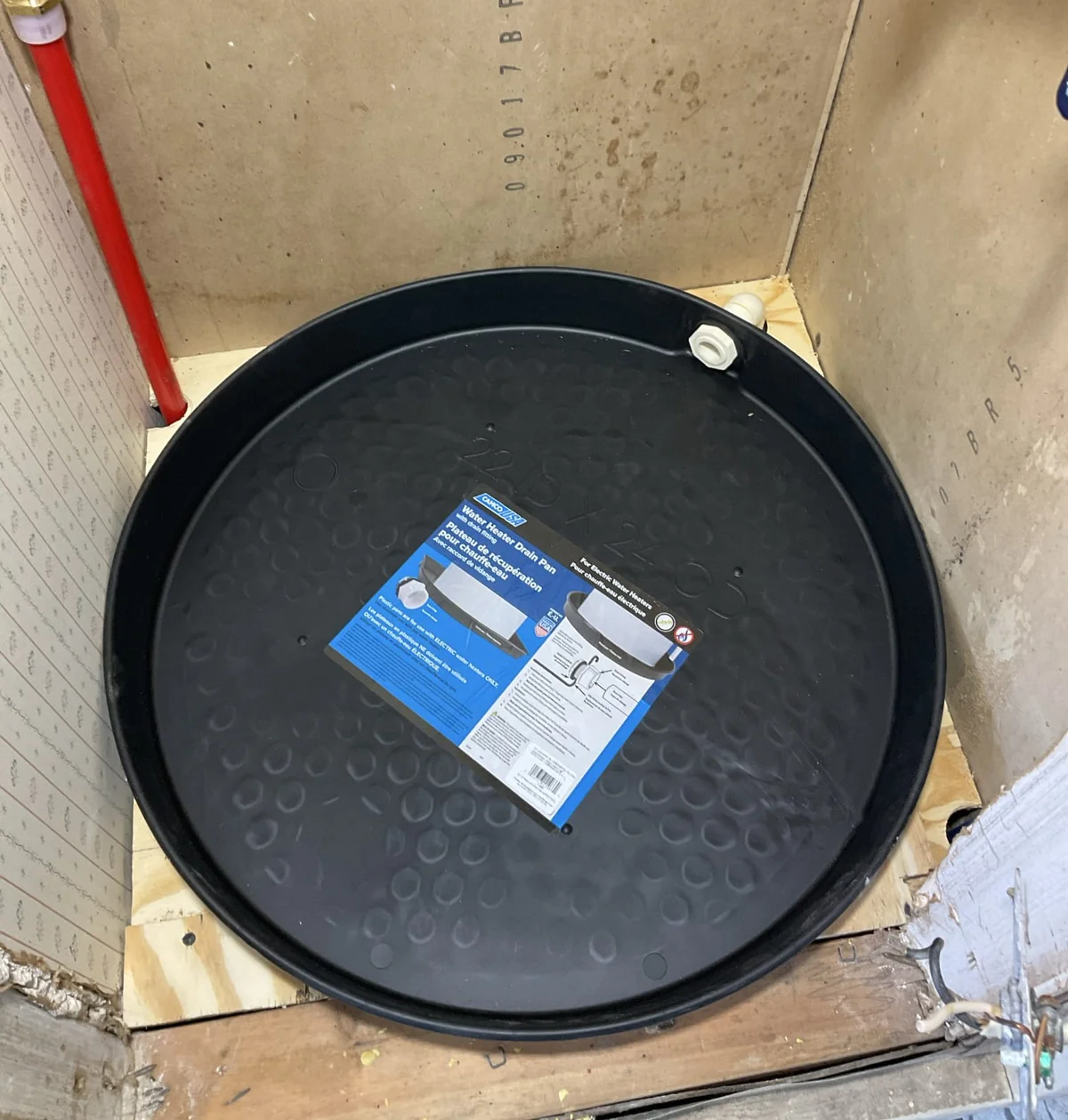
With the new base in place, we fitted a drain pan and routed its drain through the floor. Installing the pan at this stage allowed us to complete its drain connection before positioning the replacement tank.
Completing the mobile home water heater replacement
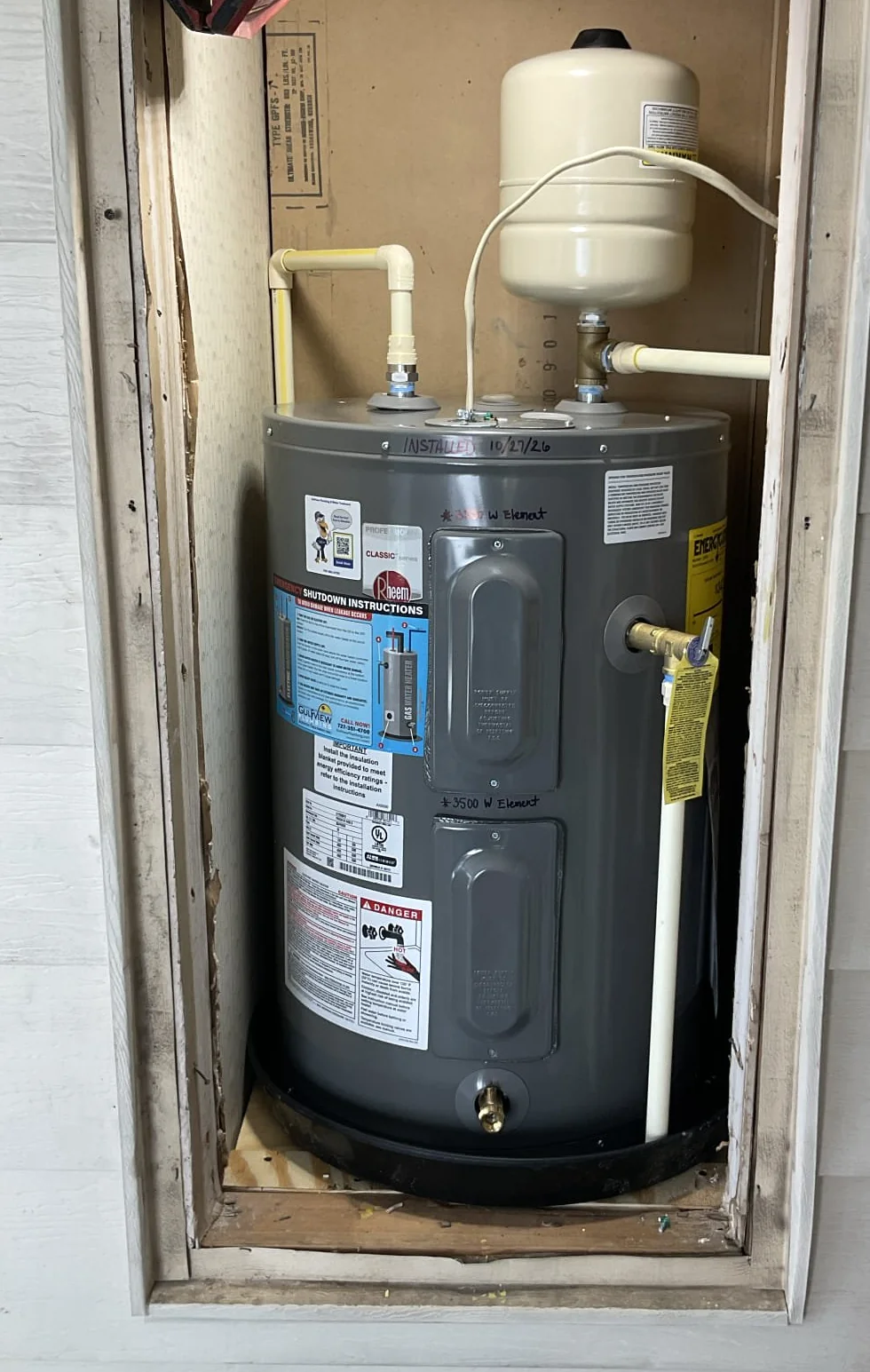
The replacement was a 30-gallon electric water heater installed in the existing exterior-access compartment. To accommodate this home’s existing 20-amp breaker, we replaced the factory 4,500-watt heating elements with 3,500-watt elements. The completed installation also includes an expansion tank above the heater.
With the heater filled, we turned the power back on.
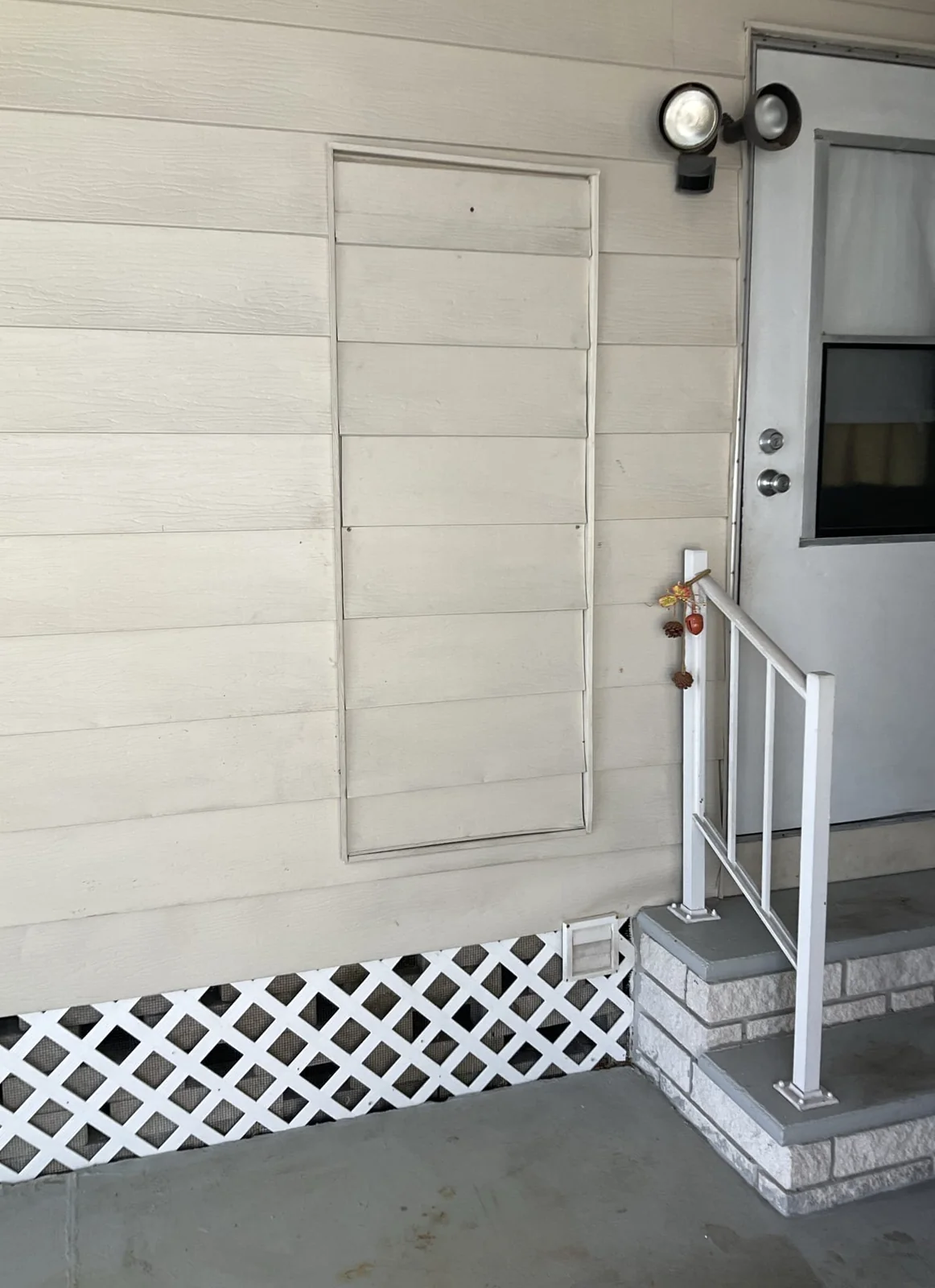
Once the installation was complete, we put the panel back and cleared the work area. The heater remained accessible behind the exterior panel for future service.
Planning a mobile home water heater replacement
If your heater sits behind an exterior panel or inside a compact closet, let us know when you call. A photo of the heater, its label and the surrounding space can help us understand the setup before your visit. Leave covers and electrical components in place; there is no need to take the heater apart to get a photo.
Choosing equipment for a mobile home water heater replacement starts with your hot-water needs and the available space. Tell us if showers have been running cold or your household’s needs have changed. Tank capacity is only part of the decision; the heater also needs to suit the installation. For background on comparing capacity, energy use and operating costs, the UF/IFAS water-heating guide explains the main considerations in everyday terms.
What affects mobile home water heater replacement cost?
A mobile home water heater replacement can involve more than exchanging one tank for another. In this home, removing the old heater revealed flooring that needed attention before installation could continue. The replacement included support repairs, new pressure-treated plywood, a drain pan and its drain connection, as well as the heater itself.
Your home may need a different amount of work. When you compare estimates, look at what each includes for access, the supporting floor, connections and the finished installation. Ask what happens if damage is discovered after the old tank comes out. Understanding those details helps you compare the actual work, rather than just the price of the equipment.
You can ask our team about your replacement and share what you have noticed. Photos of the accessible area can help start the conversation, but hidden conditions may only become clear once we can inspect the space.
A water alarm can help you catch a hidden leak
When a water heater is tucked behind a panel, you may not see a small leak during your daily routine. Adding a water-leak alarm is worth considering in these closed areas. A sensor placed where leaking water would collect can alert you when it detects moisture, giving you a reason to check the compartment sooner.
Choose an alert you are likely to notice. An audible alarm needs to be heard from inside the home; a connected model may offer phone notifications, depending on the product and its connection requirements. Ask us about a suitable location for the sensor, and follow the manufacturer’s testing and battery instructions. An alarm gives a warning—it does not repair a leak or shut the water off unless it is part of a system designed to do so.
Ask us about adding a water alarm when you schedule your mobile home water heater replacement. We can discuss the compartment location and whether an audible alert or phone notification would suit you better.
Sizing your mobile home water heater replacement
A replacement is a good time to talk about how you actually use hot water. Perhaps the old tank served you well until it leaked. Or perhaps the last person to shower regularly ended up with cold water. Those are different concerns, and they can lead to different recommendations.
The 30-gallon tank in this story was part of this home’s installation, not a recommendation for every household. When we discuss your mobile home water heater replacement, tell us about back-to-back showers, laundry and other uses that overlap. We can consider your routine alongside the compartment dimensions and the equipment requirements.
Tank capacity tells you how much water the heater stores. Its first-hour rating describes how much hot water it can deliver during an hour that starts with a fully heated tank. Comparing that rating with your busiest period of use can be more helpful than comparing gallons alone. The manufacturer’s water-heater sizing guide explains this distinction.
Does a leak always mean you need a new water heater?
Water beside the heater is a reason to call, but it doesn’t tell the whole story. A leaking connection and a leaking tank are different problems. Before you choose a replacement, we can inspect the accessible equipment and explain where the water appears to be coming from. If a repair is appropriate, you should understand that option, too.
It helps to describe what you noticed first: water below the access panel, damp flooring, a change in hot-water supply or a leak that keeps returning. You don’t need to remove electrical covers or reach into a wet compartment to investigate. A photo taken safely from the opening is enough to start the conversation.
We also want to know whether water has spread beyond the compartment. A new heater addresses the equipment, while wet or damaged surrounding materials may need separate attention. In this Clearwater project, rebuilding the base was part of the work. Your estimate should explain any comparable repairs needed in your home instead of leaving you to discover them after installation.
Choosing compatible equipment for a mobile home water heater replacement
Some details are specific to the home. The element change described in this project was part of this installation; it isn’t a do-it-yourself recommendation or a sizing rule for another heater. Equipment instructions and the existing electrical installation need to be evaluated together. Choosing a different tank should never mean guessing about compatibility.
Once the work is finished, keep the equipment information and your service paperwork somewhere easy to find. Ask where the water shutoff is and how to arrange future maintenance. If you are adding a leak alarm, choose an alert you will notice from the places where you spend time. A small sensor is most useful when its warning reaches you.
Would tankless be a better choice?
If you’re considering a different type of heater, we can help you compare the options before you buy equipment. A compact tankless unit may look appealing beside a storage tank, but its smaller cabinet doesn’t tell you everything about the installation. The available power or fuel supply, the location and your hot-water demand all matter.
Tankless equipment heats water as it flows through the unit. Its output needs to match the fixtures you expect to use together and the temperature rise required. A change from a tank to tankless can also require changes to the electrical service or gas supply. Those costs belong in the comparison from the start. Reliance’s water-heater buying guide explains the differences between storage capacity, first-hour delivery and tankless flow ratings.
For your mobile home water heater replacement, the useful question is which option fits your home and routine. Tell us whether your priority is replacing a leaking tank, having more hot water available during busy mornings or exploring a different system. We can discuss tankless water heaters alongside a suitable tank replacement without assuming that one choice is right for everyone.
What if your heater is difficult to reach?
A narrow opening or an exterior compartment can make a replacement feel more complicated, especially when you aren’t sure how the old heater will come out. You don’t need to solve that before contacting us. Let us know how you normally reach the heater and whether access involves a removable panel, a closet or an area outside your home.
If you live in a community with contractor-access arrangements, tell us about those when you schedule. The same goes for a gate, limited parking or a walkway that needs to stay open. These everyday details help us plan the visit around your home. You can move personal belongings out of the route, while leaving the heater, its connections and access components for us to assess.
The photos in this story show how the work progressed within an exterior-access space, from the exposed floor to the closed panel. Your compartment may look quite different. We can explain the access needed for your installation and discuss what will be put back afterward, so you know what to expect beyond the equipment itself.
Looking after the replacement
Once hot water is working again, it’s easy to forget about a heater behind a panel. Keep the model information and installation paperwork with your household records. That makes it easier to discuss service later without searching for a label in a cramped space. Maintenance should follow the instructions for the actual heater, rather than a schedule borrowed from a different product.
When you arrange future service, mention anything that has changed since installation: dampness near the compartment, an alarm, unusual sounds or a change in how long the hot water lasts. These observations give us a useful starting point. They don’t mean you need another replacement, and you don’t have to diagnose the cause before calling.
A mobile home water heater replacement is also a convenient time to discuss other plumbing concerns you’ve been putting off. A hard-to-turn shutoff or a nearby drip may deserve attention during the visit. Mention those concerns when scheduling so we can plan enough time and explain any separate work. Our office can help you arrange the visit and talk through what information would be useful beforehand.
Need a mobile home water heater replacement?
Need help with a mobile home water heater replacement in Clearwater or a nearby community? Tell us about the leak or hot-water problem you’re experiencing. We’ll look at the heater and the installation space, explain what needs attention, and help you understand your options.
Explore Gulfview’s water heater services or contact our team to discuss your home.