Sewer Camera Inspection Reveals a Utility Line Through a Main Drain
Sometimes the most useful thing we can do is show a homeowner what’s happening underground. On this job, a sewer camera inspection revealed a utility line that had been drilled through the main sewer. Instead of guessing from above ground, we could see the crossing inside the pipe.
We also installed a two-way cleanout at the property. The photos below show what the camera found and how we added an access point for future sewer service.
What the sewer camera inspection revealed
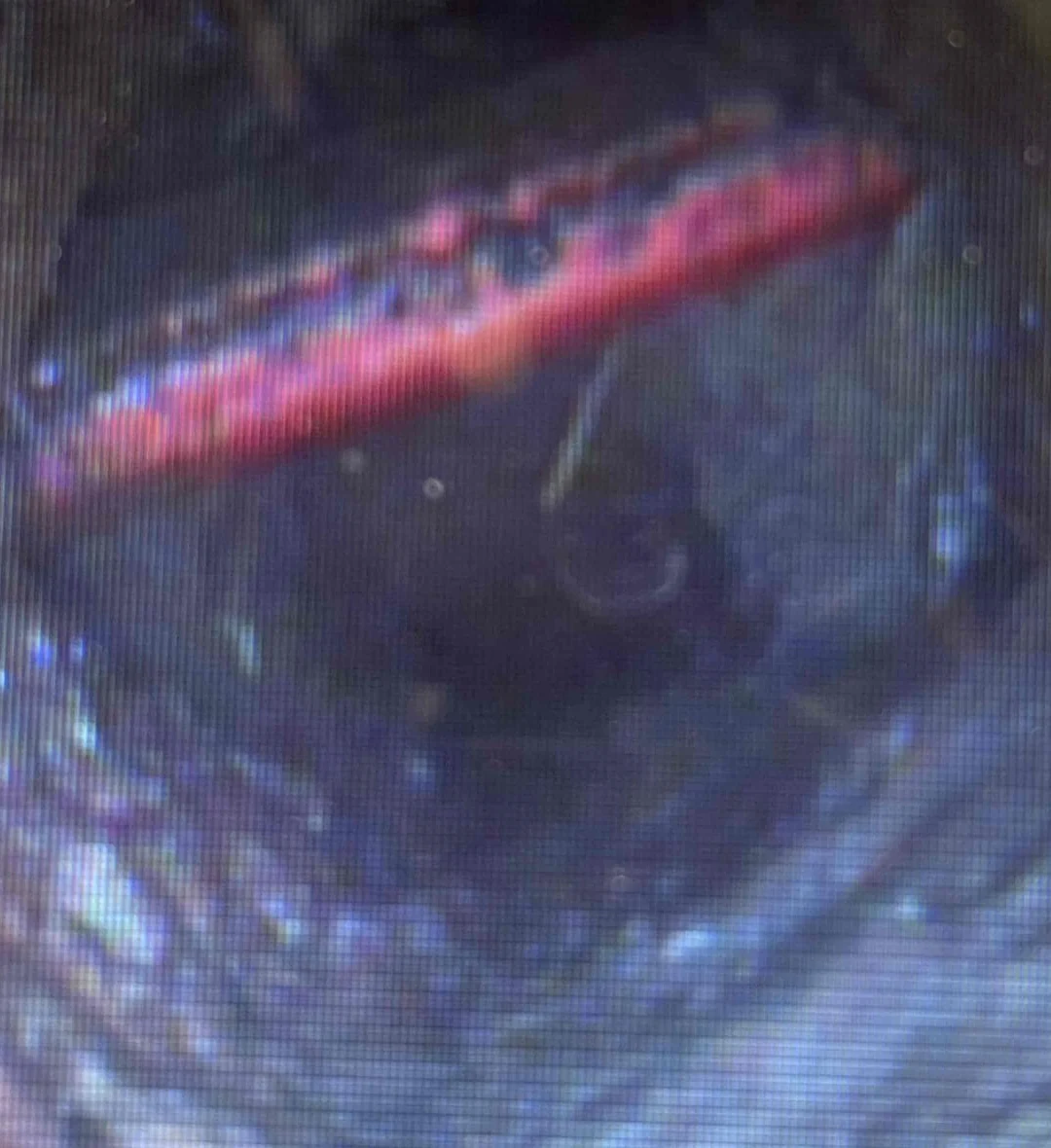
Take a look at the red line crossing the pipe in this image from the inspection monitor. That’s the utility crossing. It’s the sort of problem you wouldn’t spot by looking at the lawn or walkway.
A sewer camera inspection gives us a view of the inside of the drain. In this case, it also gave the homeowner a clear picture of what we were discussing.
Why a utility crossing needs a different approach
A utility line passing through a sewer is called a cross bore. It is not something to push through with a drain-cleaning tool. The line needs to be identified and the appropriate utility involved before work continues. The red appearance in this project’s camera image does not, by itself, identify what the line carries.
Sunshine 811’s cross-bore safety guidance warns against mechanically clearing a suspected utility crossing. Gas or electrical lines can create serious hazards if damaged. If you suspect a gas leak, leave the area and call 911 and the gas utility from a safe location.
For a homeowner, the practical takeaway is simple: tell us about recurring stoppages and any recent utility work nearby. A sewer camera inspection can help us understand a visible obstruction before recommending the next step. The camera finding and the repair plan are separate parts of that conversation.
Adding a two-way cleanout
Sewer access matters when a line needs inspection or service. A two-way cleanout gives us access in both directions: back toward the home and along the outgoing sewer line. We added one here, with the camera equipment set up beside the work area.
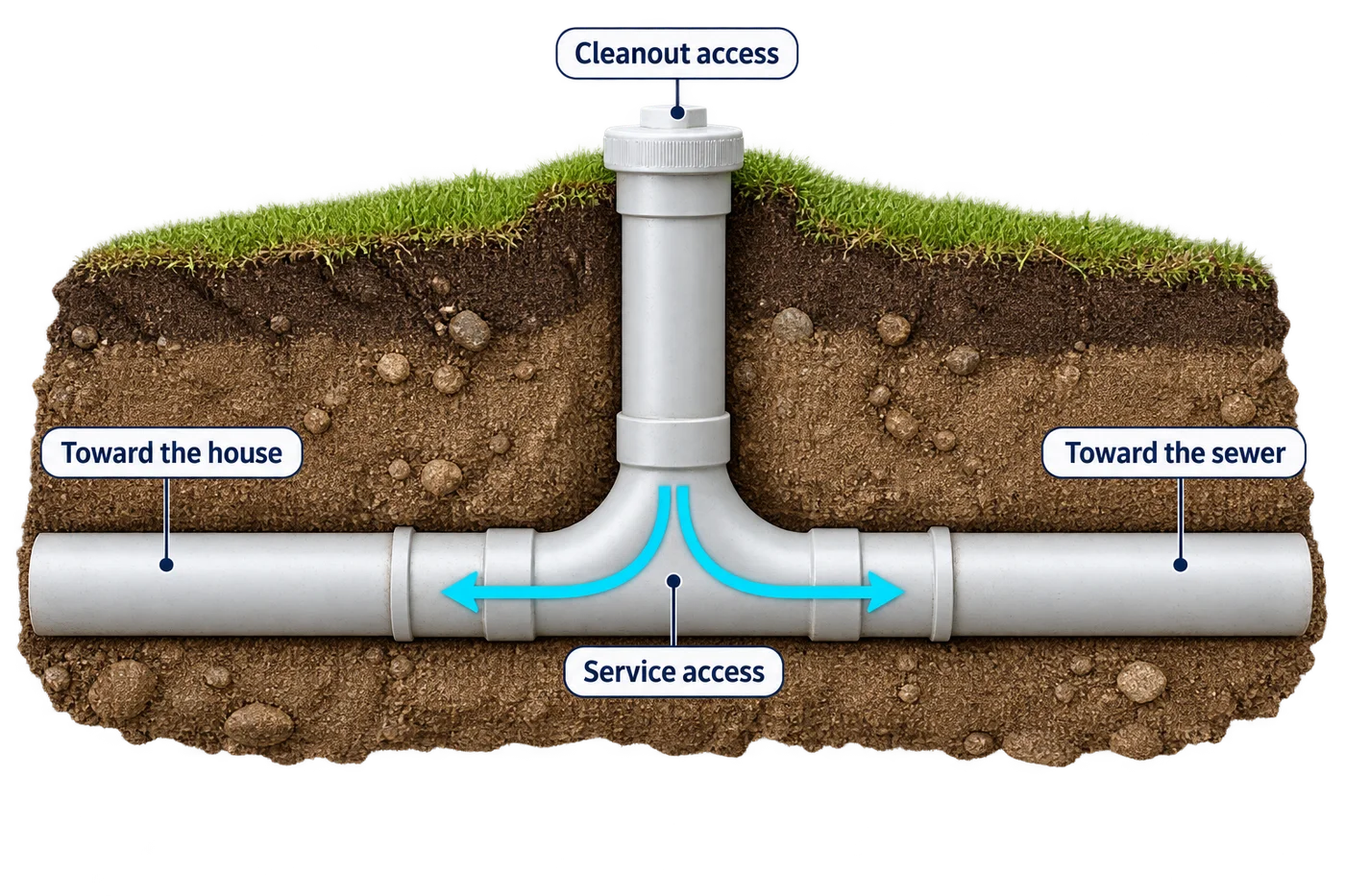
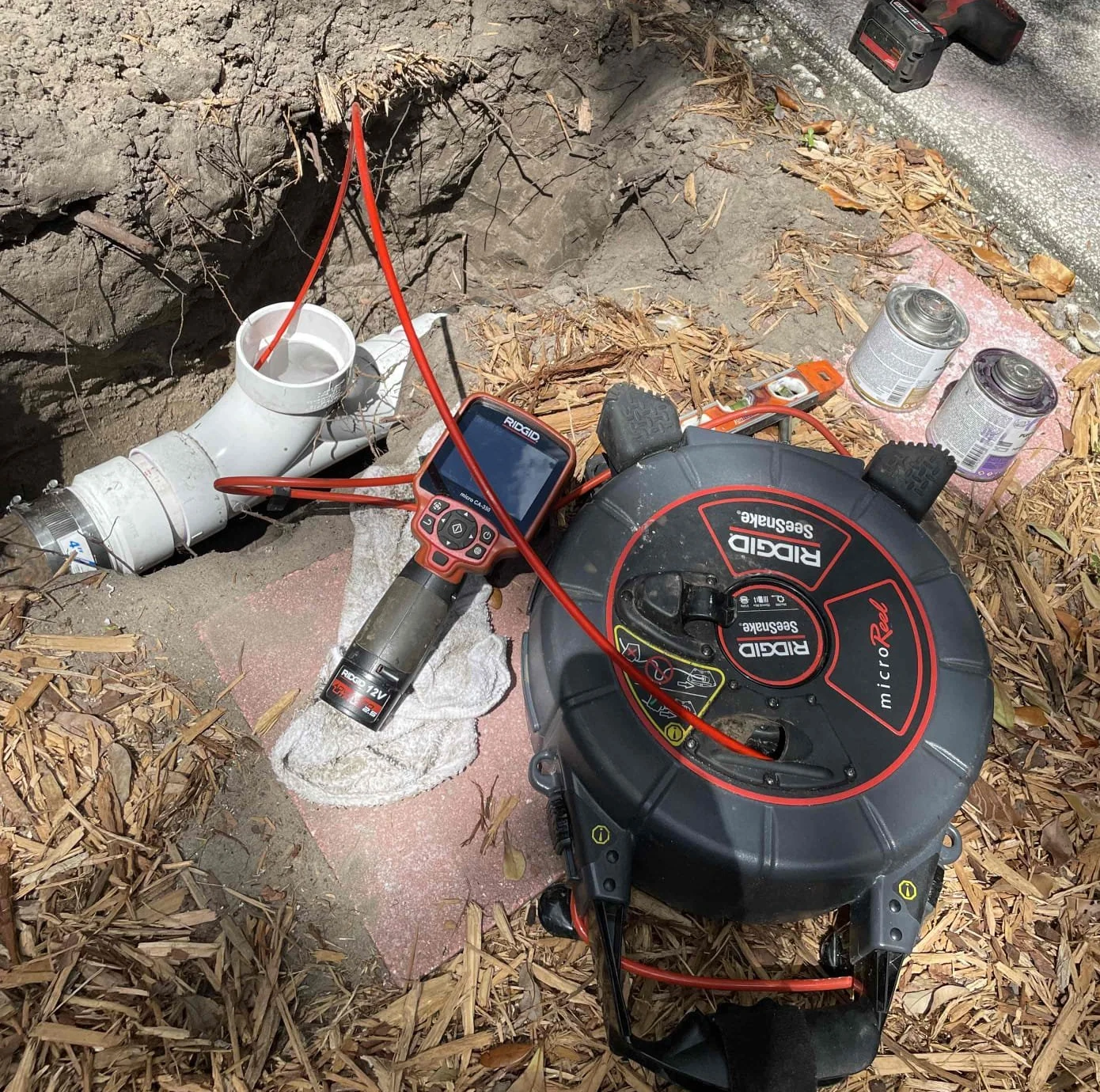
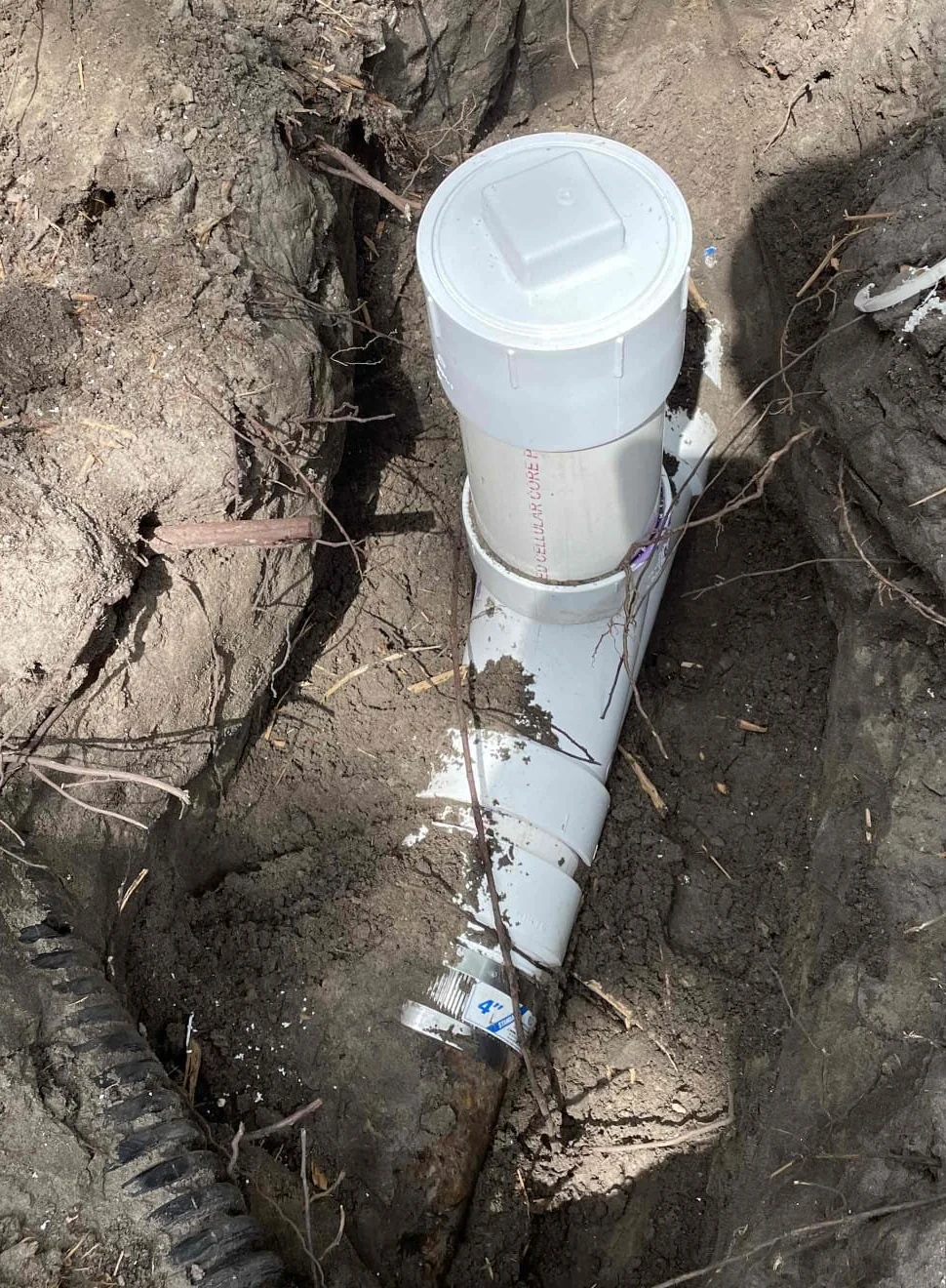
Here’s the new PVC assembly while the trench was still open. You can see how it connects below ground and rises to the capped access point above. Most of that piping disappears from view once the excavation is backfilled.
A small cap with a useful job
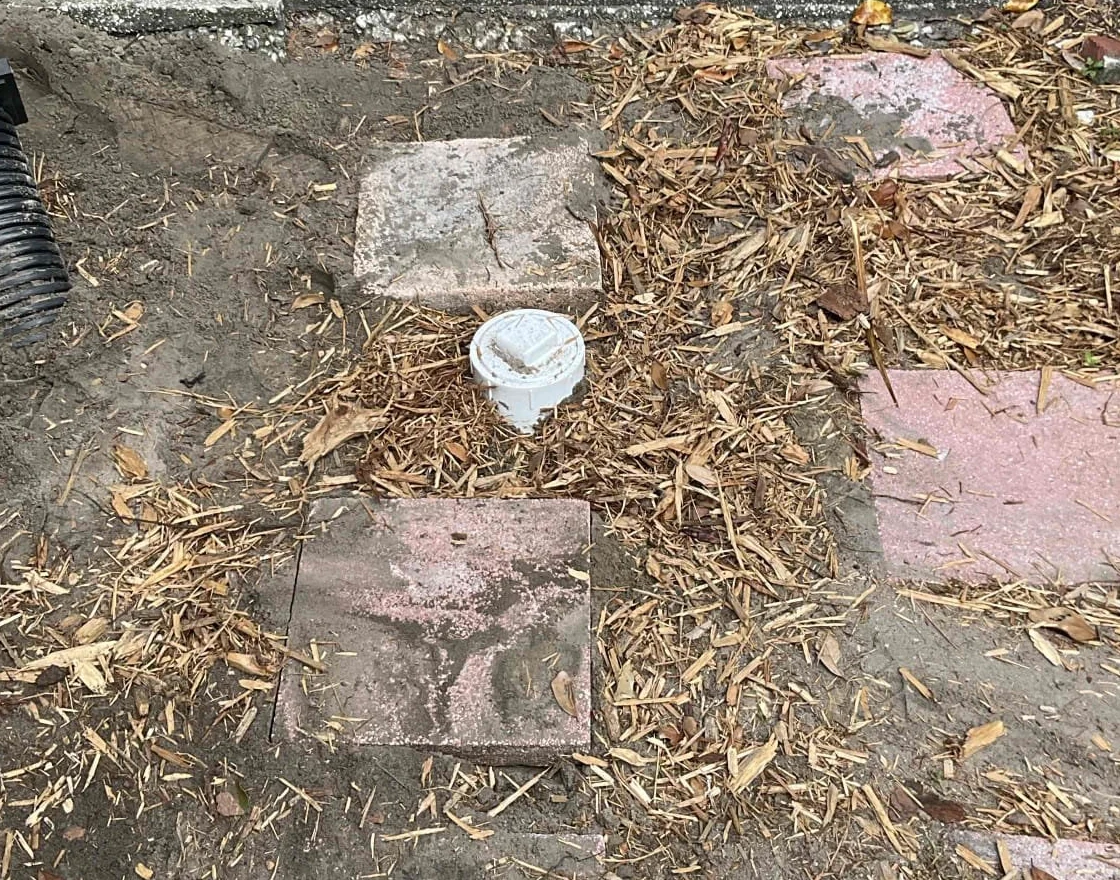
After backfilling, we left the cleanout cap accessible beside the walkway. It doesn’t take up much space, but it gives a technician a place to reach the sewer on a future visit.
Planning a sewer camera inspection?
A utility crossing is just one reason to look inside a sewer. If your drains keep backing up, a sewer camera inspection can help us investigate roots, buildup, damaged pipe or standing water that may point to a belly in the line. It can also help assess an older sewer before a home purchase, plan a repair or check the pipe after cleaning. What we can see depends on access and conditions inside the line; we’ll explain the findings and your next options.
On this project, our photos document the camera finding and the new cleanout. The utility crossing itself is a separate repair issue; installing a cleanout doesn’t remove it.
If you’re dealing with a recurring drain problem or need better sewer access, talk with our team. We can discuss your concerns and whether a sewer camera inspection is a useful next step. Read more about our drain and sewer services, or browse other work in the project gallery.