When a Running Toilet Explains Unexpected Meter Activity
When the water meter keeps moving, it’s easy to picture a leaking pipe somewhere underground. But a running toilet can waste water without leaving a puddle on the floor. During a multi-unit property inspection, we traced unexpected water use by checking the fixtures and watching how the main meter responded.
Checking the fixtures before looking underground
We started with accessible plumbing: toilets, faucets, equipment and other places where water might be escaping. Having access to the units mattered. It let us check the fixtures individually instead of trying to explain the whole building’s water use from one meter reading.
For a property like this, we agree on the inspection scope before the visit. A building-wide check is different from a single-home service call, and any repair recommendations are priced separately.
A running toilet changed the meter reading
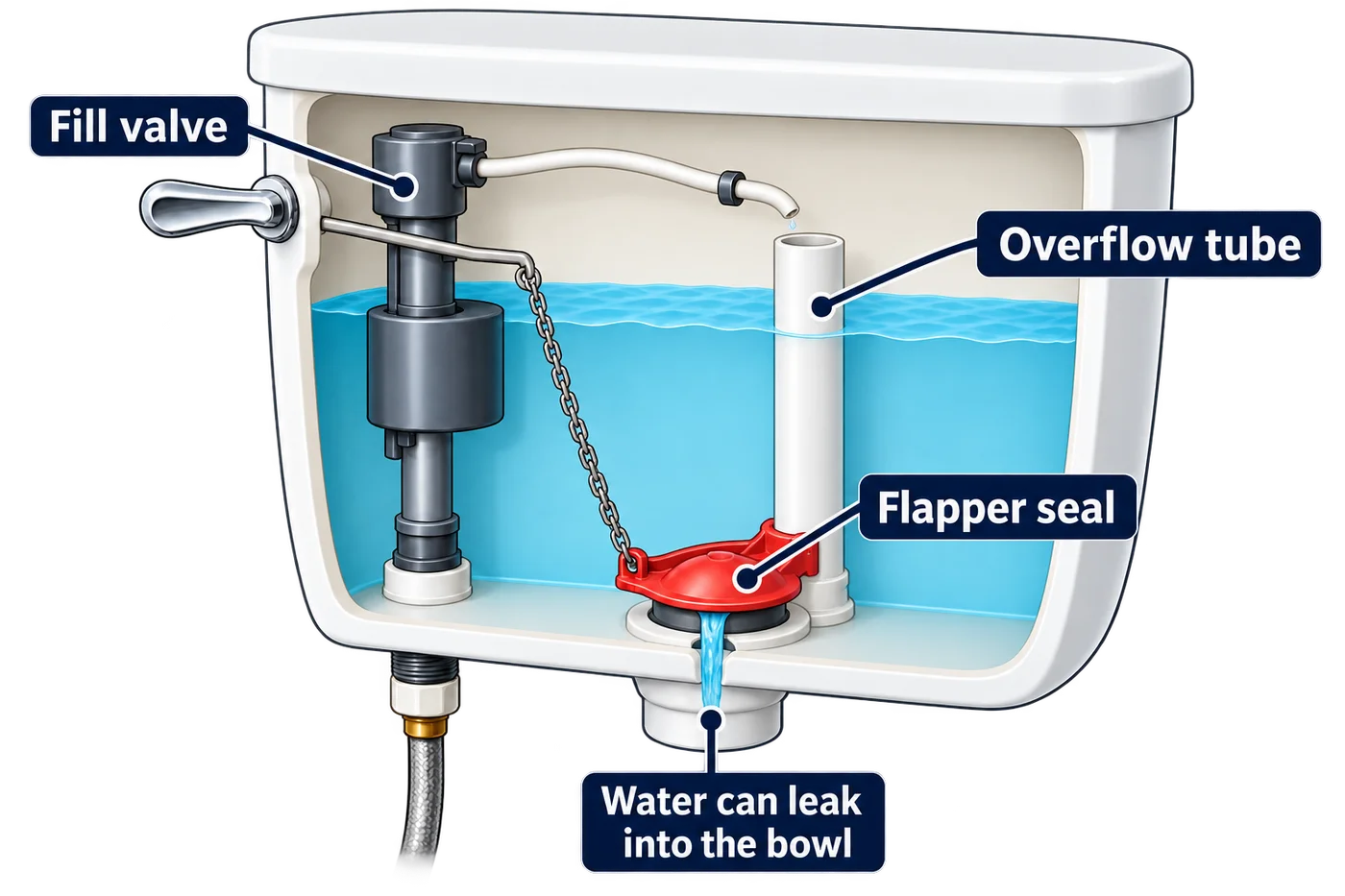
The running toilet was continuously passing water from its tank into the bowl. When we shut off its supply valve, the main meter dropped to 0.00 gallons per minute. That was a useful finding: isolating one fixture changed what the meter was showing.
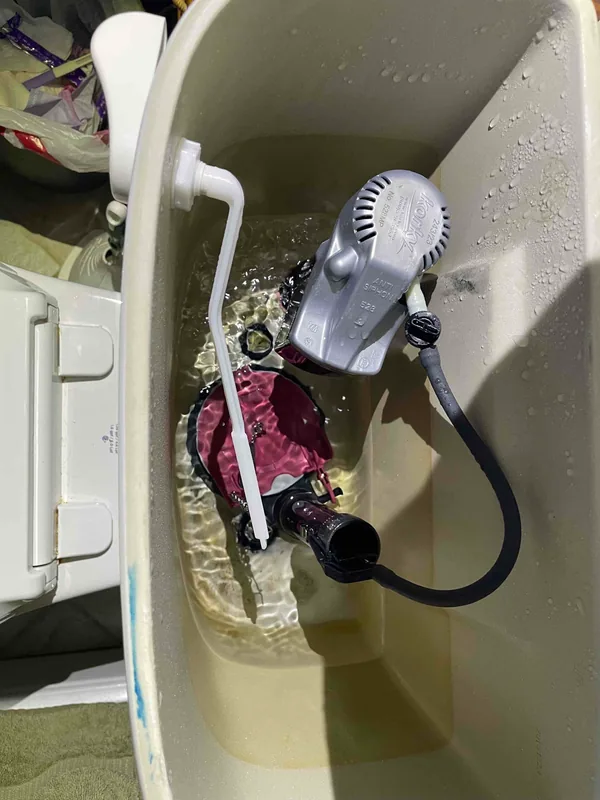
We still checked the other fixtures. Another toilet had a flapper that stuck intermittently, and we found additional concerns to include in our recommendations. A quiet meter at one moment doesn’t tell the whole story of every fixture in a building.
After the inspection, repair and replacement recommendations were to be quoted separately. This visit identified the problems; the follow-up repairs were a separate next step.
Could a running toilet be wasting water in your home?
You might hear a brief refill long after the last flush, see a ripple in the bowl or notice that the tank never quite stops filling. Those details are useful even when the bathroom floor is dry. A running toilet sends water down the drain, so an internal leak may be easy to overlook during a quick walk through the house.
Unlike a running toilet that loses water into the bowl, water collecting around the toilet base or supply connection needs a different assessment. Tell us where you see water and whether it appears during flushing. Call promptly about an active leak; don’t assume replacing the flapper will fix water on the floor.
For a typical tank toilet, EPA WaterSense recommends a simple dye check: add a few drops of food coloring to the tank and wait 10 minutes without flushing. Color reaching the bowl points to a leak. Flush afterward to help prevent staining. If you are uncomfortable lifting the tank lid or the toilet has unfamiliar equipment, leave the check to us.
A result like that gives us a starting point, not a reason to replace every part. We can inspect the components and explain whether a repair or a replacement makes sense for the toilet you have. In a shared building, let management know about the concern; do not operate a valve that may affect neighboring units.
Questions about a running toilet and unexplained water use
Why does a running toilet stop and start?
In a typical gravity tank, water leaking into the bowl lowers the tank level until the fill valve opens again. You may hear a short refill instead of a constant running sound. The interval can change, so a quiet bathroom when we arrive doesn’t cancel out what you’ve been hearing.
A running toilet can also involve water entering the overflow tube. The flapper, fill valve and water level do different jobs, and the repair should match the cause. The Portland Water Bureau’s illustrated toilet-leak guide explains these components in familiar gravity toilets. Other designs may need different parts and checks.
Does jiggling the handle mean the problem is fixed?
If moving the handle stops a running toilet, that is a useful clue about the handle, chain or seal. It doesn’t establish that the issue won’t return. Mention whether you regularly have to do it and whether the toilet has become harder to flush. We can check the mechanism rather than leave you relying on that extra step every time.
You don’t need to buy a bag of replacement parts before calling. Components vary between toilets, and an apparently similar part may not be the right fit. We can identify what is installed and explain the proposed repair.
Can one running toilet affect the whole building’s meter?
Yes, if the fixture is supplied through that meter, its water use contributes to the reading. In this inspection, isolating one toilet changed the displayed rate to 0.00 gallons per minute. That observation supported the finding at that time; it didn’t mean we had completed repairs or ruled out every intermittent problem.
For a shared property, coordinating access to the relevant units helps us investigate more effectively. A meter reading without access to the fixtures can leave important questions unanswered. We can discuss the inspection area and access arrangements with the person responsible for the property before the appointment.
Does a higher bill always mean there’s a leak?
Not necessarily. Compare the amount of water used and the billing period as well as the dollar total. Changes in household use, irrigation or other equipment can be relevant. A running toilet is one possibility, but the investigation should follow what is happening at your property rather than assume every higher bill has the same cause.
Recent bills and utility alerts can help you describe when the increase appeared. We don’t need your account login to discuss the plumbing concern. If the utility has flagged continuous use or an unusual pattern, share that information along with anything you’ve noticed at the fixtures.
Is repair or replacement the better choice?
A running toilet may need a component repair rather than a new fixture. The toilet’s condition, the available parts and any other problems all affect that decision. A cracked fixture, repeated trouble or a model that no longer suits the household can make replacement worth discussing; one worn part doesn’t automatically make it necessary.
We can explain the repair and replacement options separately. If replacement is appropriate, the fit and installation matter as well as the new toilet’s price. If you like the toilet you have, let us know. We can talk through a repair before you spend time choosing a replacement.
What if I find water outside the toilet?
Water on the floor needs prompt attention. It may involve the supply connection, tank or base rather than the internal leak described here. Keep people away from a wet, slippery area, and let us know where the water appears and whether it is continuing.
If you know the toilet’s individual shutoff and can operate it safely, stopping its supply may help limit an active leak. Don’t force a stuck valve or operate an unidentified shared shutoff. We can discuss both the toilet and any valve concern when you call.
What this running toilet inspection tells a homeowner
The useful lesson is to check the evidence before assuming the most disruptive explanation. A moving meter can be worrying, especially when you can’t see a leak. Here, checking accessible fixtures gave us a clear lead without starting with concealed-pipe work.
Your property may have a different cause, and we will explain the next step if the first checks do not settle it. You should understand what the inspection found, what remains uncertain and what any proposed repair is intended to address. That is a better starting point than replacing parts or opening walls simply because the water use has gone up.
When a running toilet doesn’t explain all the water use
Electronic leak detection was an option if the visual checks didn’t identify a source. In this case, checking the fixtures and observing the meter gave us the findings we needed to explain the next steps.
If you’re calling about unexplained water use, let us know whether it’s one home or a multi-unit property. Tell us what you’ve noticed and whether we can reach the fixtures and shutoff valves. We’ll help you understand what the inspection includes before work begins.
For current service options, explore our plumbing starting-price menu or schedule an appointment. If the water use is unexplained, tell our office what you have noticed so we can discuss the appropriate inspection.
You can read about leak detection starting prices, unexpectedly high water bills and toilet repairs. To talk through your situation, contact Gulfview or call 727-351-4700.