Toilet Leaking at the Base or Wobbling? Warning Signs and Fixes
You wipe up the water beside the toilet, and then it comes back. Or the bowl shifts a little when you sit down, even though the floor looks dry. Neither is something you should have to work around every day.
A toilet leaking at the base or rocking on the floor deserves a closer look. The cause might be beneath the bowl, but it isn’t always a broken flange or a bad wax ring. Finding where the water starts and why the toilet moves helps us work out what actually needs attention.
These examples from different Gulfview jobs show some of the connections involved, from a damaged flange to a replacement and a separate toilet installation. Your repair starts with your toilet, not an assumption that every puddle has the same cause.
Why a rocking or wobbling toilet matters
The toilet flange connects the bowl to the drain and provides mounting points that help secure it. The seal does a different job: it keeps water from escaping at that connection. When the mounting connection is damaged, movement can disturb the seal. Oatey’s flange repair guidance explains how rocking and leaks can be connected.
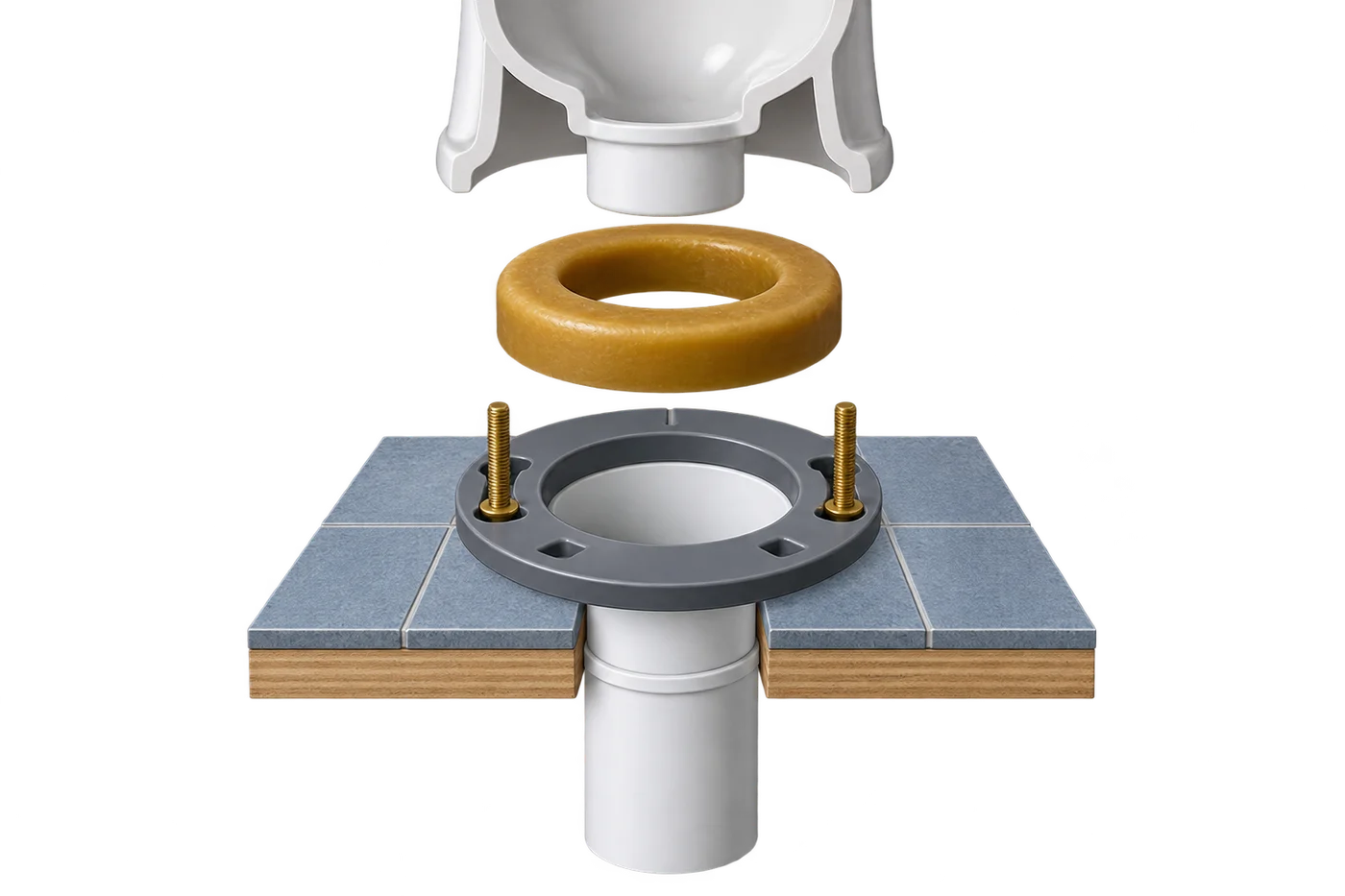
That doesn’t mean every wobble proves the flange is broken. The mounting hardware and the support beneath the bowl also need a look. Simply tightening the bolts harder isn’t a reliable answer, and overtightening can crack the porcelain.
If you’ve noticed movement, tell us even if you haven’t seen water yet. Also mention soft flooring nearby or a new stain on a ceiling below the bathroom. Those warning signs deserve attention rather than waiting for a larger puddle.
Water at the base can start somewhere else
A wet floor doesn’t tell the whole story. Water from a supply connection or the tank can run down the outside of the toilet and collect at the bottom. That calls for a different repair from a leaking connection underneath. Oatey’s overview of toilet leaks covers several of these possible sources.
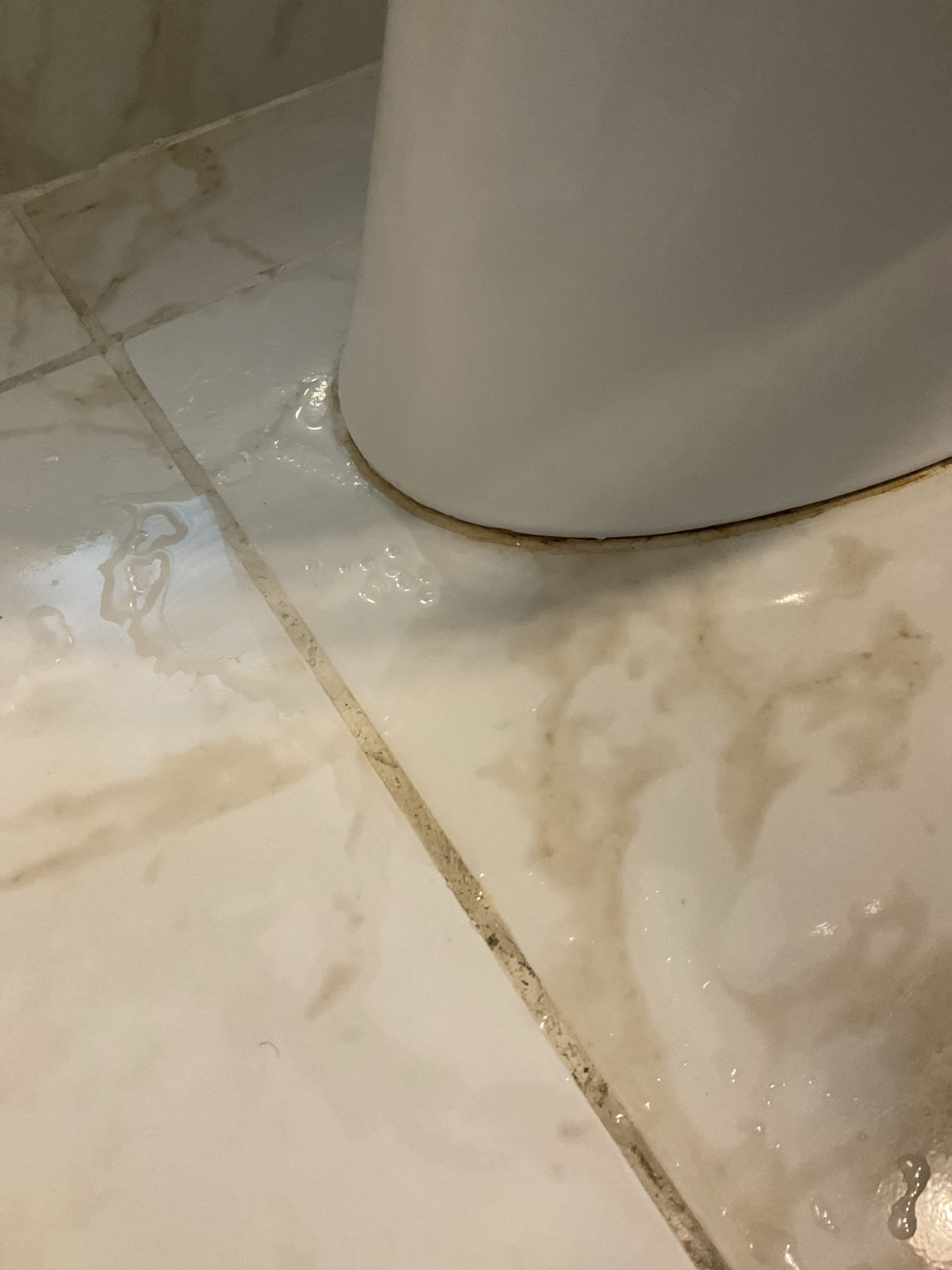
Think about what you’ve already noticed. Did the water appear after a flush? Was the toilet sitting unused? Is there moisture higher up, or does the bowl shift? You don’t need to keep flushing, rock the toilet on purpose, or take anything apart to answer those questions.
A toilet that keeps running is another concern worth mentioning. Water passing from the tank into the bowl is different from water escaping onto the floor. You can have more than one problem, so let us know about both rather than assuming one replacement part will take care of everything.
Looking beyond a new wax ring
It’s understandable to hope the answer is one small part. The important question is whether replacing that part also addresses what went wrong. A fresh seal won’t repair a broken mounting connection.
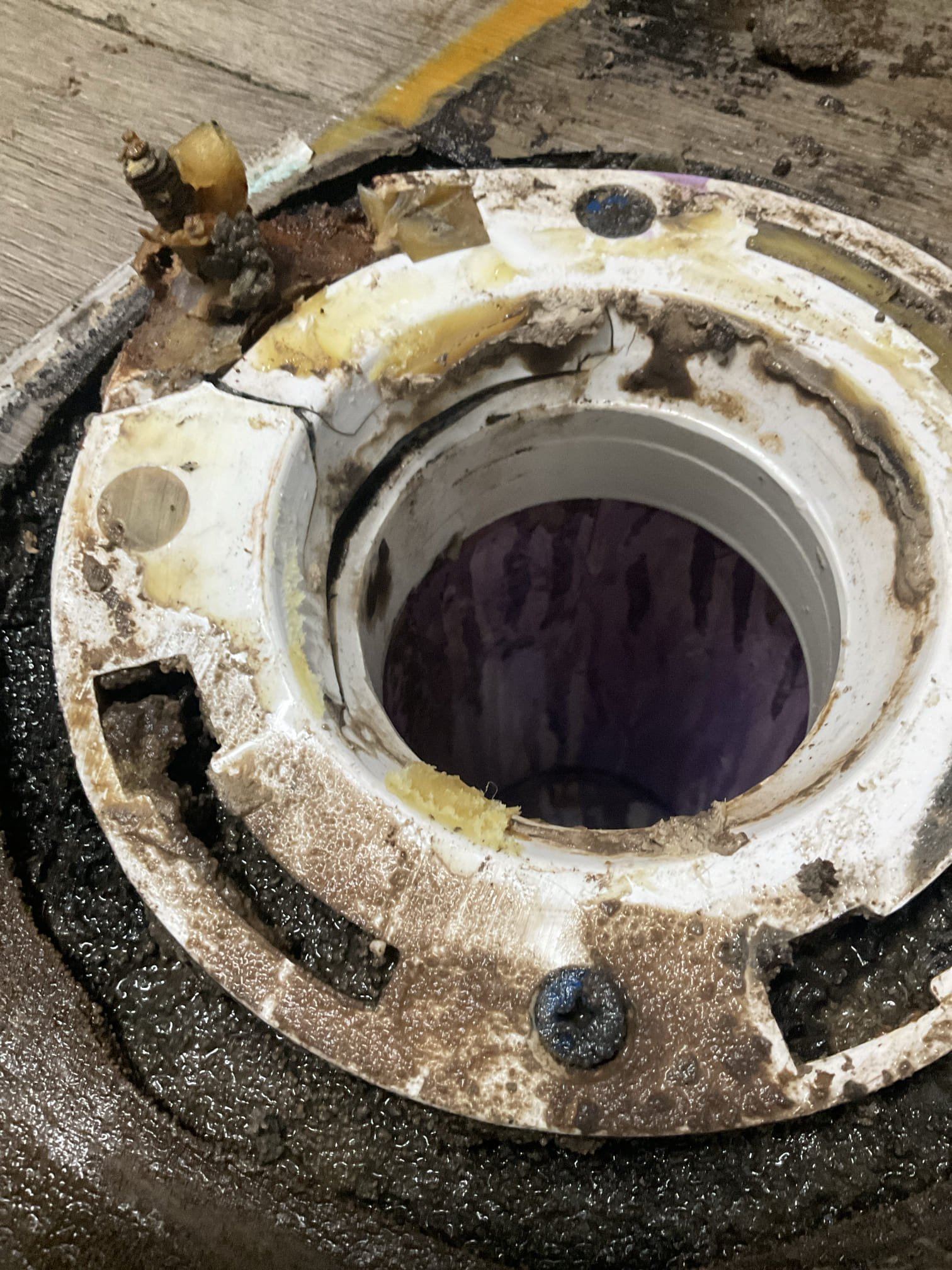
On the broken-flange job pictured here, we replaced the damaged flange and installed a new toilet. The replacement flange below is from that work. It’s one example of a repair, not a reason to assume you need a new toilet, too.
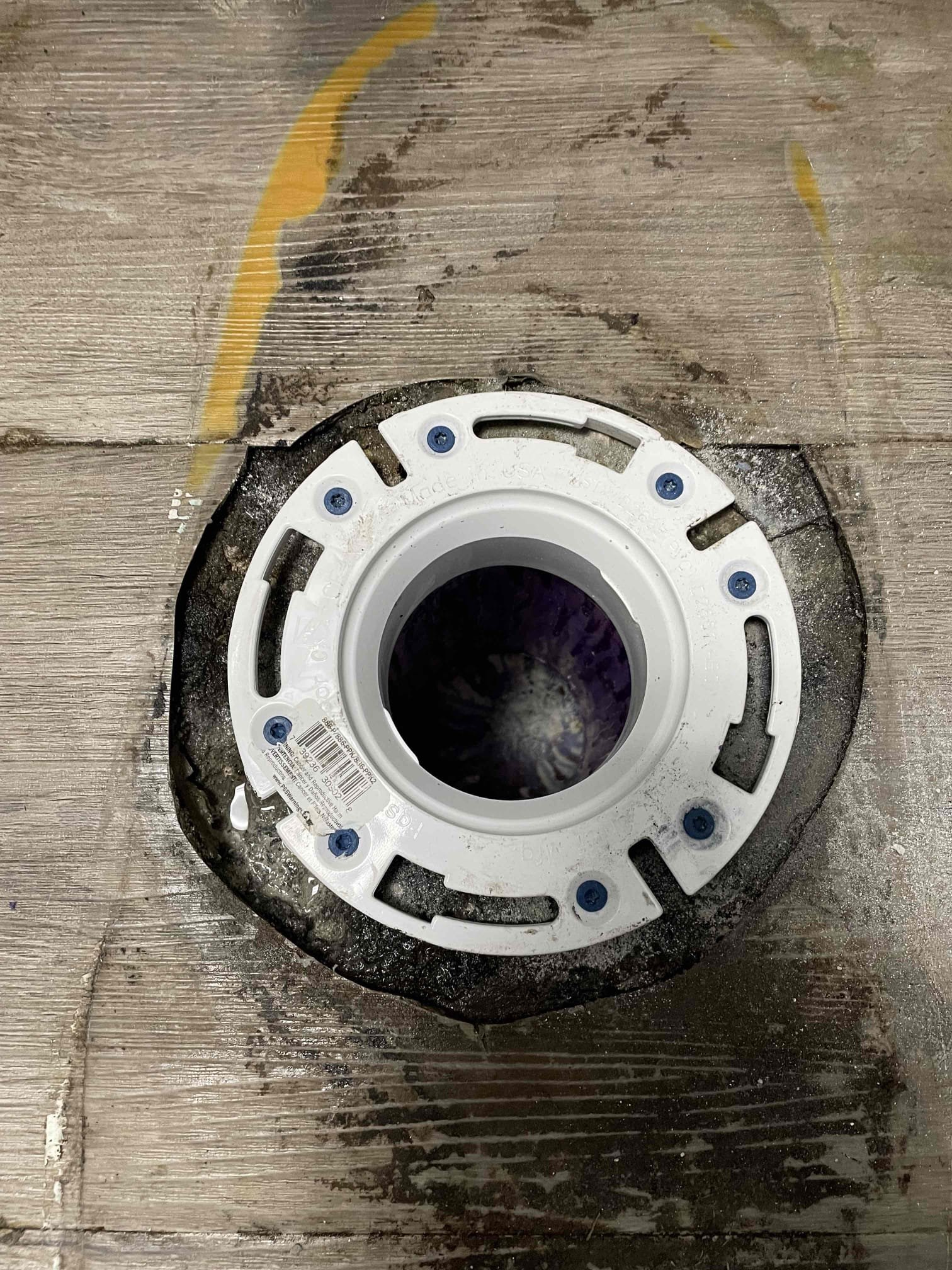
Some flange damage can be addressed with a suitable repair component; other damage requires replacement. The condition of the drain connection matters when choosing between them. We can explain what we find and what the proposed work includes before you decide how to proceed.
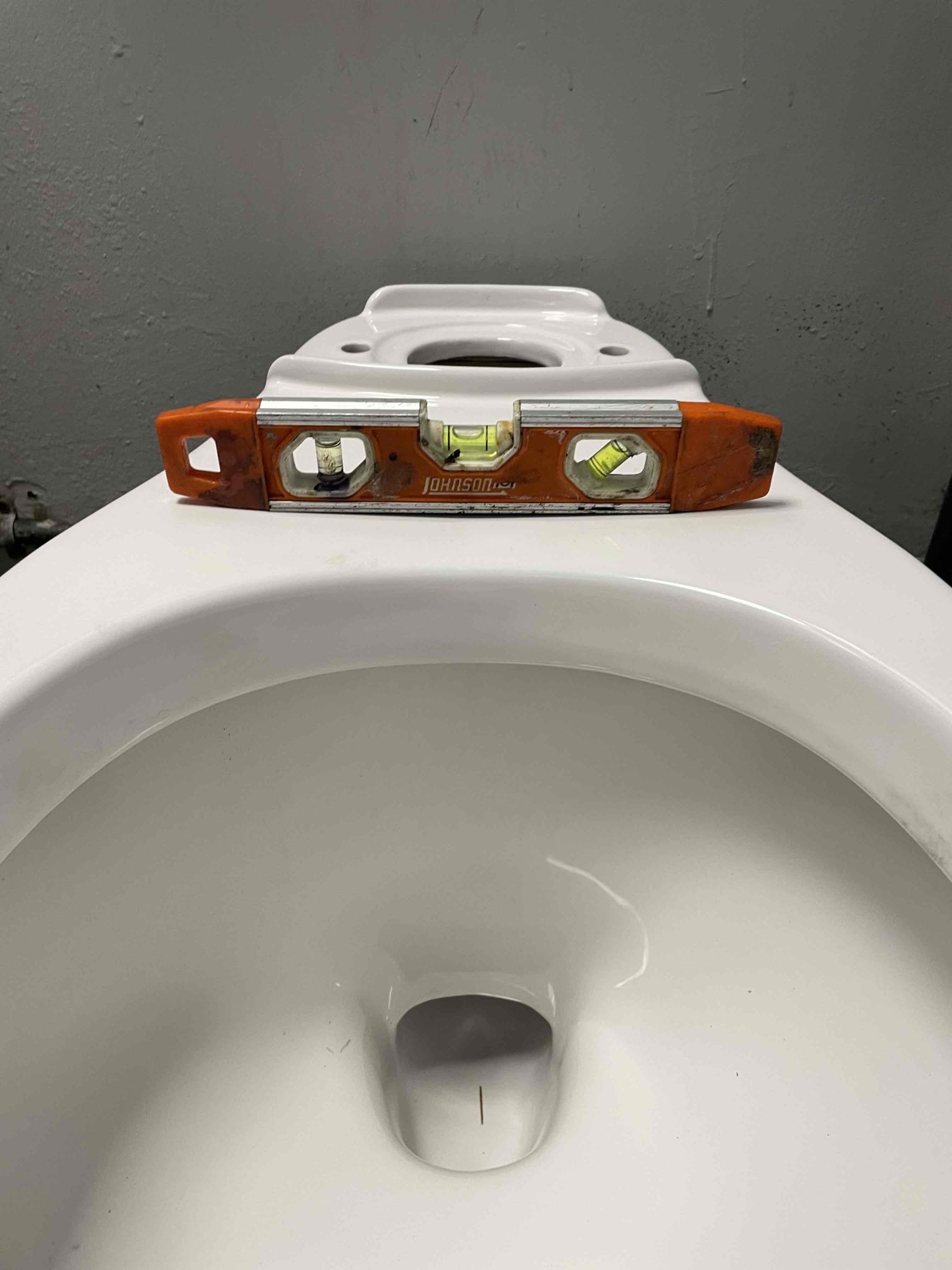
The bowl’s position matters as well. Here, a level is being used during installation. Getting the toilet positioned is a different part of the work from replacing the damaged connection underneath it.
Does a leaking toilet need to be replaced?
Not automatically. A problem with the connection beneath a toilet isn’t the same as a problem with the toilet itself. We’ll look at the fixture’s condition and the source of the trouble, then talk through repair or replacement with you.
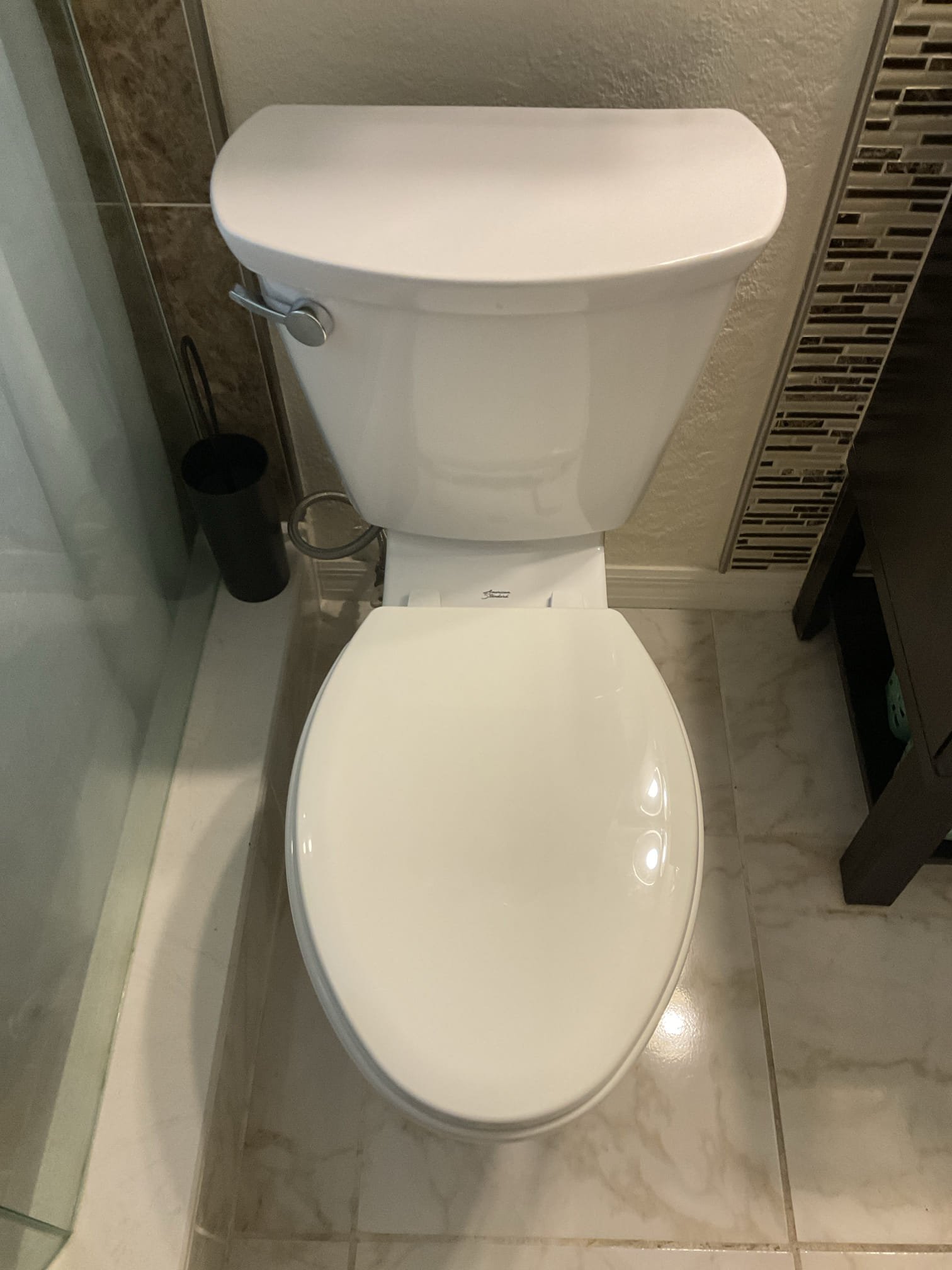
If you’ve already been considering a new toilet, tell us what you’d like to change. You may want to discuss the bowl shape, seat height, or how the toilet fits the room. Those preferences can be part of the conversation without losing sight of the leak or movement that brought you here.
Let’s get to the cause
You don’t need to diagnose a broken flange or choose a toilet before calling. Tell us about the leak, the wobble, or both. A picture of the whole toilet and a closer view of the affected area can help explain what you’re seeing.
Explore our toilet repair and installation services, or contact Gulfview Plumbing & Water Treatment to schedule a visit. We’ll help you understand the next step.