Outdoor Water Heater Enclosure: Essential Planning Tips
An outdoor water heater enclosure can look like a simple answer when you’re deciding where the tank should go. It gives the equipment a defined space outside the home and keeps it out of sight behind a door. But choosing the right setup takes more than finding a cabinet that fits.
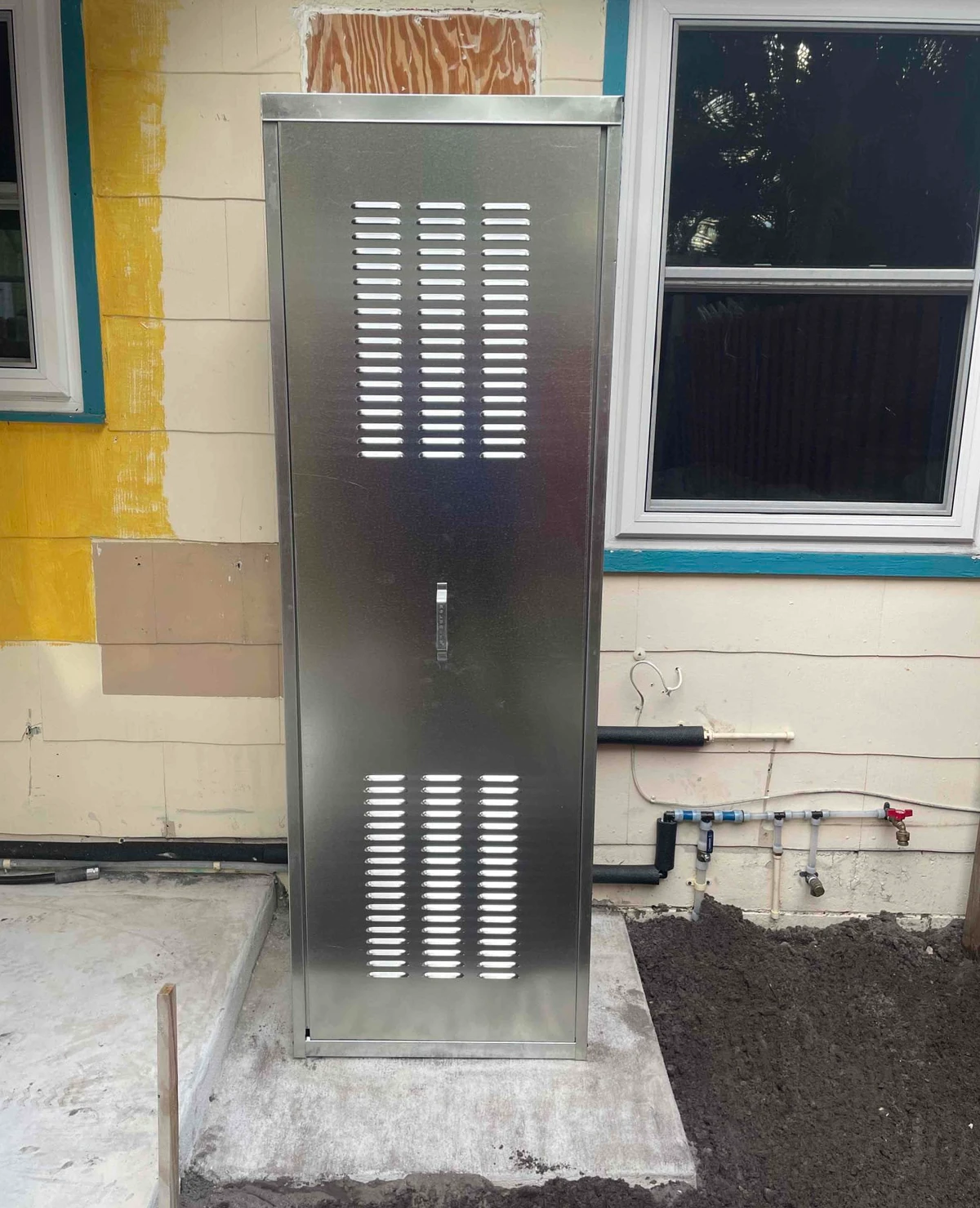
For this Gulfview installation, we worked on the water piping and installed the heater in an exterior metal enclosure. Before the finished door went on, the project involved connections beside the concrete pad, piping inside the cabinet and space for the tank itself.
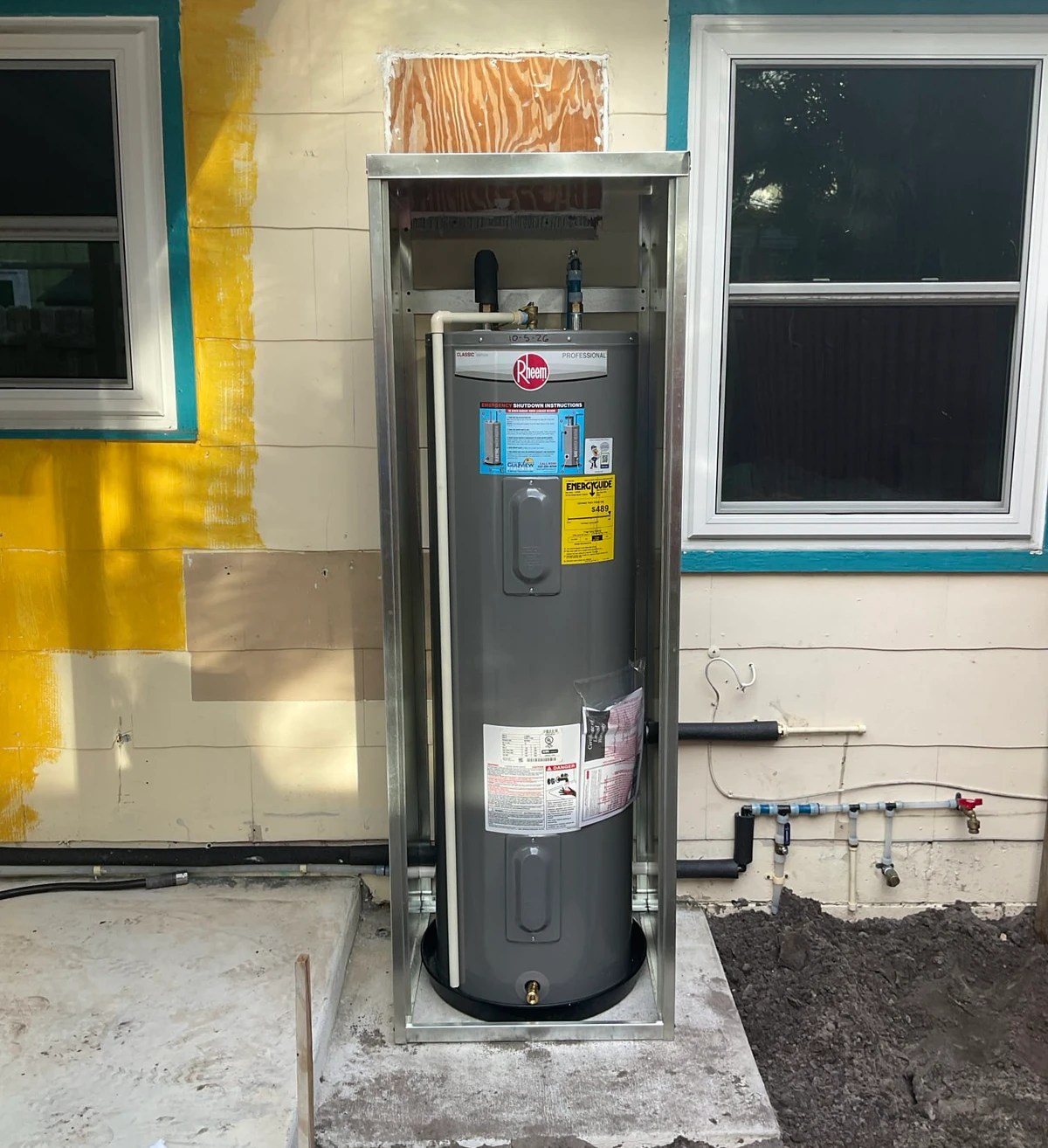
Choosing an outdoor water heater enclosure: start with the heater
A water heater that fits inside a cabinet isn’t automatically suitable for that location. The exact heater, its installation instructions and the proposed outdoor water heater enclosure need to be considered together. A cover alone doesn’t establish that the equipment is suitable for an exterior installation.
Manufacturer instructions set important limits. For example, Rheem’s guidance for one electric-water-heater series calls for a clean, dry location and access for servicing, and prohibits outdoor, unprotected locations. Your own heater’s manual is the one to check; requirements vary by model.
Before you purchase equipment or an enclosure, let us look at the space and talk through the options. That conversation should include how much hot water your household needs, not just how much room is available.
Water heater installation involves more than the tank
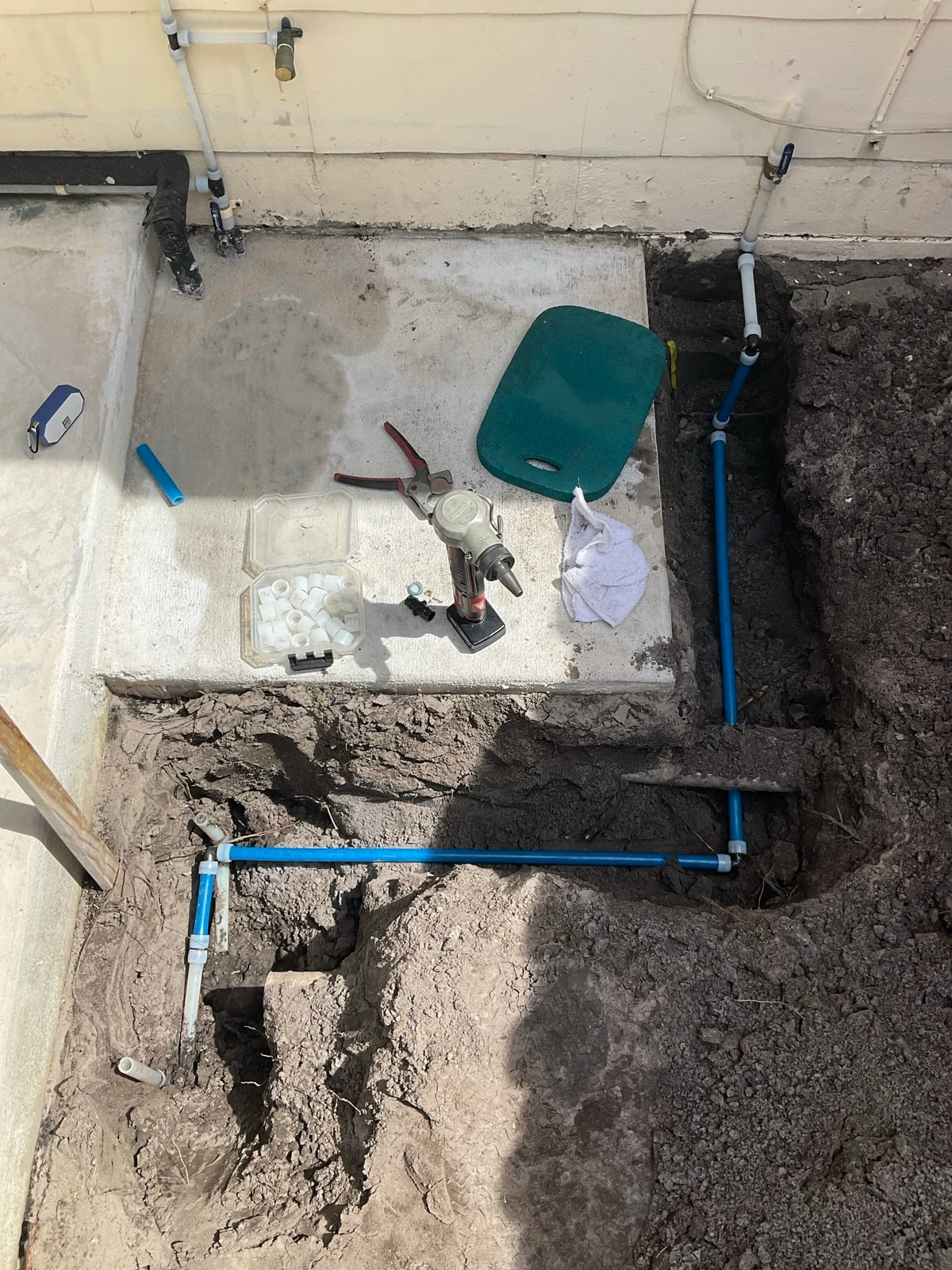
The work here extended beyond the cabinet to the piping beside the concrete pad. That’s easy to overlook when you’re picturing the finished enclosure. Where the water lines run and how they connect to the heater are part of the project, too.
When we discuss a proposed installation, we’ll help clarify the plumbing work involved and identify related work that needs to be accounted for. A useful estimate should make those boundaries understandable instead of leaving you to discover them halfway through.
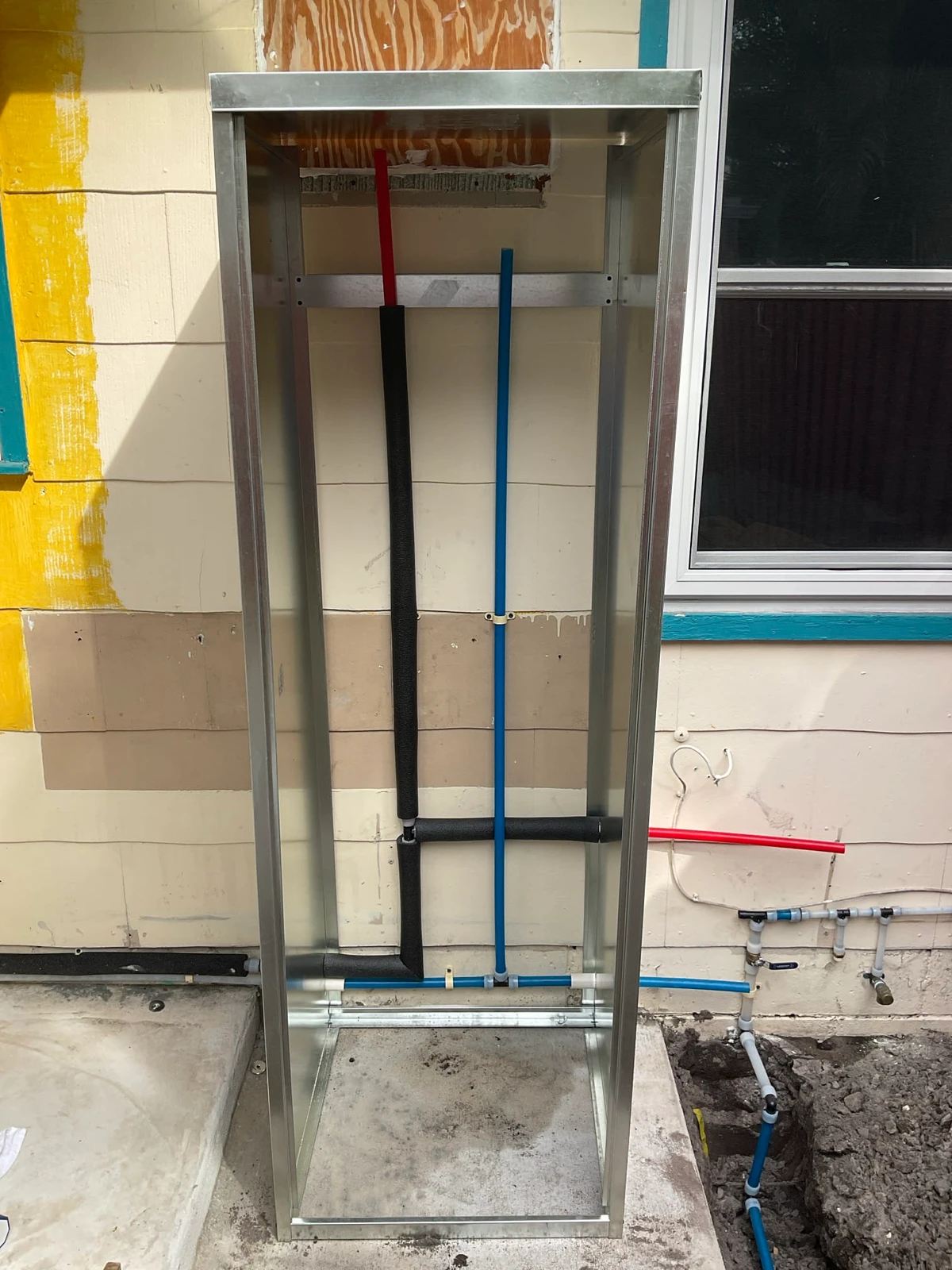
Avoid a frustrating service visit: leave room for access
The finished appearance matters, but so does being able to reach the equipment later. A service technician needs access to the parts that require attention. A future replacement also needs a practical route in and out.
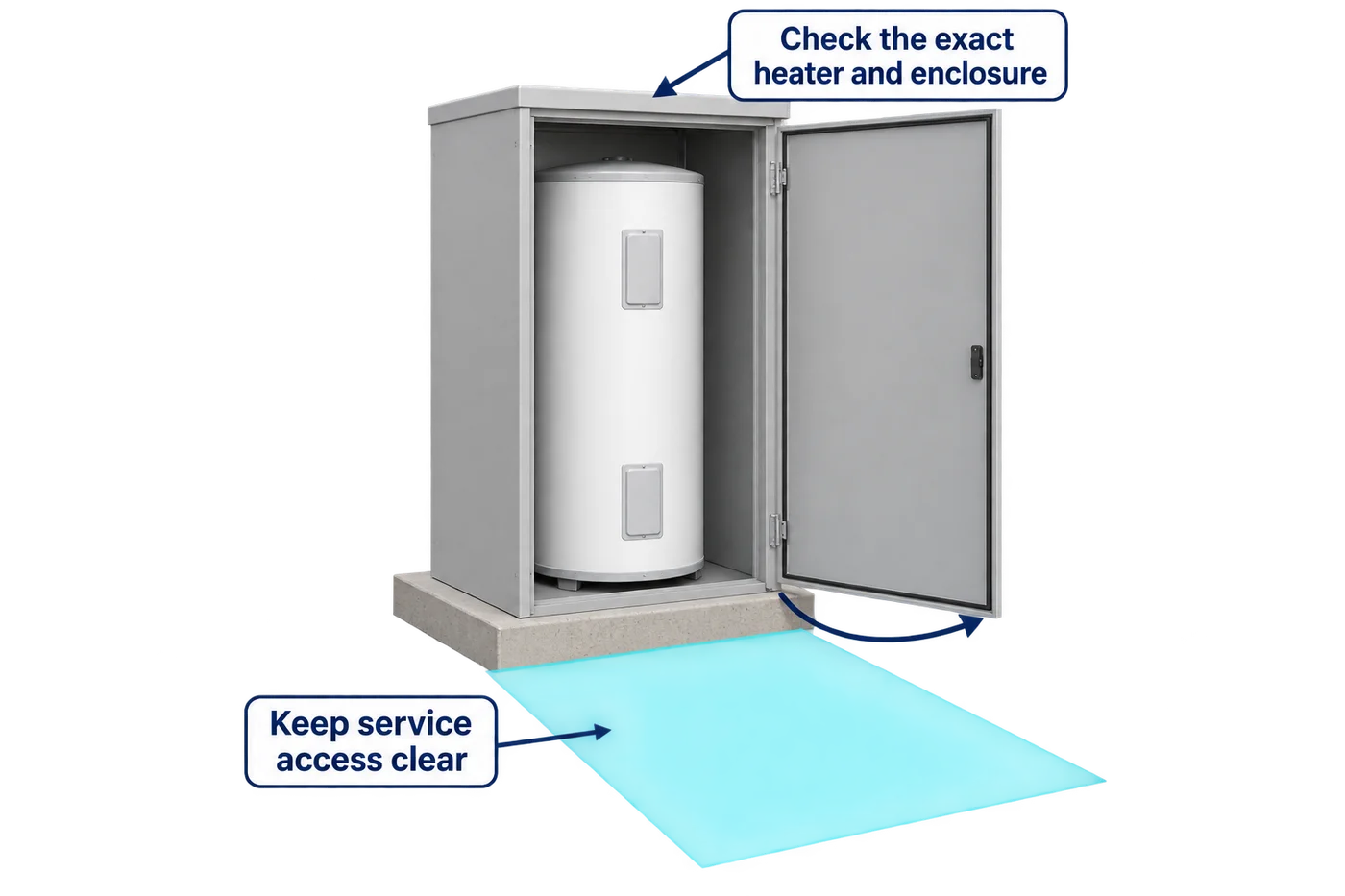
Questions worth asking before you buy
Can I put any water heater in an outdoor cabinet?
No. Don’t choose the cabinet first and assume the heater will work there. Check the installation instructions for the exact equipment and have the proposed location reviewed. A metal door or a set of louvers isn’t enough information to make that decision.
Can an existing enclosure be reused for a replacement water heater?
It needs to be evaluated with the replacement heater. Even if the old tank fit, the new equipment may have different dimensions or access requirements. Share photos of the enclosure, the connections and the heater’s model label when you contact us so we can start the conversation with useful information.
What should I ask about the installation estimate?
Ask what is included for the heater, enclosure and water piping, and whether any related electrical or site work needs to be arranged separately. It’s also worth discussing access for future maintenance and replacement. Getting those details clear before work begins helps you compare the actual work being proposed, not just the price at the bottom.
Considering a setup like this?
Bring us your questions before committing to a cabinet or a particular heater. Gulfview can help you evaluate the plumbing side of the project and discuss an installation suited to your home. Learn about our water heater services or schedule a conversation with our team.