Restaurant Water Filtration: An Everpure Installation for Ice and Beverages
When a customer orders a fountain drink or a glass of ice water, the plumbing behind it probably never crosses their mind. For a restaurant owner, though, that water is part of what you serve every day.
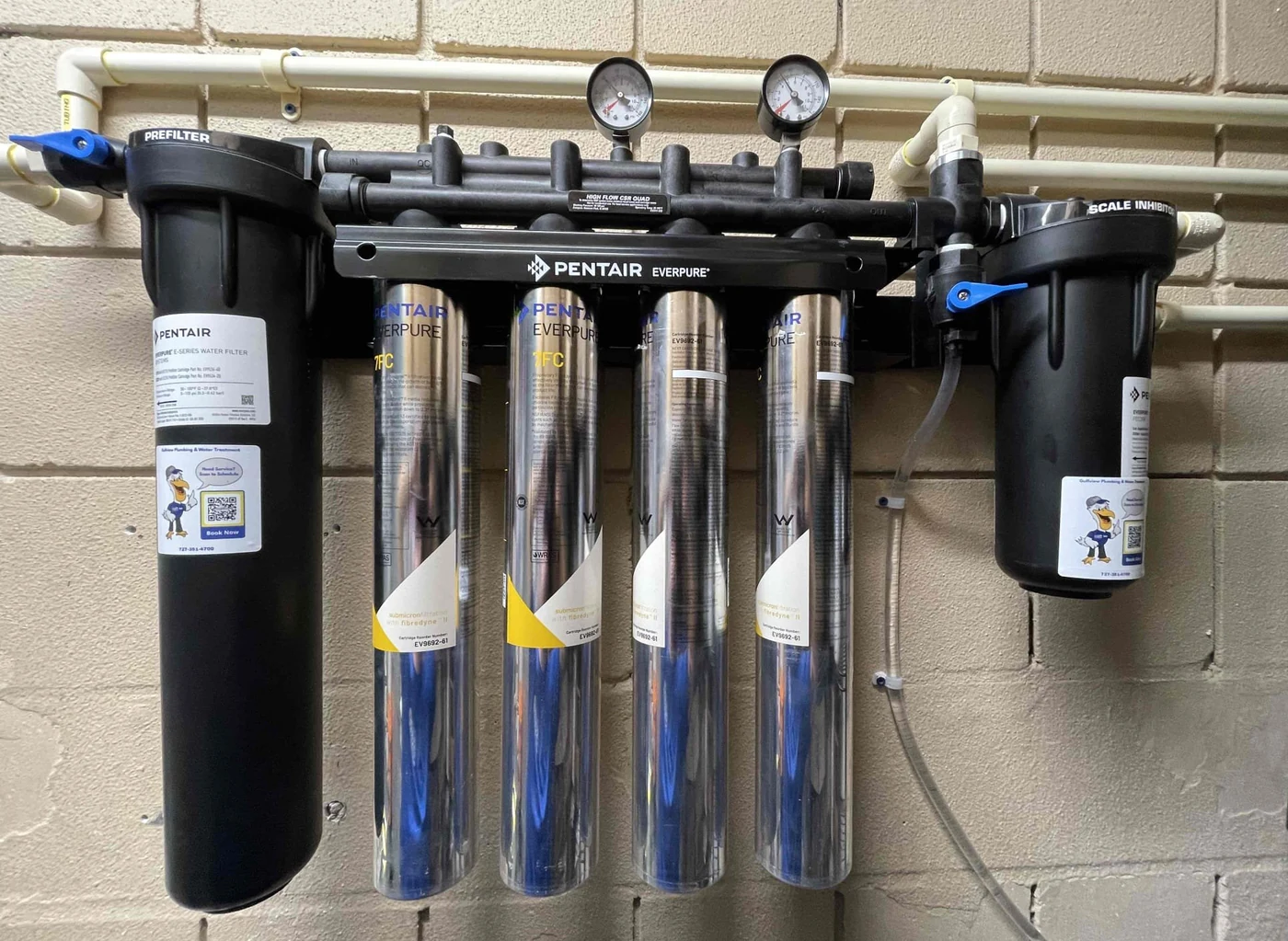
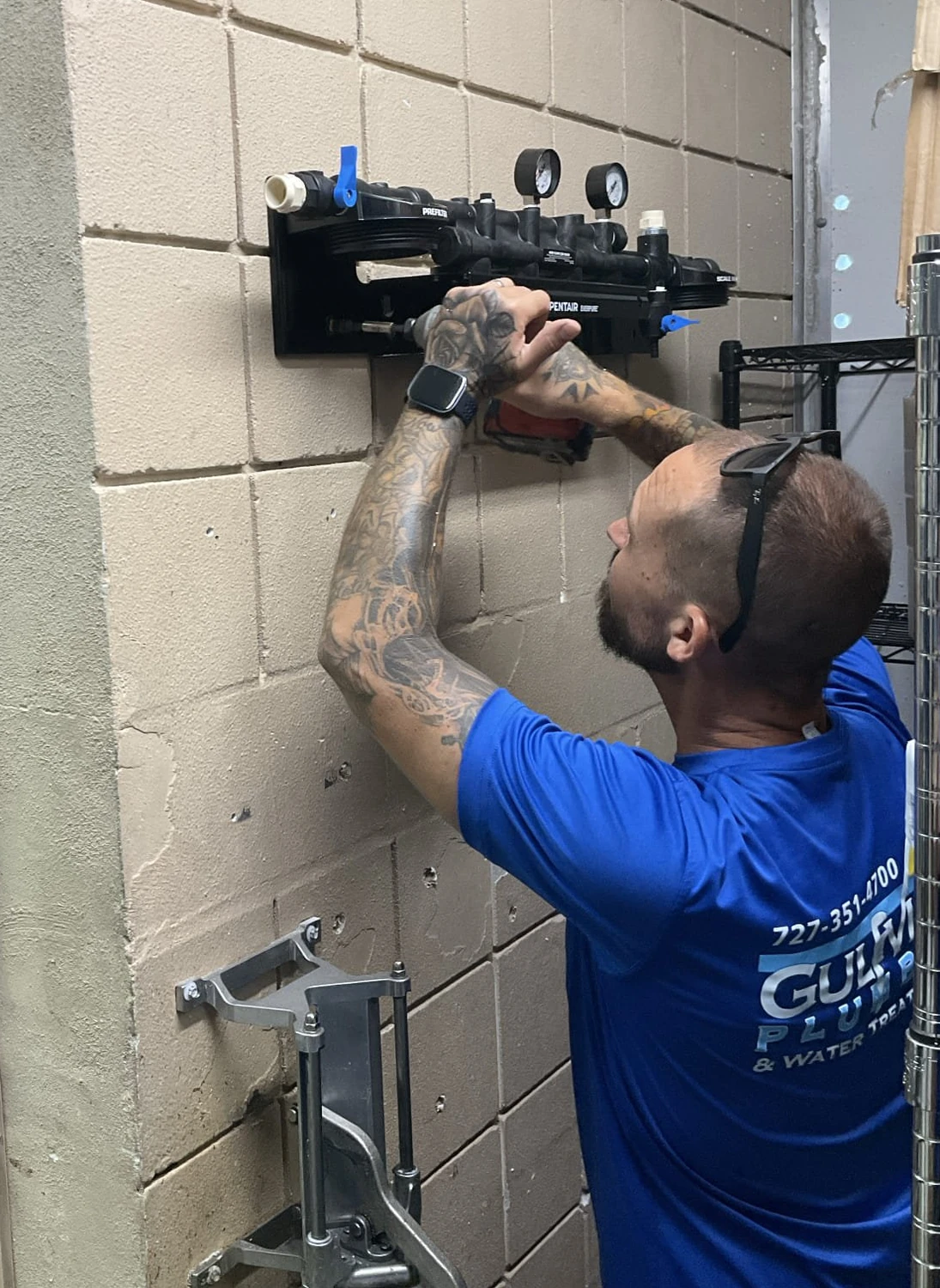
For this restaurant water filtration project, we installed an Everpure High Flow CSR Quad-7FC to serve the existing ice maker, drinking water and soda fountain. This owner had already purchased the equipment and brought us in to handle the installation. We mounted the system, connected the water lines and got everything ready for use.
You don’t have to choose or purchase a system before calling us. Gulfview can recommend, furnish and install water filtration equipment based on your concerns and the needs of your home or business. We also install customer-supplied systems, as we did on this project.
Here’s a look behind the scenes, along with a few things worth considering if restaurant water filtration is on your own to-do list.
Restaurant water filtration takes more than a wall-mounted filter
The spot for this system was inside the restaurant near the walk-in refrigerator, against a block wall that had once been an exterior wall. We mounted the filtration assembly there and connected it to the existing cold-water supply.
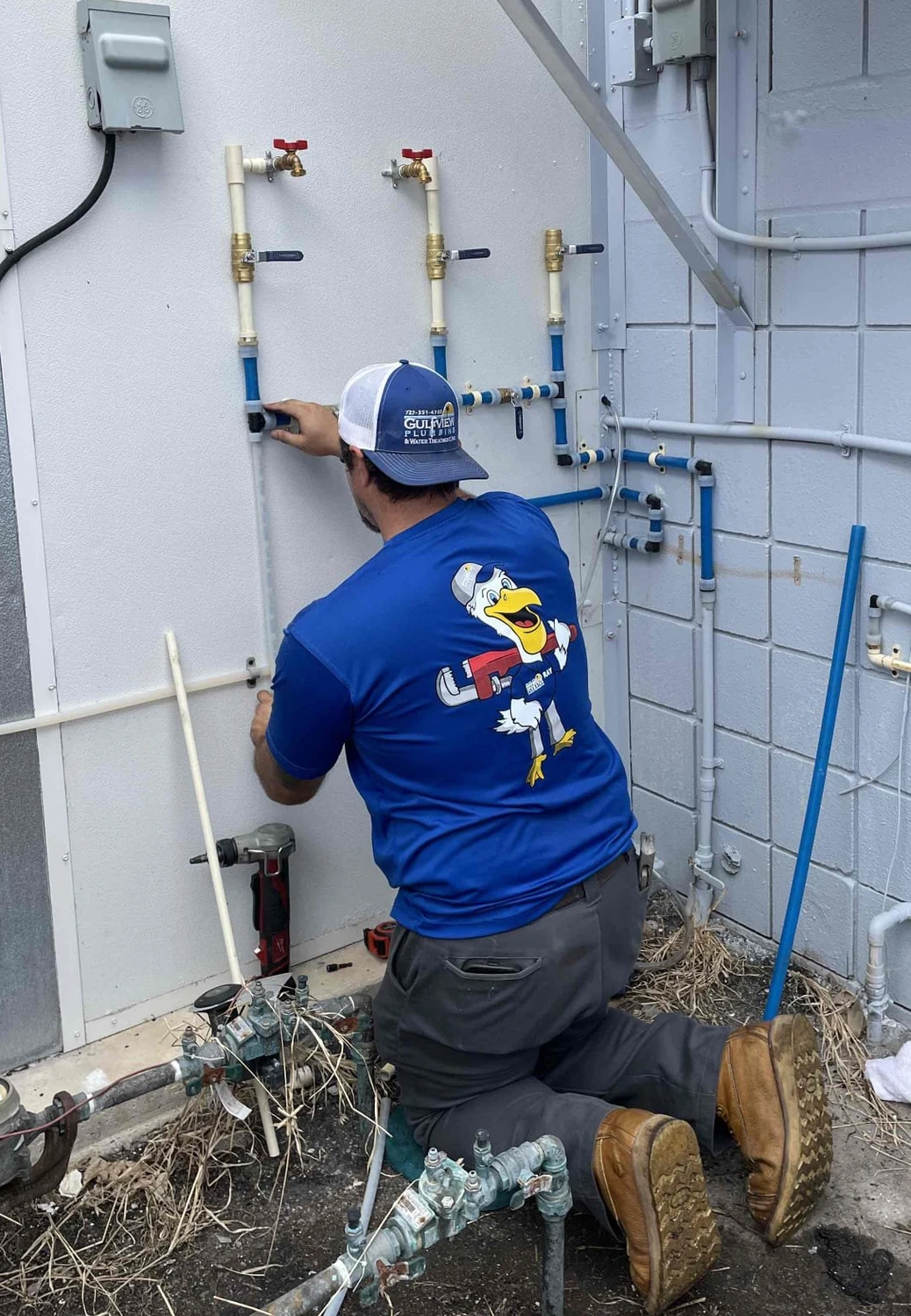
Then came the work you don’t see in a close-up of the finished filter: getting the treated water where it needed to go. We ran two dedicated 3/4-inch lines to the rear exterior wall. One serves the ice maker; the other serves the drinking-water and soda-fountain feed.
If you’re planning a similar installation, those connections deserve just as much attention as the filter itself. Where does the water come in? Which equipment needs filtered water? Can someone reach the system when it’s time for service? Working through those questions is part of the job.
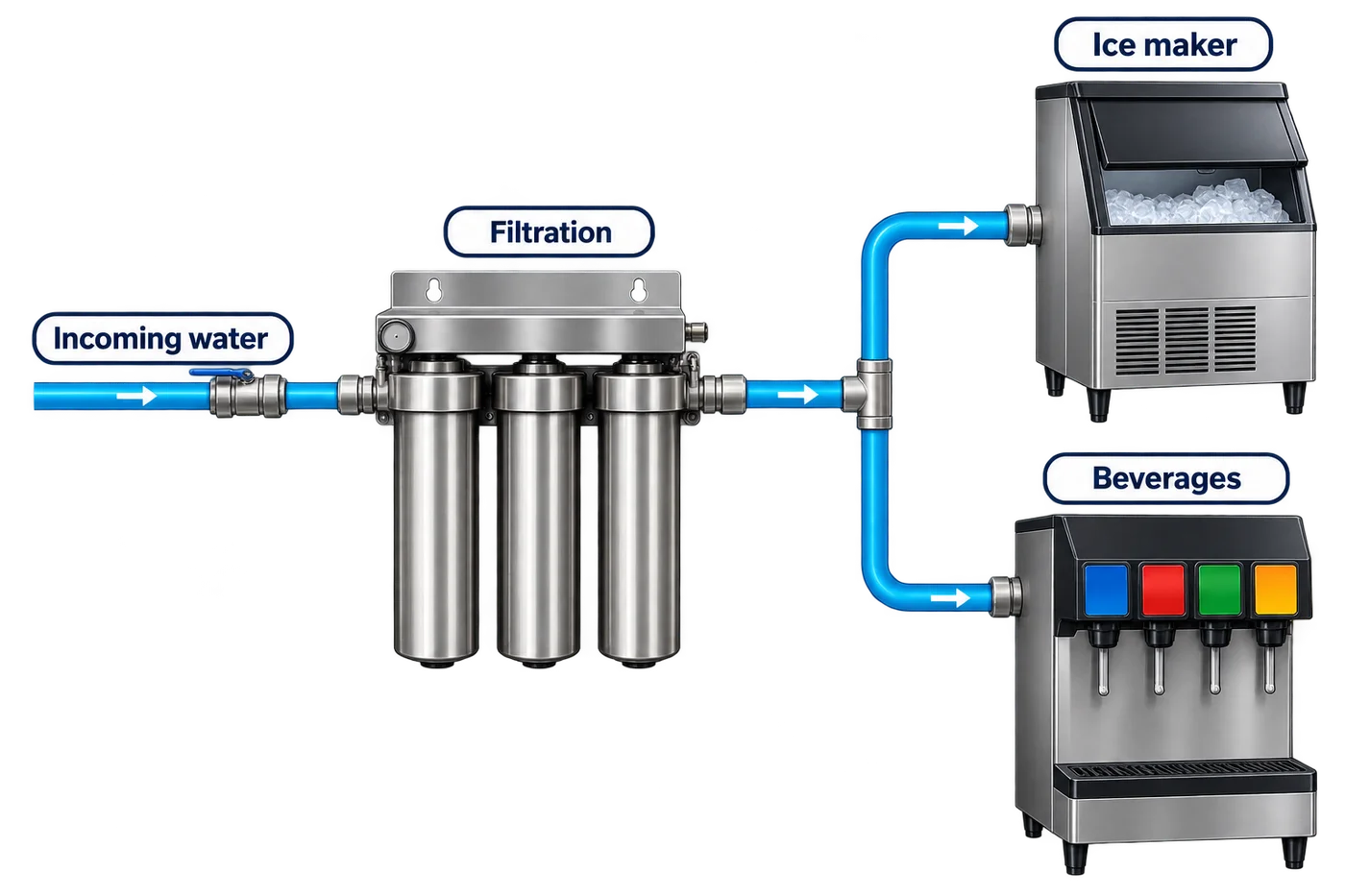
What does restaurant water filtration do for ice and drinks?
Think about how much of a fountain drink is water, or how much ice goes into a glass. Water quality belongs in that conversation, right alongside the beverages you choose to serve.
According to Pentair, the Quad-7FC’s filtration media reduces chlorine taste and odor. The assembly also includes a prefilter and scale-inhibitor media. It’s designed for foodservice applications involving multiple pieces of equipment, which is why matching the system to the restaurant’s needs matters.
For owners comparing equipment, Pentair lists a 10-gallon-per-minute service flow and a 100,000-gallon rated capacity for this model. Your water conditions and usage still determine how it performs and when it needs service. You can find the manufacturer’s details in Pentair’s Everpure system specifications.
Making room for restaurant water filtration maintenance
When comparing restaurant water filtration options, ask about replacement cartridges and ongoing service costs as well as the installation price. Keep the cartridge part numbers and service dates with your equipment records. We can help you understand the care your selected system needs, using its manufacturer’s guidance and your restaurant’s water use rather than assuming every filter follows the same schedule.
A new filter will need attention eventually. We included an H-style bypass in this installation so the filtration assembly can be isolated and water routed around it when appropriate for service or troubleshooting.
The five full-port ball valves and two quarter-turn hose bibs are a practical part of that arrangement. The finished lines are labeled for ice, soda and the incoming supply, so the connections are easier to identify.
When water bypasses the system, it doesn’t receive that filtration. Whether connected equipment can keep running during service depends on its requirements and the water supply. We’ll explain the arrangement so you know what it’s there for and when to call for help.
The last step wasn’t the last fitting
Once the piping was connected, we checked the installation for leaks and proper operation. We purged air from the lines between the filtration system and the ice maker, drinking-water supply and soda fountains. The system was fully pressurized and ready for use before we wrapped up.
That’s the less photogenic part of the project, but it matters. A finished installation needs to do more than look good on the wall.
Choosing restaurant water filtration for a busy service
A quiet dining room doesn’t tell you how hard the water system will work during a rush. The ice maker may be filling while staff serve fountain drinks and prepare other beverages. That’s why choosing filtration involves the equipment being supplied and its water requirements, rather than simply picking the largest assembly that fits the wall.
Capacity and flow rate describe different things. Rated capacity concerns how much water a filter is designed to treat under its specified conditions; flow rate concerns how quickly water can pass through the system. Neither number, on its own, tells you whether a particular setup is right for your restaurant. The connected equipment and the water supply need to be considered together.
A new beverage station or a replacement ice machine can change that picture. If an equipment upgrade is coming, it makes sense to discuss the water connections at the same time. You may be able to plan the piping and service access around the new layout instead of discovering an awkward connection after the equipment arrives.
Planning the visit around your restaurant
For a restaurant owner, the question isn’t just what the installation will cost. It’s also how the work fits around preparation, service and the people using the kitchen. We can discuss which equipment is connected, where the work will take place and the water interruption the installation requires.
That conversation is especially helpful when several businesses or pieces of equipment share a supply. A valve beside the proposed filter may not tell the whole story about what will lose water. Understanding the connections before work begins helps everyone plan around the interruption. We won’t assume a bypass means every machine can operate normally throughout the visit.
There’s also a difference between caring for a filter and caring for the equipment it supplies. Filter changes don’t replace the ice machine’s own cleaning and maintenance. Keeping both in view helps you ask the right questions when arranging service, rather than expecting one visit or one cartridge to address every concern.
If you already have restaurant water filtration and something has changed, we can start with that concern. Perhaps a dispenser has become slower, the service history is unclear or you want to add equipment. A replacement system isn’t the automatic answer. Tell us what you have and what’s different, and we can discuss whether maintenance, a plumbing repair or a different setup deserves a closer look.
Keeping restaurant water filtration working after installation
Should we wait for the drinks to taste different?
Taste alone isn’t a maintenance schedule. For this Quad-7FC model, Pentair’s specification sheet recommends cartridge replacement at least annually, with earlier attention when flow becomes inconveniently slow or rated capacity is approached. That is guidance for this equipment, not a promise that every restaurant filter lasts a full year.
If your service history is uncertain, we can help identify the installed system and discuss its maintenance requirements. A dated record of the last cartridge change is useful, but so is a change in how the equipment behaves. You shouldn’t have to wait until a busy evening exposes a problem before asking about it.
Are all the replaceable parts on the same schedule?
Not necessarily. This assembly has main filter cartridges, a prefilter and scale-inhibitor media with different jobs. Pentair calls for attention to a dirty prefilter and replacement of the scale-inhibitor cartridge before its compound is exhausted. A visit should consider the assembly as a whole, rather than assume changing one component takes care of the rest.
That distinction also helps when comparing maintenance proposals. Understanding which components are included is more useful than comparing two prices both described simply as a “filter change.” We can discuss the equipment you have and the work proposed for it.
Does slow water mean we need a new filtration system?
It means the cause deserves a closer look. A restriction in the filter is one possibility; the supply, valves and connected equipment also matter. Knowing whether one dispenser or several pieces of equipment are affected helps explain the concern. Replacing the whole system before understanding the problem may miss the actual cause.
If the change appeared after maintenance, a plumbing repair or new equipment was installed, mention that history. It gives us context for the investigation. You don’t need to move heavy kitchen equipment or take fittings apart to gather it; what your staff have already noticed is a useful starting point.
Can we keep the same system when the business changes?
That depends on what is changing. Adding an ice machine, moving a beverage station or increasing the number of outlets may call for a review of the existing filtration and piping. The system’s condition, capacity and connections all belong in that conversation. Keeping suitable equipment can be sensible, while an upgrade should have a clear reason behind it.
Let us know about the planned change before committing to new equipment where possible. We can help you consider the plumbing alongside the layout, so service access and water connections aren’t left until the last minute. For broader kitchen work, our commercial plumbing team can discuss the related needs with you.
Filtration for your home or business
Restaurant water filtration is one part of the work we do. Gulfview also handles filtration for homes and other businesses, from a system serving an entire property to treatment for a particular area or piece of equipment.
Whole-house or whole-business filtration may be worth discussing when you want treatment across the property. If your concern is more specific, a smaller, targeted installation may make more sense. You might want filtered drinking water at a kitchen sink, treatment for an ice machine, or a dedicated supply for a beverage station.
That targeted approach is often called point-of-use filtration: treating water where you need it, instead of choosing a whole-property system by default. Neither approach is automatically the better choice. What matters is what you’re trying to address, where you need treated water and how much water the equipment or household uses.
Which water concern are you trying to solve?
Better-tasting drinking water, scale concerns and a sluggish beverage supply can lead to different recommendations. Before choosing restaurant water filtration, it helps to separate the symptoms. What tastes different? Which equipment is affected? Has the change been gradual or sudden? You don’t need technical answers—just a description of what your staff and customers are noticing.
A filter’s appearance won’t tell you everything it can do. Two assemblies with similar cartridges may have different ratings and intended uses. The claims for the selected model matter more than a broad promise of “clean water.” We can help you compare the manufacturer’s specifications with the concern you want addressed.
It’s also worth separating filtration from softening. Reducing chlorine taste and odor is a different purpose from reducing hardness, and scale-control media should not automatically be described as a water softener. The right conversation depends on the equipment and water conditions. A system suitable for one part of your operation may not be the answer for every water-using appliance.
The Quad-7FC in this story is an example of a foodservice installation. It isn’t a universal recommendation for every restaurant or a default choice for a home. We offer both commercial and residential water-treatment services, but the equipment should match the setting. A small drinking-water installation and a busy restaurant’s ice-and-beverage supply call for different planning.
Comparing a filter price with a complete installation
An equipment listing is a starting point, not the whole project. This restaurant needed more than the filtration assembly: the work included mounting, dedicated water lines, service valves, labeling and getting the connected supply ready for use. Your location may involve different work, even if you choose a similar filter.
When we discuss your installation, the useful comparison is the complete proposed scope. An existing connection in the right place may be straightforward to use; a new route across the building needs to be considered separately. The mounting surface and available service space matter as well. We can explain those differences without asking you to work out the piping yourself.
For equipment you’ve already purchased, sharing the model information early helps us review the connection requirements before the visit. For equipment you’d like us to supply, we can include that choice in the proposal. Either way, you should understand what is being installed, what it will serve and how it can be maintained.
Keeping the proposal and equipment information together is useful long after installation day. If a cartridge needs replacing or your restaurant layout changes, you have a clear starting point for the next conversation. Our goal is to help you choose an installation that makes sense now and remains practical to service.
Not sure which restaurant water filtration system you need?
You don’t need to arrive with a model number or a shopping list. Tell us what you’ve noticed and what you’d like to improve. Is your concern the taste of drinking water? Water supplied to business equipment? Treatment throughout your home? If you have water-test results or information about an existing system, bring those along, too.
We can help you sort through the options and recommend a system suited to those concerns. From there, we can furnish the equipment and handle the installation, including the plumbing connections it needs. We’ll talk through space, service access and ongoing care so you’re choosing with the full picture in mind.
If you’ve already purchased a system, we’re happy to discuss that installation as well. Send us the make and model and a few photos of the proposed location. For a business, we’ll also discuss how to coordinate water shutoffs around your operation.
Gulfview Plumbing & Water Treatment serves homeowners and businesses in Pinellas County and selected surrounding communities. Explore our water filtration and treatment services, learn about our commercial plumbing work, or browse real installations in the project gallery.
Let’s talk about better water for your home or business. Whether you need help choosing a system or you’re ready to have one installed, we’re here to help you take the next step.